
ecoPayz Casino UK: Compare Payz Deposits and VIP Features
 Available in GB
A regulator-grade map of Payz at UKGC-licensed casinos — covering FCA authorisation 900011, tier-by-tier fees, deposit and withdrawal mechanics, and what changes under PS25/12 on 7 May 2026.

Ecopayz Casino UK: Market Guide Contents
- Two Shocks That Rewired British Casino Payments
- From EcoCard to Payz: A Twenty-Five-Year Brand Path
- Inside Britain's Three-Regulator Stack
- The Five-Tier Account Ladder and What Each Tier Buys You
- How a Payz Deposit Actually Reaches a British Casino Cashier
- Why Withdrawals Take Longer Than Deposits
- The Full Fee Map Against Skrill, Neteller and PayPal
- The Payz Mastercard: Where the Wallet Meets the High Street
- Is My Money Actually Safe Under FCA Safeguarding?
- Mobile, App and 2FA: Three Security Layers That Matter
- Which UKGC Operators Accept Payz at the Cashier
- Playing Safely with Payz in the Stake-Cap Era
- Questions I Get Asked Most Often About Payz at UK Casinos
- Where Payz Lands in the British Casino Stack
Two Shocks That Rewired British Casino Payments
Two regulatory shocks define how British casino players move money in 2026. The first arrived quietly on 14 April 2020, when the UK Gambling Commission banned credit-card deposits at every licensed gambling site in the country. Overnight, the cleanest, most familiar funding rail for British players was switched off — and the volume it carried had to go somewhere. The second shock is still rolling through the market. Mobile wallet registration among UK adults jumped from 42% in 2023 to 57% by the end of 2024, the steepest annual rise the UK Finance Payment Markets series has ever recorded. The space credit cards used to occupy hasn't disappeared; it's been redistributed to debit cards, bank rails and e-wallets. Payz — formerly ecoPayz — sits squarely inside that redistribution.
I've spent eight years inside the iGaming payments world, reading FCA policy statements at the desk, mapping fee ladders and watching cashier integrations break in real time. The questions I keep being asked sound similar, but each has a different answer in 2026. Is ecoPayz still the same thing as Payz? Does the operator behind it actually have the regulatory weight to hold British casino balances? How do the fees stack up after the 2023 rebrand, and what changes when PS25/12 takes effect on 7 May 2026?
This guide answers all of that with numbers and regulator references rather than adjectives. We'll move through brand history, FCA authorisation, the five-tier account ladder, deposit and withdrawal mechanics, the fee map against Skrill and Neteller, the Mastercard product, safeguarding rules, the mobile app and the stake-cap landscape we now operate in.
What This Guide Settles in Ninety Seconds
- Payz is the post-2023 rebrand of ecoPayz, run by PSI-Pay Ltd under FCA EMI authorisation 900011 — same legal vehicle, new front-end.
- 57% of UK adults now hold a mobile wallet, up from 42% the previous year, and that shift is the structural reason e-wallets matter at British casinos at all.
- The Classic-tier FX rate of 2.99% is the everyday cost most UK players pay; Gold drops it to 1.49%, Platinum and True VIP to 1.25%.
- PSI-Pay holds £64.97m in total assets and powers roughly €3 billion in annual transaction volume across the Payz infrastructure.
From EcoCard to Payz: A Twenty-Five-Year Brand Path
Most British players I talk to assume the brand was born when they first noticed it in a casino cashier — usually somewhere between 2010 and 2015. The reality is older and a little quirkier. The product line that became Payz launched as EcoCard in 2000, before PayPal had a meaningful presence in UK gambling and a decade before the smartphone reshaped online casino traffic. Three name changes and twenty-five years later, the legal infrastructure underneath has stayed remarkably constant.
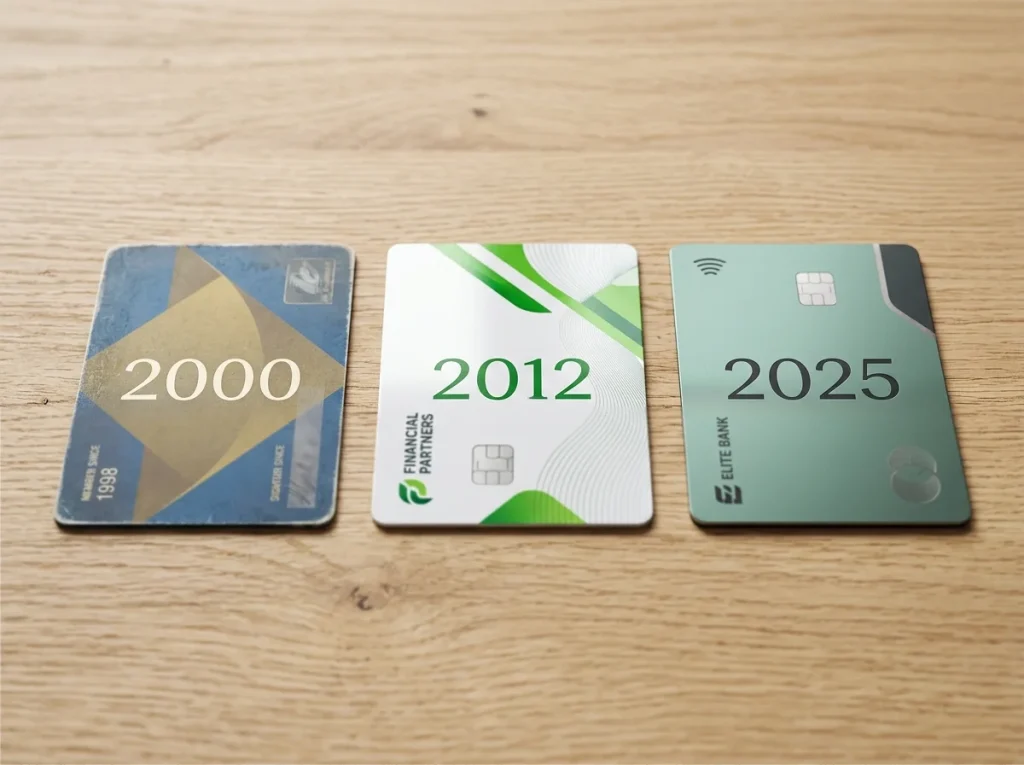
EcoCard arrived in the UK gambling market roughly nine years before PayPal carved out meaningful share there — long enough for an entire generation of British casino players to remember the brand by its old name before the 2023 rebrand happened.
The legal vehicle behind every iteration of the brand is PSI-Pay Ltd, a UK-incorporated electronic money institution. PSI-Pay sits on the FCA register under authorisation number 900011 — the same identifier the regulator has used since the firm cleared its E-Money Regulations 2011 application. That number isn't decorative. It's how I check counterparty status when a reader sends me a screenshot of a casino cashier that lists Payz alongside something called "EcoPayz Lite". The latter doesn't exist. The former carries an FCA identifier that anyone can verify in seconds in the public register.
EMI — Electronic Money Institution. A firm authorised by the FCA to issue e-money under the Electronic Money Regulations 2011. EMIs are not banks and balances held with them are not FSCS-protected, but they are required to safeguard client funds under separate FCA rules.
PSI-Pay's path into the Mastercard scheme matters because that's what unlocks the prepaid card product British players use to pull casino winnings out into the high street. The firm became a Mastercard Principal Member in 2009 and has issued prepaid and debit cards across more than 170 countries and 44 currencies ever since. Phil Davies, the PSI-Pay chief executive whose profile of the firm is the most widely cited, put the compliance posture plainly: "We need to be crystal clear to prove that what our customers are providing is real and authentic. We are also required to conduct checks on politically exposed persons and OFAC because of our relationship with MasterCard — an American company with a different set of standards." That sentence tells you almost everything about why Payz's KYC layer can feel heavy at casino sign-up: the firm is checking against US sanctions lists too, not only UK ones.
What is PSI-Pay?
PSI-Pay Ltd is the UK-incorporated EMI behind the Payz brand. It holds FCA authorisation 900011, is a Mastercard Principal Member, and issues the prepaid and debit cards that sit inside every Payz wallet. The firm's 2024 accounts show total assets of £64.97 million and net income of £260,634 — a small but stable EMI balance sheet, ranked 58th among UK domestic EMIs by market share at 0.16%.
The 2023 Brand Switch and What Actually Moved
On 10 May 2023 ecoPayz became Payz overnight, in a rebrand the company itself described as cosmetic. From a UK casino player's perspective, that turned out to be mostly accurate. The wallet number stayed the same, balances didn't move, existing cards kept working until their physical expiry, and the casino cashier integrations didn't need a single line of code changed — only the merchant logo and the brand string the cashier displayed. I've worked through the rebrand at a back-end level with two payment teams, and the only meaningful change was the white-label colour scheme.
Rebrand date: 10 May 2023. Legal entity, wallet numbers and FCA authorisation 900011 unchanged. Anyone holding a legacy ecoPayz account before that date holds a Payz account with the same balance, same card, same KYC tier.
What did change was the framing. Payz reports a footprint of 174 countries and 50-plus currencies, and it's pushing the brand into broader retail and remittance use cases rather than positioning itself purely as a gambling-friendly e-wallet. For UK casino players, that has a knock-on effect worth noting: the wallet is no longer marketed at gambling first. The product still works at every UKGC-licensed casino that previously accepted ecoPayz, but the company's marketing budget has shifted towards mainstream payments, and that subtly affects which features get prioritised in app updates.
Inside Britain's Three-Regulator Stack
£15.6 billion. That's the figure Andrew Rhodes, chief executive of the Gambling Commission, used at his most recent industry keynote: "Gambling in Great Britain has reached the highest GGY we have ever seen — £15.6bn. Those official statistics will tell you plenty about what is going on with gambling in Great Britain." Set against that backdrop, Payz isn't a niche payment tool — it's a regulated rail moving through a market that's hit its all-time record size.

GGY — Gross Gambling Yield. The total amount wagered by players minus the total amount paid back to players in winnings, before operator costs. It's the Gambling Commission's headline measure of operator revenue.
The British market sits inside a three-regulator stack. The UK Gambling Commission licenses the casino itself. The Financial Conduct Authority licenses the wallet that holds player money — in Payz's case, PSI-Pay Ltd under EMI authorisation 900011. UK Finance, the trade body, doesn't license anyone but produces the data that explains why we got here. Each regulator does a different job, and the player rarely sees more than one of them at a time.
UK Gambling Commission
Licenses the casino. 2,179 gambling operators authorised across all sectors.
Financial Conduct Authority
Licenses the wallet. PSI-Pay Ltd holds EMI authorisation 900011 on the public register.
UK Finance
Trade body. Publishes the Payment Markets report that tracks how British consumers move money each year.
The UKGC licenses 2,179 gambling operators across the British market. Some of those are land-based, some online, some both. The online sector alone generates around £5 billion in annual gross gambling yield. When a UK casino accepts Payz, it's promising to operate inside both rule sets — the wagering rules the UKGC enforces and the safeguarding rules the FCA enforces on the wallet behind every transaction. Player complaints can flow to either regulator depending on which side of the cashier the dispute sits on.
The credit-card ban of 14 April 2020 is the single most important regulatory event for understanding why e-wallets matter in British gambling at all. Before the ban, players could fund a casino directly from a Visa or Mastercard credit card. After the ban, every credit-card deposit attempt failed at the cashier. Debit cards, e-wallets and bank transfers absorbed 100% of the displaced volume, and Payz was already authorised, integrated and ready to scale. The growth of e-wallet share at British casinos in the five years since isn't a marketing victory — it's a regulatory consequence.
The next regulatory move is dated. The FCA published Policy Statement PS25/12 in August 2025, setting an implementation deadline of 7 May 2026 for a supplementary regime that lifts payment and e-money firms onto stricter reporting, audit and reconciliation rails. I'll come back to the safeguarding mechanics in detail later — for now the relevant point is that the rule book the Payz wallet operates under in mid-2026 is materially different from the one in force a year earlier, and the user interface won't reflect that change. The compliance cost lands on PSI-Pay; the protection benefit lands on the player.
Stack the three regulators together and you get a model that's unusual by international standards: the casino is regulated by one body, the wallet by another, and the macro behaviour tracked by a third. It's also why I argue against treating Payz casino safety as a single question. There are three different safety questions, sitting at three different regulators, and the answers don't always move together.
The Five-Tier Account Ladder and What Each Tier Buys You
The first decision every new UK Payz user makes — usually without realising they're making it — is which tier to settle on. The wallet starts at Classic by default, and most British casino players never move from there. The five-tier ladder runs Classic, Silver, Gold, Platinum and True VIP, and each step changes three things at once: the FX rate the wallet applies on cross-currency moves, the upper limits on what the wallet can hold and process, and the depth of KYC the firm runs on the holder.

KYC — Know Your Customer. The verification process a regulated financial firm runs on a new account holder to confirm identity, address and source of funds. KYC depth scales with the level of risk the account presents.
The FX rate is where tier choice hits the casino bill hardest. Classic and Silver share the same 2.99% applied conversion rate — a meaningful premium over interbank pricing. Gold drops to 1.49%. Platinum and True VIP both sit at 1.25%. For a player who deposits a few hundred pounds a year, that gap is invisible. For someone running £5,000 to £10,000 through Payz annually, it's a four-figure cumulative cost difference between Classic and Gold over a few years.
| Tier | FX Rate | KYC Depth | Card Limits |
|---|---|---|---|
| Classic | 2.99% | Basic ID and address | £100 contactless, lower daily cap |
| Silver | 2.99% | + source-of-funds | Raised daily purchase |
| Gold | 1.49% | + enhanced documents | Up to €750 ATM daily |
| Platinum | 1.25% | Enhanced due diligence | Up to €5,500 daily purchase |
| True VIP | 1.25% | Invitation-only, EDD | Bespoke caps |
The contactless and ATM limits sit mostly with the Mastercard product the wallet can issue. The single contactless transaction limit on a UK Payz Mastercard is £100, in line with the UK contactless ceiling the FCA confirmed in 2021. Daily ATM cash withdrawals reach up to €750, and point-of-sale spending on the upper-tier cards stretches as high as €5,500 a day — both ceilings expressed in euros because PSI-Pay's card programme is multi-currency at issuance level.
KYC depth scales with tier. Classic asks for basic identity verification — name, address, date of birth and a single document. Silver and Gold add source-of-funds questions, often requiring a bank statement or wage slip. Platinum and True VIP are invitation-only and involve enhanced due diligence that mirrors what a bank's private wealth desk runs on a new client. Casino-side KYC then runs in parallel, and the two sets of checks can interact in ways that confuse first-time withdrawers — a topic I'll come back to in the withdrawals section.
A pattern I've watched repeat across several years: players upgrade reactively, usually because a withdrawal stalls at the Classic-tier cap. The cheaper move is to model your expected annual throughput against the FX gap and upgrade before the first big deposit, not in the middle of a stuck cashout. Wallet support generally needs forty-eight to seventy-two hours to process a tier upgrade with the additional documents, and that's exactly the window a stuck withdrawal can't afford.
How a Payz Deposit Actually Reaches a British Casino Cashier
A typical British Payz deposit takes about four taps on a phone — and roughly 80% of online gamblers now use a smartphone as their primary device, so that's how most of these flows actually unfold.
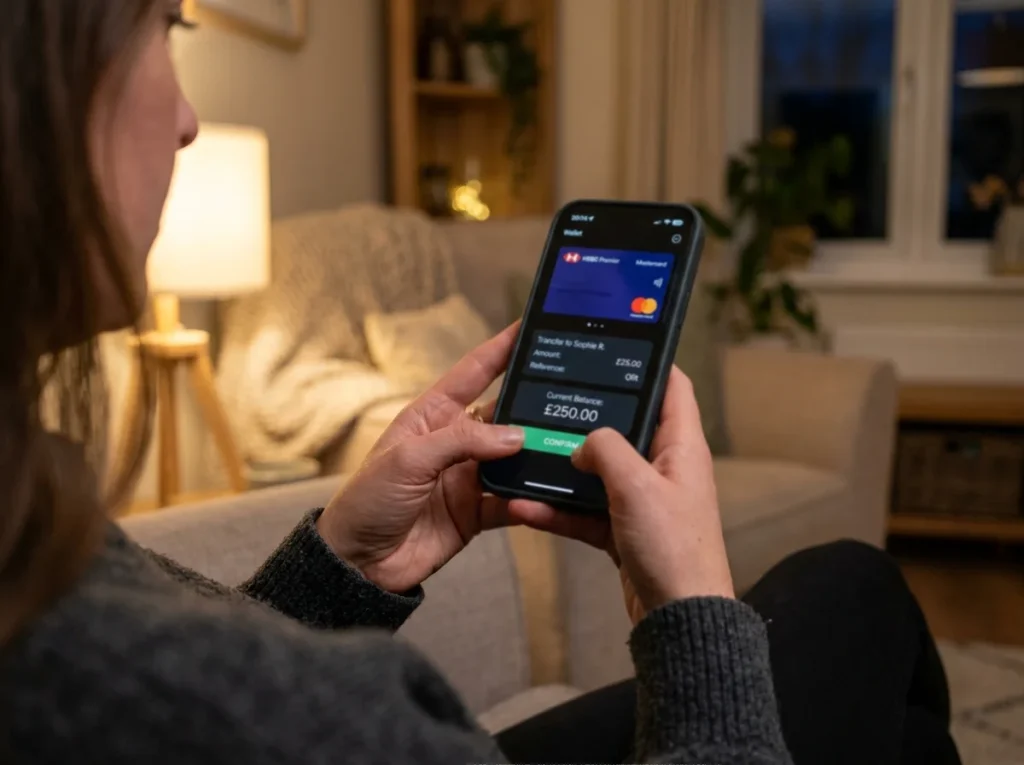
The cashier opens, the player selects Payz, confirms an amount, taps approve on the Payz app or browser pop-up, and the funds appear in the casino balance. That's the happy path. Underneath, three things are happening sequentially: the casino is debiting the player's Payz balance through the PSI-Pay rail, the wallet is running 3D Secure equivalents if a card is involved, and the casino's risk engine is checking stake-cap and source-of-funds rules in parallel.
The interesting numbers sit in the FX leg. If the wallet balance is in pounds and the casino debits in pounds, no FX runs and the deposit is rail-only. If the balance is in euros or dollars and the casino debits in pounds, the wallet applies the tier-level FX rate at the moment of debit.
Worked example: £100 deposit at Classic tier with a EUR-denominated wallet balance
Step 1. Cashier requests £100 from the Payz wallet.
Step 2. Wallet sees EUR balance, calculates required euro amount at mid-market rate.
Step 3. Payz applies the Classic-tier FX premium of 2.99% on the converted leg.
Step 4. Wallet debits the EUR equivalent of £100 plus 2.99% from the balance.
Step 5. £100 lands in the casino balance. The £2.99 FX cost lives invisibly inside the wallet debit.
Most British players I work with hold a GBP Payz balance for exactly this reason — it bypasses the 2.99% Classic FX rate altogether and turns the deposit into a flat rail move with zero applied conversion cost. The trade-off is that you then carry FX exposure on the funding side, when topping the Payz wallet up from a card or bank account in a different currency.
A few other behaviours are worth knowing. Payz deposits at British casinos are generally credited within seconds — the rail is real-time on both sides. The casino cashier may show a brief "pending" state while it runs anti-fraud checks, but the balance is already reserved in Payz. Failed deposits almost always trace to one of three causes: insufficient wallet balance, tier-level limit, or a 3D Secure timeout on the funding card. For the full deposit walkthrough, including troubleshooting and 3D Secure recovery, I've broken it down in the dedicated deposits tutorial.
Why Withdrawals Take Longer Than Deposits
Deposits move money into a regulated environment. Withdrawals move it back out — and that direction reversal is where AML and KYC checks gain legal teeth. Same wallet, same rails, completely different velocity.

Withdrawals are where the regulator turns the volume up. A deposit moves player money into a regulated environment — there's not much for the FCA or UKGC to argue about. A withdrawal moves money out of that environment, back to the player, and that's the moment AML controls have to fire properly. The difference is structural, not stylistic, and it's why a deposit that takes four taps can be followed by a withdrawal that takes four days.
AML — Anti-Money Laundering. The set of legal obligations a regulated firm has to detect, prevent and report suspicious financial activity. Casinos and EMIs sit under separate but overlapping AML regimes, and a withdrawal is the natural trigger point for AML checks on both sides.
The Payz withdrawal stack involves two parallel queues. The casino has to clear the cashout against its own internal risk rules — most British operators run a 24- to 72-hour review window for first-time withdrawals, longer if any flag fires. Once the casino releases the funds, Payz credits the wallet, and that leg is usually instant. From the wallet, the player can hold the money, spend it on a Payz Mastercard, transfer it on or convert it back to a bank account on a separate timeline.
The first-time withdrawal is the one that catches people out. GamCare's National Gambling Helpline took 55,228 calls and online chats in 2023-24, a 25% rise year on year, and a measurable share of those calls are from players whose withdrawals are stuck. Most of those stuck withdrawals aren't dishonest operators — they're casino-side KYC checks waiting on documents the player didn't realise were needed. The cleanest path is to clear the casino's full KYC stack before the first withdrawal request, not after.
PSI-Pay's own balance sheet matters here in a way most readers don't think about. The firm reported total assets of £64.97 million in its 2024 accounts and net income of £260,634. That's a small balance sheet by bank standards but a healthy one for an EMI of its tier, and it means the wallet has the liquidity to settle UK casino withdrawals as they arrive rather than batching them on settlement cycles the way some smaller providers do. Liquidity isn't glamorous to read about, but it's the difference between a wallet that credits cashouts in real time and one that holds funds overnight for back-office reasons.
Three other delays catch British players regularly. Weekend withdrawal requests sit longer because casino review desks run reduced cover from Friday evening through Monday morning. Tier-level caps on the Payz side block large withdrawals at Classic until an upgrade clears. And occasional AML flags — usually on first-time large withdrawals or unusual destination changes — trigger a manual review that can add days. For the full withdrawal map, including the IBAS and ombudsman escalation route when a casino sits on a payout, see the withdrawals guide.
The Full Fee Map Against Skrill, Neteller and PayPal
Among the e-wallets British casinos actually accept, Payz sits third by gambling-sector size, behind Neteller and Skrill — both owned by the Paysafe group, which is why their pricing tends to move in lockstep. Payz is independent of Paysafe, runs on its own PSI-Pay payment rail, and that's the structural reason its Classic-tier FX rate is 2.99% versus Skrill's and Neteller's 3.99%. A full percentage point of FX is not a small gap on annualised volume.

The fees a UK Payz casino user actually pays cluster into four buckets. There's the FX rate, which applies whenever the wallet currency doesn't match the casino's debit currency. There's the per-transaction fee — zero on Payz deposits and a flat per-cashout charge when paying out to a Mastercard. There are inactivity fees, which kick in if the wallet sits dormant for an extended period. And there are casino-side fees, which are entirely the casino's choice and unrelated to Payz — a small number of operators add a cashier fee on e-wallet withdrawals.
| Wallet | Classic-tier FX | Casino Coverage UK | Parent Group |
|---|---|---|---|
| Payz | 2.99% | Broad | PSI-Pay Ltd |
| Skrill | 3.99% | Broad | Paysafe |
| Neteller | 3.99% | Broad | Paysafe |
| PayPal | Mid-market plus margin | Narrow | PayPal Holdings |
The tier ladder reshapes the FX cost more than anything else. Classic and Silver pay 2.99%, Gold pays 1.49%, and Platinum and True VIP pay 1.25%. For the comparison I run with readers, I model annual throughput against the FX gap: roughly £2,000 a year of cross-currency activity is the inflection point where moving from Classic to Gold starts to make sense purely on FX savings, before any other tier benefits are factored in.
PayPal sits outside this comparison neatly because PayPal's UK casino acceptance is structurally different. Where Payz, Skrill and Neteller all openly target gambling, PayPal restricts its merchant agreements heavily, and a much smaller pool of UK casinos can offer it. Acceptance breadth matters as much as headline pricing — a 1% lower FX rate at a wallet your chosen casino doesn't accept is worth nothing in practice.
A note on what isn't a fee: bonus rules. Many UK casinos exclude e-wallet deposits from welcome offers — that exclusion isn't a Payz fee, it's a casino policy, and it applies equally to Skrill and Neteller deposits. The full numerical breakdown sits in the dedicated fees article, and the three-way wallet comparison sits in the Skrill and Neteller piece.
The Payz Mastercard: Where the Wallet Meets the High Street
The Payz Mastercard is the bridge between the wallet and the rest of a player's financial life — and it's the product feature that genuinely separates Payz from a lot of competing e-wallets at British casinos. Plenty of e-wallets can hold a balance. Far fewer can hand you a card that works at any UK ATM and at any Mastercard-accepting retailer.
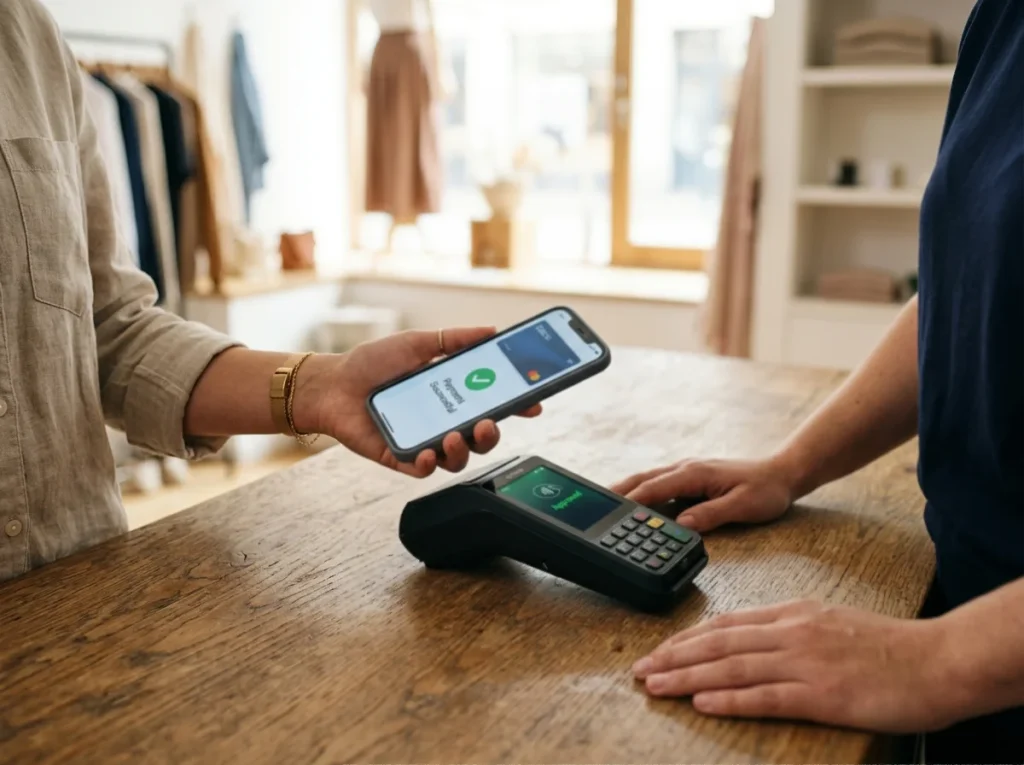
The card programme runs on PSI-Pay's Mastercard Principal Member licence — held continuously since 2009 and authorising prepaid and debit card issuance across 173 countries and 44 currencies. That breadth is what makes the Payz Mastercard usable when a British player travels: the same card the wallet issued for casino cashouts works in Tokyo or Lisbon at retail terminals, with the wallet's tier FX rate applied transparently at the point of sale.
Payz Mastercard at a glance
Issued under PSI-Pay's Mastercard Principal Member licence. Available as a virtual card inside every Payz wallet and as a physical card on request at upper tiers. UK contactless cap of £100 per transaction. Daily ATM withdrawal up to €750. Daily purchase limit reaching €5,500 at upper tiers. FX applied at the wallet's tier rate when spending outside the wallet's base currency.
The day-to-day limits matter more than the geographical breadth for most users. UK contactless transactions cap at £100 per tap — that's a Mastercard scheme rule rather than a Payz choice, and it applies to every contactless card in the country. Daily ATM cash withdrawals reach up to €750 across the tiered card products, and the daily purchase limit at the higher tiers extends to €5,500. The currency expression is euro because PSI-Pay's card programme is denominated in EUR at the scheme level, even though British players typically use the card in pounds.
Two practical points I always flag. First, the physical card and the virtual card are different products inside the same wallet, and casinos handle them differently at the cashier — some accept the virtual single-use number for deposits while others recognise only the physical card. Second, when a withdrawal lands on a Payz Mastercard there's no further FX leg unless you spend in a non-EUR or non-GBP currency, because the cashout from the wallet to the card is a same-account move. That makes the Mastercard a clean exit route for British players who want their winnings outside the wallet as quickly as possible.
Is My Money Actually Safe Under FCA Safeguarding?
Whether Payz is "safe" is the wrong question to ask. The right one is: under which regulatory regime is your Payz balance held, and what does that regime actually guarantee? The answers aren't intuitive even for experienced players, and the FCA itself spent most of 2024 and 2025 redrawing them.
The share of UK consumers holding an e-money account rose from 1% in 2017 to 7% in 2022 — a sevenfold growth curve that the FCA has been increasingly nervous about. The reason for that nervousness is brutal in the numbers. Among e-money firms that became insolvent between 2018 and 2023, the average shortfall in funds owed to clients was 65%. That isn't a statistical artefact. It means most affected customers lost more than half of what they thought was safe in the wallet.
Adrian Buckle, UK Finance's head of research, framed the broader shift this way when the 2025 Payment Markets report landed: "2024 was a year of firsts, all pointing to the growing shift towards digital payments. More than half of UK adults used mobile wallets, mobile banking overtook desktop as the main way people access their accounts, and cash fell below 10% of all payments." The behavioural pull is real, the volume is growing fast, and the regulator has had to catch up to it.
An e-money balance is not legally a bank deposit. FSCS protection does not apply. The protection that does apply is safeguarding — segregation, reconciliation, audit — under FCA rules, and the rules around it are being significantly tightened during 2026.
FCA Policy Statement PS25/12, published on 7 August 2025, is the catch-up. It introduces mandatory monthly reporting, annual safeguarding audits, enhanced fund reconciliation and tighter rules on how EMIs segregate client money. The supplementary regime takes effect on 7 May 2026. The annual safeguarding audit specifically kicks in only if a firm safeguarded more than £100,000 in relevant funds across any 53-week window — and that threshold means it applies straightforwardly to PSI-Pay given the firm's reported asset base of £64.97 million.
A Payz balance is not the same legal entity as a current account with a high-street UK bank. Bank balances up to £85,000 are FSCS-protected. E-money balances are not — they're protected by safeguarding rules that require segregation and reconciliation but don't pay out from a compensation pot if the worst happens. The difference is technical but consequential, and the 65% average shortfall figure is the reason it matters. I cover the full safety picture, including Mastercard scheme protections and the PS25/12 implementation timeline, in the safety deep-dive.
A practical takeaway. Don't treat the Payz wallet as a long-term store. Treat it as a payment rail — money moves in, money moves through to the casino, winnings move back out. The lower the balance you carry between sessions, the smaller the exposure if anything ever goes wrong on the safeguarding side. That's not paranoia, it's pattern-matching on what the FCA itself has now decided needs tighter oversight.
Mobile, App and 2FA: Three Security Layers That Matter
Mobile isn't a feature anymore — it's the default. Around 80% of online gamblers used a smartphone as their primary device in 2025, and mobile accounted for 71% of all online wagers in the UK that same year, up from 58% in 2021. The Payz app is the only piece of the chain a British casino player touches directly on the wallet side, and how it's set up matters more than most readers think.
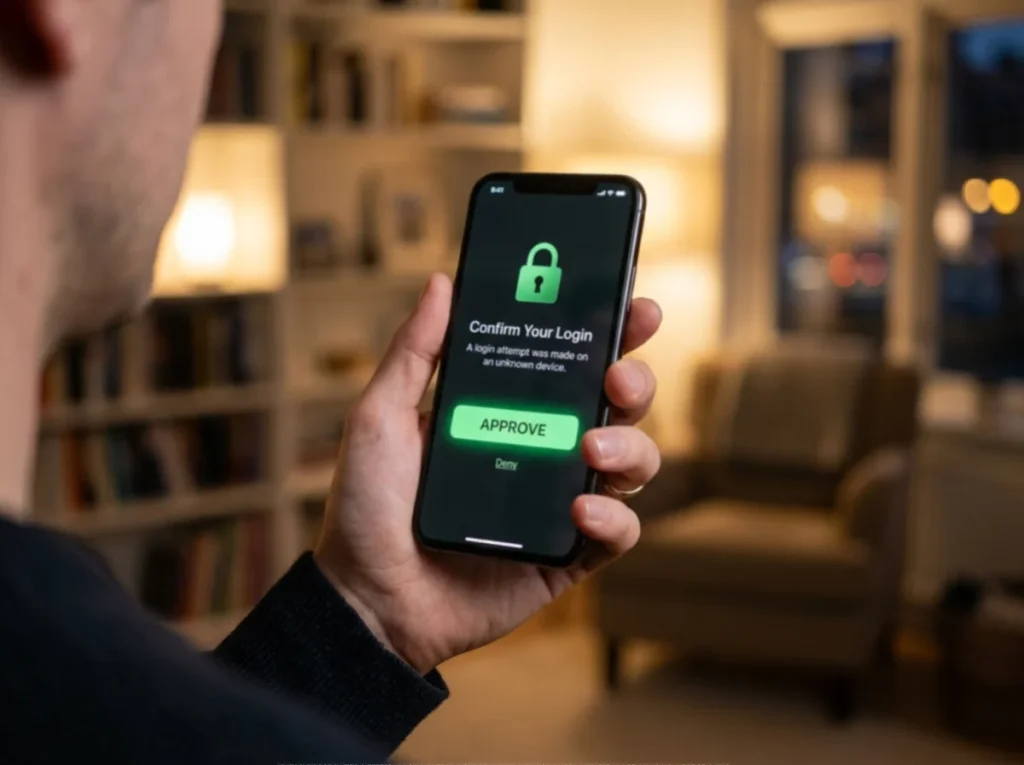
The app's security stack runs three layers. There's the device-level layer — biometric unlock, screen-lock PIN, OS-level update hygiene. There's the wallet-level layer — Payz's own 2FA, session timeouts, login alerts. And there's the card-level layer — single-use virtual card numbers, card-freeze toggles, transaction notifications. Each layer guards against different attack vectors, and missing any one of them changes the wallet's risk profile materially.
Do
- Enable authenticator-app 2FA in the Payz app and treat the recovery codes like cash.
- Lock the Mastercard inside the app when you aren't actively spending from it.
- Turn on push notifications for every card transaction and every wallet login.
- Use a separate, unique password for the Payz account that isn't reused at any casino cashier.
Don't
- Share single-use virtual card numbers across multiple casinos — they exist to be one-shot.
- Rely on SMS 2FA where authenticator-app or hardware-key options are available.
- Skip device-level biometric or PIN locks; the wallet sits inside whatever the phone allows in.
- Leave the same password on Payz and the casino cashier — the security separation falls apart.
I see the same mistakes recur. Players enable biometric login but skip 2FA because they "don't need both" — biometric login is local to the device, 2FA is the wallet's check that the login itself is legitimate. The two layers protect against different attacks, and each is worth the small amount of friction it adds.
A pattern that holds up well in practice: enable authenticator-app 2FA rather than SMS, set the app to require biometric re-auth for any new payee, and keep card notifications on for every transaction. The cost is a few seconds of extra friction at login. The benefit is that any unauthorised access shows up in your notifications stack within the same minute it happens — and that early-detection window is the difference between a small loss and a forensic nightmare.
Which UKGC Operators Accept Payz at the Cashier
The honest number is somewhere between 25 and 35 UKGC-licensed operators that accept Payz at their British-facing cashiers. That's not a recommendation list — and I won't be turning it into one — but it's the realistic coverage map. Of the 2,179 gambling operators the UK Gambling Commission licenses, only a subset run online casinos, and only a subset of those have integrated Payz as a cashier option.

Several patterns explain that distribution. Large international operators with a UK licence almost always integrate Payz because the wallet's overseas footprint means their non-UK divisions already use it. Smaller UK-only operators sometimes skip e-wallet integration entirely and stick to debit cards and bank transfers — fewer integration costs, fewer cashier flows to maintain. Newer launches in the post-stake-cap era tend to integrate Payz from day one because the e-wallet share of total deposit volume in UK gambling has only grown since the credit-card ban.
2,179
UK Gambling Commission licensed operators across all sectors.
25 – 35
Realistic count of UKGC casinos with live Payz integration.
£5.0bn
Annual gross gambling yield from the UK online sector.
£1.42bn
Q2 FY 2025-26 online GGY, an 8% year-on-year rise.
The macro numbers help frame why Payz's casino acceptance has held up rather than eroded. The UK online gambling sector now generates around £5 billion in annual GGY, with Q2 FY 2025-26 alone hitting £1.42 billion — an 8% year-on-year rise. That growth funds the integration and compliance work casinos need to keep multiple payment rails live. When a casino chooses which e-wallets to support, it's making a cost-benefit call about player demand versus integration overhead, and Payz keeps clearing that bar.
A few practical filters help any UK player check whether an operator's Payz integration is genuinely live and not just listed. First, verify the operator's UKGC licence in the public register before depositing anything — it's a free check that takes thirty seconds, and it's the single most useful piece of due diligence available to British players. Second, look at the cashier itself rather than the marketing footer; some operators list Payz as a "coming soon" option that hasn't actually been activated. Third, watch for the difference between deposits-only Payz integration and full deposit-plus-withdrawal integration — a small number of operators allow Payz funding but force withdrawals back to a debit card, which defeats half the reason for using the wallet in the first place.
The acceptance map is stable for now, but the next twelve months will probably see consolidation. Smaller operators absorbing the cost of PS25/12 compliance may rationalise their payment-method shortlists, and that's worth watching at renewal time. The bigger picture is that Payz isn't a fringe choice in 2026 — it's a mainstream payment method whose share at British casinos has been quietly compounding since 2020.
Playing Safely with Payz in the Stake-Cap Era
The 9 April 2025 stake-cap rewrote the maths of every slots session in the UK. From that day, the maximum stake per game cycle for online slots is £5 for all adults — and £2 for 18- to 24-year-olds, a tighter limit that came in on 21 May 2025. The cap is set per spin, not per session, and it changed player behaviour faster than most regulators expected.

PGSI — Problem Gambling Severity Index. A nine-item screening tool used in the Gambling Survey for Great Britain. Scores of 8 or above indicate the most severe end of gambling-related harm; scores of 3 to 7 indicate moderate risk; 1 to 2 indicates low risk.
The early measurement is striking. The share of online slot sessions lasting longer than one hour fell from 6.2% in Q3 2024-25 to 4.4% in Q4 2024-25 — the first full quarter under the new cap. Shorter sessions, smaller stakes, lower harm exposure: that's the intended trajectory, and the data is moving the way the policy expected. The behavioural change reached players faster than equivalent regulations in other jurisdictions have managed historically.
Payz sits inside this picture in a specific way. The wallet doesn't enforce the £5 or £2 cap — that's the casino's job, baked into the game engine. What the wallet does control is deposit limits, spend tracking and the speed at which money can move from a funding source into a casino balance. Those features are now more important, not less, because the lower stake-cap extends the playable window of any deposited balance — meaning the deposit-side controls have to do more work to keep harm reduction effective.
UKGC stake-cap: £5 per online slot game cycle for all adults from 9 April 2025; £2 per cycle for 18 – 24-year-olds from 21 May 2025. Deposit limits and self-exclusion remain the player's primary on-ramp controls; Payz-side spend caps add a second layer.
The Problem Gambling Severity Index sits at 2.7% of UK adults scoring 8 or above — a level the Gambling Survey for Great Britain has reported as statistically stable since 2023. Stable isn't the same as low; it means the harm baseline persists at population level, and it's why the Betting and Gaming Council's Safer Gambling Week now generates such large engagement numbers. The 2025 edition saw 281,000 deposit limits set by 153,960 unique account holders — a 41% year-on-year rise that suggests deposit-side tooling is finally being used at meaningful scale.
Payz users have a parallel set of tools on the wallet side. Daily, weekly and monthly outbound spending limits can be configured in-app. Pre-authorised payee lists restrict which casinos the wallet will release funds to. Push notifications can mirror every casino deposit in real time. These aren't marketing features — they're harm-reduction infrastructure, and they sit on top of whatever limits the casino itself enforces. The two layers reinforce each other, and the strongest setup uses both.
Questions I Get Asked Most Often About Payz at UK Casinos
The questions below come from the inbox patterns I see most often. They sit at the high-level intersection of brand, regulation and account mechanics — for deeper questions on fees, deposits, withdrawals, safety and competitor wallets, the cluster articles linked through this guide go further.
Is ecoPayz the same as Payz?
Legally, yes — and operationally, yes. The 10 May 2023 rebrand replaced the ecoPayz name with Payz across the front-end, but the legal entity behind the wallet is the same PSI-Pay Ltd that ran ecoPayz before the rebrand. The FCA authorisation number is unchanged at 900011. Any UK casino that previously accepted ecoPayz now accepts Payz under the new brand string, with identical underlying mechanics.
Are ecoPayz casinos legal for British residents under the UKGC?
Yes — provided the casino itself holds a UK Gambling Commission licence. Payz is a payment method, not a casino; its legality is independent of the casino's. The legality test for British players sits with the casino, and any operator's licence can be verified in the public UKGC register before funding an account. A Payz transaction at an unlicensed operator carries the full risk that unlicensed gambling carries — the wallet doesn't fix that.
How many UKGC-licensed casinos accept Payz?
Realistic public estimates from sector trackers put it between 25 and 35 active UKGC-licensed casinos with full Payz integration. The number shifts as operators add or rotate payment methods, and integration status can differ between deposits and withdrawals at the same operator. Of the 2,179 gambling operators the UKGC licenses across all sectors, only the online subset is relevant for this question, and only a portion of those have prioritised e-wallet rails.
How does ecoPayz fit into the UK credit-card-ban payment landscape?
The 14 April 2020 credit-card ban left a deposit-side vacuum that e-wallets, debit cards and bank transfers absorbed. Payz was already FCA-authorised and casino-integrated when the ban hit, so it became one of the structural beneficiaries — not because it filled the gap deliberately, but because it was ready when the gap appeared. The compounding effect over five years has been a steady rise in e-wallet share of UK casino deposit volume.
Does FCA authorisation 900011 give a Payz casino balance the same legal protection as a high-street UK current account?
No. A current account is FSCS-protected up to £85,000 per banking authorisation. An e-money balance held under FCA EMI authorisation is protected by safeguarding rules — segregation, reconciliation, audit — but not by FSCS payout. The protections are different in mechanism and different in compensation level. PS25/12 tightens the safeguarding rules considerably from 7 May 2026, but it doesn't change the underlying legal distinction between e-money and bank deposits.
Does ecoPayz work for both casino slots and live dealer games?
Yes, on the payment side there's no distinction. Payz funds the casino balance; the casino balance funds whatever game you select. Slots and live dealer titles sit on the same balance line, and the £5 / £2 stake-cap applies to slots specifically, not to live tables. Game-side limits at live tables are set by the casino and the studio rather than by the wallet, so a Payz-funded session is constrained only by what the table itself accepts.
What changes for ecoPayz users when FCA PS25/12 takes effect on 7 May 2026?
From the user-facing app, very little visibly changes. Behind the scenes, PSI-Pay moves into mandatory monthly reporting, annual safeguarding audits and tighter reconciliation. The wallet still covers 174 countries and 50-plus currencies — none of that footprint moves — but the regulatory layer around how UK balances are held will be measurably stricter from that date. Players don't need to do anything to benefit; the protection upgrade lands at the firm level.
Where Payz Lands in the British Casino Stack
Payz occupies a specific shelf in the British casino payments market and it helps to see that shelf clearly. The wallet is operated by PSI-Pay Ltd under FCA authorisation 900011, sits third by sector size behind Skrill and Neteller, and runs on a payment rail entirely independent of the Paysafe group that owns those two competitors. That independence is the structural reason the Classic-tier FX rate of 2.99% sits a full percentage point below Skrill's and Neteller's 3.99% — and it's the reason the comparison rarely shows up as cleanly as the marketing pages suggest.
The tier ladder is where the wallet either earns its place or doesn't. For a casual player making occasional same-currency deposits, the difference between Classic and Gold is invisible. For an active cross-currency player putting £3,000-plus a month through a casino in a non-wallet currency, the gap between Classic at 2.99% and Gold at 1.49% — 150 basis points compounding across a year of deposits — is the entire economic case for the upgrade. The KYC documentation step is the friction that gates that case.
The safeguarding picture is the part most British players underestimate. An e-money balance is not FSCS-protected the way a high-street current account is up to £85,000; it is safeguarded by FCA rules that require segregation, reconciliation and audit. Historic shortfalls when EMIs have failed have averaged around 65%, and that is the reason PS25/12 lands on 7 May 2026 with mandatory monthly reporting, annual safeguarding audits and tighter reconciliation requirements for firms above the £100,000 threshold. From that date forward, the regulatory layer wrapped around a Payz UK balance is materially stricter than it was twelve months earlier.
The practical posture follows from the architecture. Treat Payz as a payment rail rather than a store of value, keep the carried balance modest between sessions, and recognise that three regulatory layers — UKGC over the casino, FCA over the wallet, Mastercard scheme rules over the card — sit underneath every cashier interaction. Each layer does a different job, and reading their boundaries is the difference between a Payz user who understands the rail and one who is merely using it.
Payments
Prepared by the Ecopayz Casino UK editorial staff.