
ecoPayz Platinum VIP: High-Roller Limits at UK Casinos
 Available in GB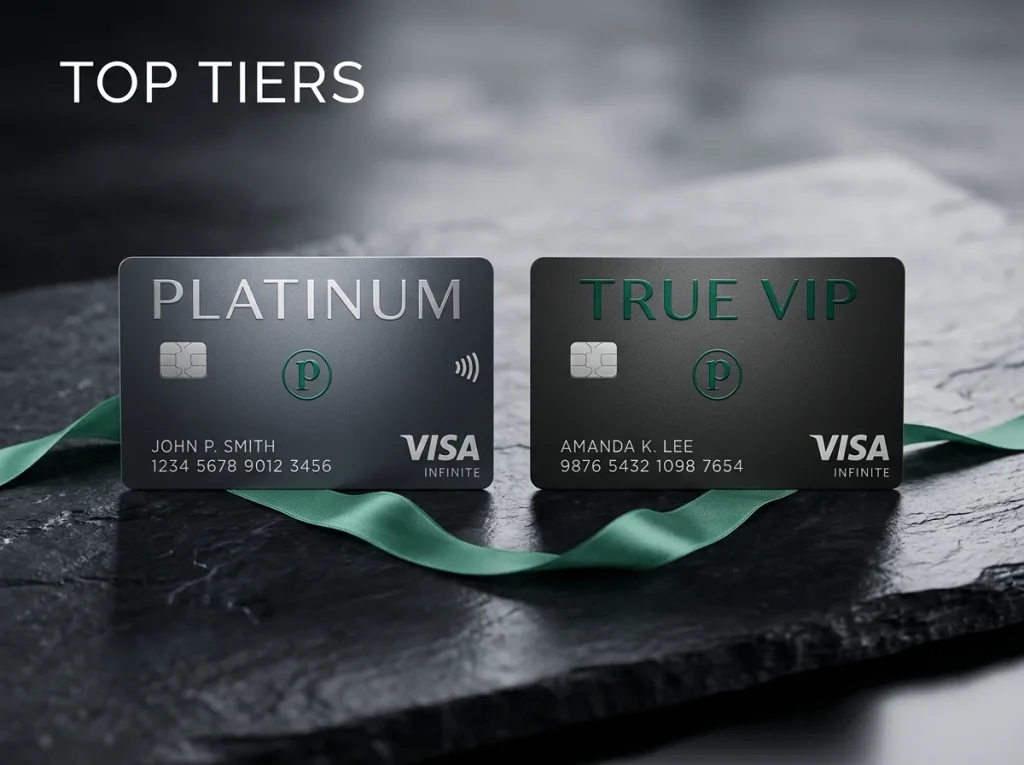
VIP Tier Access: Achieving Platinum and True VIP Status
I work with maybe a dozen clients across any given year for whom Platinum or True VIP genuinely makes financial sense. Almost everyone else stops at Gold, and rightly so. The top two Payz tiers exist for a specific user — high monthly cross-currency volumes, sustained over time, with the patience to sit through enhanced source-of-funds checks on both the wallet and the casino sides. If that isn’t you, stop reading here and stay at Gold.
What's inside this guide
For the small group it does fit, the maths is straightforward and the casino-side consequences are not. Platinum drops the FX rate to 1.25%, True VIP keeps the same rate but unlocks further bespoke arrangements. The pinch points at this tier aren’t the wallet fees — they’re the AML and source-of-funds workflows that activate the moment your deposits at any UKGC-licensed operator start running into five figures monthly. This piece walks through how to reach these tiers, what they unlock, and why the regulatory friction at this end of the volume curve is the real story.
How you actually reach Platinum or True VIP
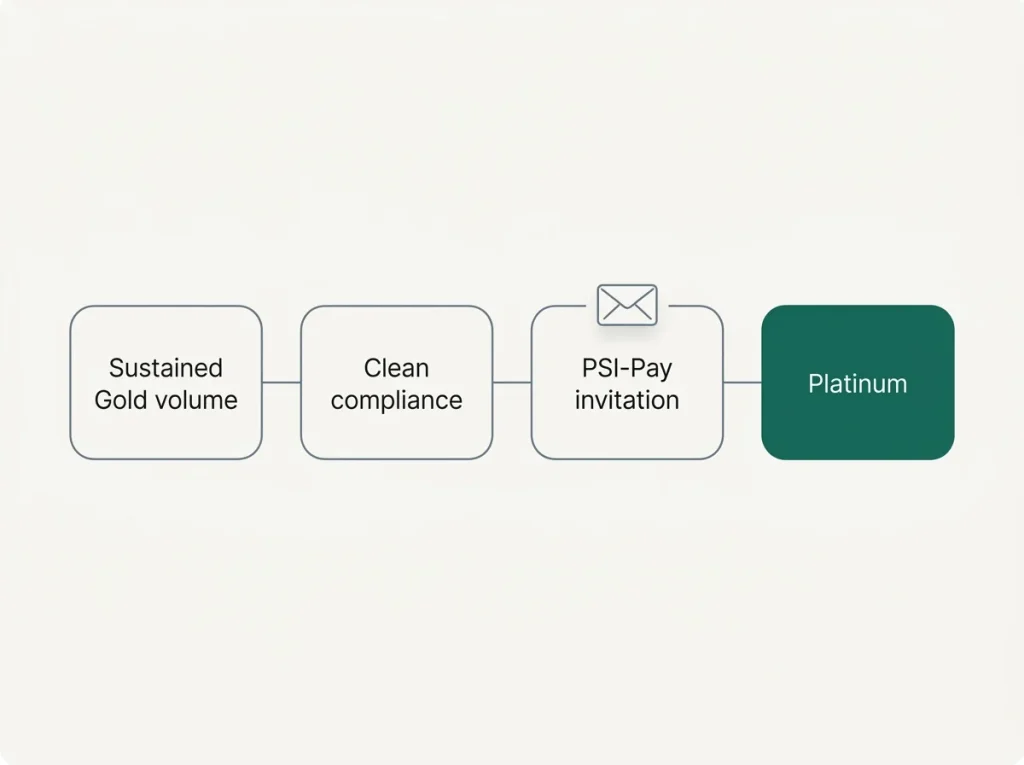
Platinum is not a self-service upgrade. You don’t click a button. There’s no checkout flow. The tier opens by invitation from PSI-Pay, triggered by sustained volume on a Gold-tier account that’s already cleared full KYC.
The general pattern: a Gold account that consistently runs above a defined monthly volume threshold, with clean compliance history (no flagged transactions, no return-to-sender deposits, no KYC reissues), eventually receives a Platinum-tier offer from PSI-Pay’s customer team. The offer arrives by email or in-app notification. Acceptance typically requires additional documentation — proof of address from multiple sources, enhanced source-of-funds documentation, sometimes a brief verification call.
True VIP sits a step further. It is not advertised publicly. PSI-Pay treats it as a relationship tier rather than a product tier. The path to True VIP is bespoke — long-standing Platinum customers with substantial sustained volume become eligible, and the upgrade conversation is initiated by PSI-Pay rather than the customer. The benefits are negotiated rather than tabled.
For a UK casino player, this means: focus on Gold first, sustain the volume the casinos see, keep your compliance history clean, and let Platinum come to you. Trying to engineer the upgrade rarely works.
Platinum versus True VIP, in practice
The two top tiers share a 1.25% FX rate. That’s where the visible similarity ends.
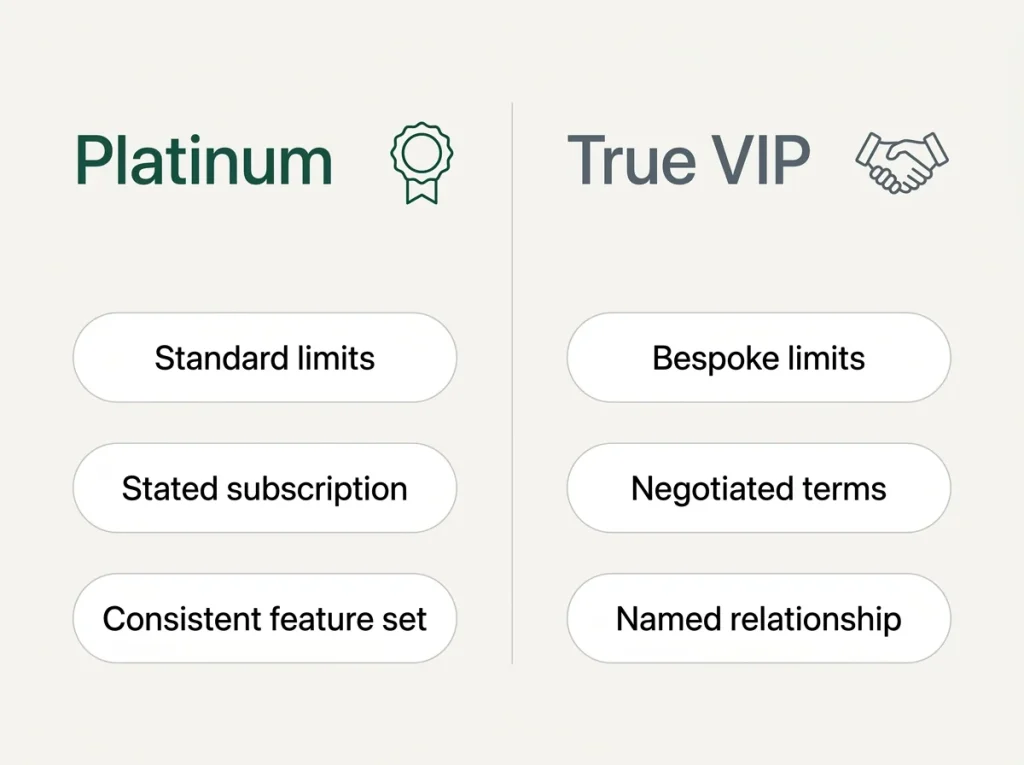
Platinum is a defined product. Limits are documented, the subscription fee is stated, the feature set is consistent across users. The Payz Mastercard at Platinum carries the highest standard limits available in the publicly listed tier structure. ATM withdrawals, daily purchase limits and cross-border transaction caps all sit at the top of the published range.
True VIP is bespoke. Limits are negotiated rather than tabled. The fee structure may differ from Platinum’s standard subscription model. PSI-Pay’s customer team treats True VIP holders as named relationships, with direct support contacts and customised handling for irregular transactions. The FX rate matches Platinum’s 1.25%, but the surrounding service envelope is different — closer to private banking than to retail e-money.
The functional decision for a casino player is rarely between Platinum and True VIP. It’s between Gold and Platinum. True VIP arrives at a volume where the question is no longer “which tier?” but “are casino operations on this scale still appropriate given UKGC enhanced-due-diligence requirements?” — and that’s a conversation that needs to happen with a compliance advisor, not a fees page.
The top-end FX arithmetic at 1.25%
Let me work the maths for the volume bands where this tier genuinely pays off, because it isn’t the place a sub-£500-monthly player wants to land.
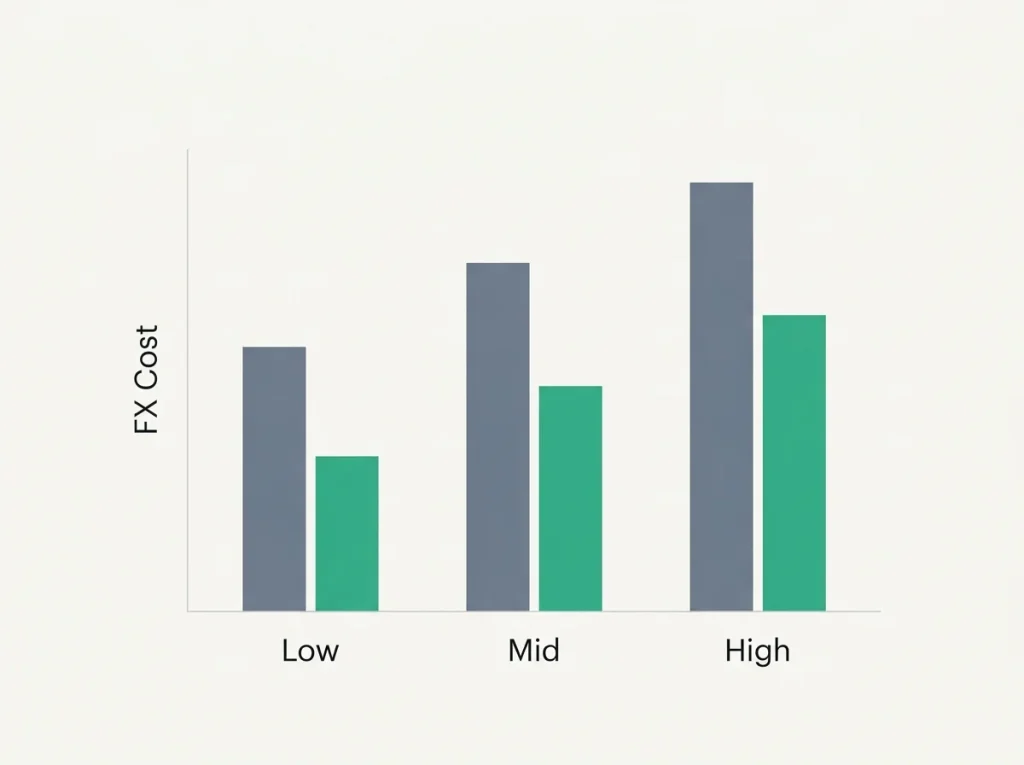
Profile one: £1,500 monthly cross-currency casino volume. At Gold (1.49%), the FX cost is about £22 per month, or £264 per year. At Platinum (1.25%), it drops to about £19 per month, £225 per year. The annual saving is roughly £39. Platinum’s subscription fee — which is higher than Gold’s — needs to be paid back from a £39 annual margin, which is tight and often loses on this profile.
Profile two: £3,000 monthly cross-currency volume. Gold costs about £45 per month, £540 per year. Platinum costs about £38 per month, £450 per year. The annual saving is around £90. The Platinum subscription has more room to fit.
Profile three: £8,000 monthly cross-currency volume. Gold costs about £120 per month, £1,440 per year. Platinum costs about £100 per month, £1,200 per year. The annual saving is £240. Comfortably above the Platinum subscription, regardless of where it’s currently set.
The break-even between Gold and Platinum sits somewhere in the £2,500 to £3,500 monthly cross-currency band, depending on the current Platinum subscription fee. Below that band, Gold remains the better tier. Above it, Platinum pulls ahead and keeps pulling. True VIP, with its bespoke pricing, doesn’t fit a generic break-even — that calculation gets done on a per-relationship basis.
Casino-side implications at this volume level
Most casino operators have separate VIP programmes of their own, with their own tier structure, dedicated hosts, and customised offers. The relationship between Payz Platinum/VIP and casino VIP status is incidental — the casino doesn’t see your Payz tier at the cashier, and tier matching across the two systems is rare.
What casinos do notice is sustained high-volume play. Once your monthly turnover at a single UKGC operator passes a threshold (typically defined internally by each casino but rarely below £3,000 a month), several things change. The casino assigns a VIP host. Withdrawal SLAs improve. Bonus offers move from generic to bespoke. And — critically — enhanced source-of-funds documentation requirements activate.
That last point matters more at Platinum/VIP than at any lower tier, because the volume that justifies Payz Platinum sits above the volume that triggers most casinos’ enhanced KYC band. UK Gambling Commission enforcement actions over the May to December 2025 period totalled over £50 million in AML-related fines across the industry — the regulator is actively watching this band. Operators have responded with substantially stricter source-of-funds workflows on high-volume accounts.
For a Platinum/VIP-tier player, the expectation should be: be prepared to document income, employment, savings and asset positions on request. The request will come, often more than once.

The AML attention this volume attracts
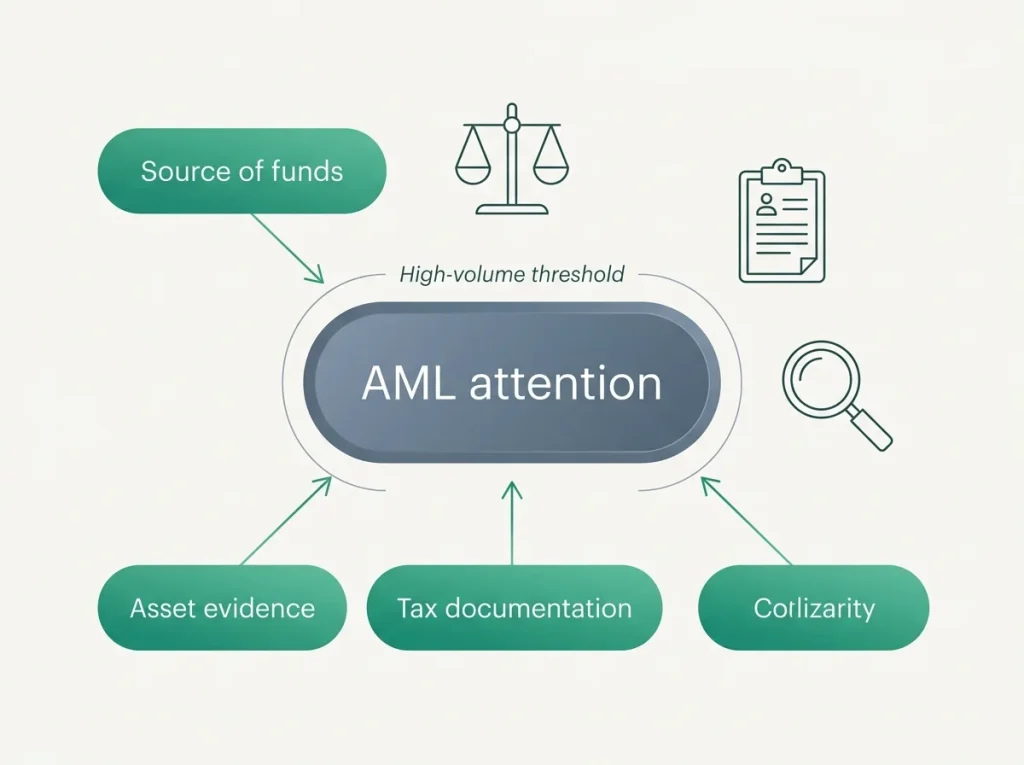
AML scrutiny at high-volume casino play has tightened sharply in 2025 and into 2026. The UKGC took regulatory action against 13 operators between May and December 2025 alone, and over £50 million in AML-related fines were paid out across the year. That enforcement pressure has reshaped how operators handle high-volume Payz accounts.
The practical effects on a Platinum/VIP Payz user: source-of-funds requests arrive earlier in the customer lifecycle, the documentary thresholds are tighter (a single payslip is no longer enough — recent statements and tax documentation are usually requested), and withdrawal holds on flagged transactions extend longer than they did even two years ago.
None of this is unique to Payz. The same scrutiny applies to high-volume play funded by any rail. What Payz Platinum/VIP does is concentrate the high volume in one wallet, which makes the casino’s risk-engine view of your account cleaner and arguably reduces the false-positive rate on AML flags. The volume itself, though, is the trigger — not the wallet behind it.
If you’re planning Platinum-band casino activity, expect the documentary burden to be substantial and recurring, and build that expectation into your timing. The wallet fees are the smaller half of the picture at this end of the volume curve. The full fee landscape, from Classic upward, is set out in detail in my complete breakdown of ecoPayz casino fees.
Is the True VIP tier above Platinum advertised, or is it strictly invitation-based?
True VIP is invitation-based. PSI-Pay doesn"t list it as a self-service upgrade option. Eligibility is built on a track record at Platinum, sustained volume and clean compliance history, and the upgrade conversation is initiated by PSI-Pay"s customer team. The benefits are bespoke rather than tabled.
Do UKGC operators apply enhanced source-of-funds checks once Platinum/VIP volumes start hitting the casino?
Yes, almost universally. The casino-side enhanced due diligence is triggered by spend volume rather than wallet tier, but Platinum/VIP volumes sit well above the standard trigger threshold. Expect to provide income evidence, asset documentation and sometimes tax paperwork on request — and expect the request to recur as a refresh cycle every six to twelve months.
ecoPayz Casino Articles: UK Market Trends and Payment Data
Prepared by the Ecopayz Casino UK editorial staff.