
Casinos That Accept Dogecoin in the UK: What to Check
 Available in GB
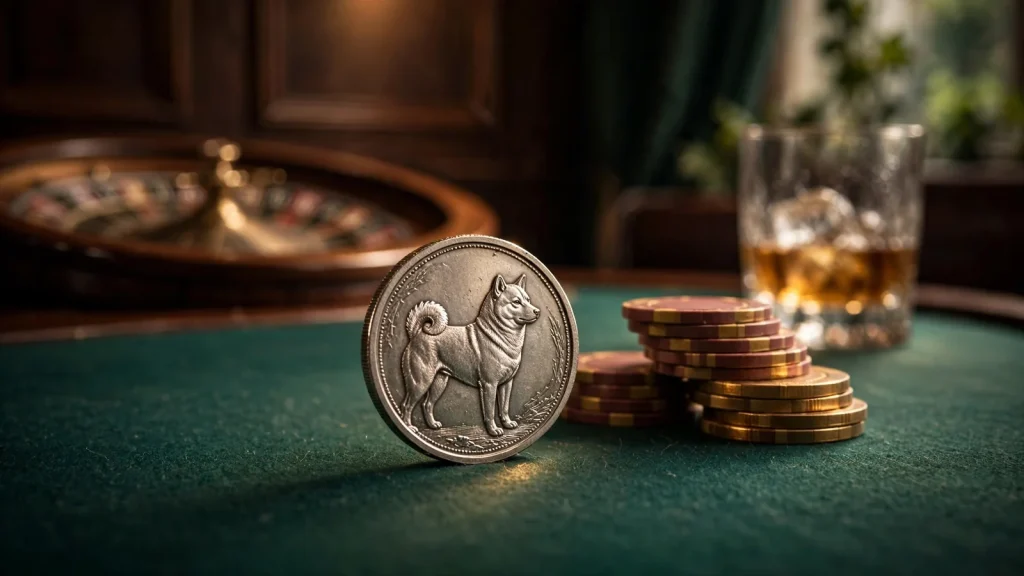
A general mention of crypto does not confirm Dogecoin support, and deposit availability may differ from withdrawal options.
What's inside this guide
Dogecoin Availability Needs Checking at the Cashier
A casino page that mentions cryptocurrency has not necessarily confirmed Dogecoin. “Crypto accepted” is a broad label: it may refer to one coin, several named coins, or a payment feature that is not available to every customer. The distinction matters. For a Dogecoin deposit, the relevant evidence is whether Dogecoin itself appears as a selectable method in the casino’s cashier for a UK account.
I treat general payment-page wording as a starting point, not a confirmation. A specialist review of casino sites has listed Visa, Mastercard, bank transfer, e-wallets and several cryptocurrencies among the methods mentioned. That describes a range of payment options; it does not establish that every site accepts every listed coin. Nor does a cryptocurrency reference identify Dogecoin unless the coin is named specifically.
The cashier is the practical check because it shows the methods offered in the account at that point. A site’s promotional page can remain broad, or describe a feature that is not enabled for a particular market. If Dogecoin is not visibly selectable after signing in, a general statement about crypto should not be read as proof that it can be used. The useful confirmation is specific: Dogecoin is listed, the account is eligible to use it, and the cashier allows the intended transaction to proceed.
Availability also has a location dimension. A casino may display a payment option somewhere on its site without making that option available to customers in the UK. The relevant question is not simply whether the operator has ever supported Dogecoin, but whether it is currently offered to a UK customer under the account conditions shown. Payment menus can change, and a review or old article may describe an earlier configuration. A name on a historic list is not a live cashier result.
I would also separate the operator’s general cryptocurrency wording from the actual coin selector. A page that says “digital currencies” does not tell the customer which assets are supported. A page that names Bitcoin does not establish support for Dogecoin; the two are distinct payment choices. The same applies to a site that lists multiple cryptocurrencies without identifying each one. A broad category cannot substitute for a named option.
Casinos That Accept Echeck in the UK: Payment Checks
For anyone assembling a list of Dogecoin casinos in the UK, that standard prevents false positives. A list should include only sites where Dogecoin is specifically identified as accepted and current UK availability can be confirmed. If the evidence stops at “crypto,” the site remains unverified for Dogecoin. That is a narrower result than an all-crypto list, but it is more useful for a decision involving a particular coin.
The word “best” can obscure the more basic question. Rankings, attractive site design or a claim of being a new crypto casino do not establish that Dogecoin is enabled. A new brand may mention digital assets while offering a different selection at the cashier; an established casino may have changed its payment menu since a review was written. The label is marketing. The selectable method is the test.
The same caution applies when looking for a casino that accepts Dogecoin on Android. A mobile-friendly site or an Android app describes how casino content is accessed, not which payment methods are available. The payment check still has to identify Dogecoin in the account cashier. Mobile access does not turn a general cryptocurrency claim into confirmation of a Dogecoin option.
I would record the exact wording and where it appears: a general statement about crypto, a list naming Dogecoin, or a live cashier option. Those are different levels of evidence. If a site names the coin but the cashier does not offer it to the UK account, the practical answer is still that current availability has not been established. If the cashier does show it, the confirmation applies to the account and moment checked; it should not be assumed to describe every customer or remain unchanged indefinitely.
This is why searches for the best Dogecoin casinos, new sites or casinos with Dogecoin deposits can produce uncertain results. A result may repeat a broad claim, rely on an old payment list or refer to a different market. None of those details settles the specific UK question. The cashier does. First the coin, then the account.
Do
- Check if Dogecoin is a selectable method in the live cashier
- Verify current availability for a UK account
- Specifically identify the coin by name
Don’t
- Rely on general “crypto accepted” labels
- Assume availability based on promotional pages
- Use historic lists or broad category mentions
Our top casino picks for the UK
- BeOnBetBonus: 100% up to €500 + 100 FS · Payout speed: 1-3 business days
- WinBeastBonus: €5000 + 500 FS + €650 Freebet · Payout speed: 1-3 business days
- NightWinBonus: £900 + 400 free spins · Payout speed: 1-3 business days
- JetsetspinsBonus: 200% Bonus + 100 Free Spins + Free Royal Wheel · Payout speed: 1-3 business days
- DieselwinBonus: Welcome Pack 250% up to £4000 + 200 FS · Payout speed: 1-3 business days
- EvoSpinBonus: 125% up to €2500 + 125 Free Spins · Payout speed: 1-3 business days
- SpinFormulaBonus: 550% Up To £15,000 + 550 FS · Payout speed: 1-3 business days
- Revery PlayBonus: 100% up to€1,000+ 100 FS · Payout speed: 1-3 business days
If Dogecoin Is Not an Option, Other Payment Routes
A casino’s payment menu can be less flexible than its games lobby suggests. When Dogecoin is not offered, the practical alternatives at UK sites are familiar: debit cards, bank transfers or open banking, prepaid vouchers and e-wallets. Each works differently, and a method’s presence at one casino does not establish that another offers it.
Debit cards
Debit cards are a common starting point. UK casinos commonly accept Visa and Mastercard debit cards, although the cashier is where current availability and the eligible card product need to be confirmed. A card branded Visa or Mastercard is not automatically suitable simply because the network logo appears on a payments page.
Credit-card payments for gambling are prohibited at UK-licensed casinos. That restriction also covers credit-card funds routed through a money service business, and a wallet cannot be used where it allows credit-card funds to be used for gambling. In practical terms, a debit card should not be confused with a credit card just because both are issued by a bank or carry the same network branding.
I have seen payment pages list card networks in broad terms, then leave the actual eligibility question to the cashier. That is not necessarily a contradiction: the brand describes the payment rail, while the specific card and transaction still have to meet the operator’s rules. A visible logo is only the first check.
Bank transfers and open banking
Bank transfers and open banking are another route. A specialist review describes these services as capable of providing instant deposits and fast withdrawals at many sites. That is a useful indication of what the route can support, not a promise about every casino or every account. The cashier’s options and the bank’s own process determine what is available in a particular case.
Casinos That Accept Litecoin in the UK
Open banking is designed to connect a payment to a bank account through an authorised flow, rather than asking for card details. A conventional bank transfer uses the bank’s transfer process. The labels can be grouped together on a casino payments page, but the route may not be identical behind the scenes. It is worth checking the named service and the instructions shown before confirming a transaction.
The practical appeal is straightforward: money moves through a bank account rather than a prepaid code or a separate e-wallet balance. The limitation is that availability can depend on the operator and the payment service. A method described as instant in one review should not be treated as a guarantee that every transfer will arrive instantly.
Prepaid vouchers
Paysafecard is a prepaid voucher used for deposits only. It can suit someone who wants to fund an account without entering card details in the casino cashier, but its deposit-only status matters: it is not a route for receiving casino funds back.
That makes the voucher different from a bank-linked method or an e-wallet. It can be convenient for a particular deposit, but it should not be mistaken for a complete payment arrangement. A player may need a separate supported route for any payout. The cashier’s description is more useful than the general label “prepaid”, which says how funds are added but not what happens later.
E-wallets
PayPal is popular for speed and convenience, though a specialist review notes that it may be excluded from bonus eligibility. That point is specific to the offer terms and payment policy in force; it should not be read as a rule for every casino. The method can be attractive for keeping casino transactions separate from a bank statement, but its appearance in the cashier does not settle promotion conditions.
Debit Cards
Commonly Visa and Mastercard; credit cards are prohibited at UK-licensed casinos.
Bank Transfers
Includes conventional transfers and open banking for instant deposits and fast withdrawals.
Prepaid Vouchers
Paysafecard is used for deposits only and cannot be used for receiving funds.
E-wallets
PayPal, Skrill, and Neteller; often subject to bonus eligibility exclusions.
Skrill and Neteller are available at some sites. A specialist review also reports that they are often excluded from promotions, so the relevant terms need to be read before a deposit is made with either wallet. The trade-off is not simply whether an e-wallet appears on a list: a promotion may define eligible payment routes separately.
Some UKGC-licensed casinos also accept Apple Pay for deposits. That gives another way to make a deposit from a compatible device, but the option is operator-specific. A mobile payment logo does not mean every casino supports it, and it does not turn a phone-based wallet into a universal substitute for a bank account or card.
In my experience, the useful distinction is between a method that can fund an account and a method that fits the whole payment arrangement, including any promotion conditions. The names look familiar. The conditions differ.
Deposit Compatibility Is Not the Same as Payout Compatibility
A payment logo beside a casino’s deposit button tells only part of the story. It does not establish that the same route can be used to withdraw, or that it is available to every UK account. I learned to treat deposit and payout compatibility as separate checks: the cashier may show one set of options when money goes in and a different set when a withdrawal is requested.
Casinos That Accept POLi in the UK: What to Check
That distinction matters when a site mentions cryptocurrency. A reference to digital coins does not confirm that Dogecoin is an active deposit method for UK customers, and a deposit option would not, by itself, prove that Dogecoin can also receive a payout. The specific coin and the transaction direction both matter. “Crypto accepted” is a broad label, not a complete payment rule.
Cards create a similar trap. A specialist review lists Visa and Mastercard among the methods shown by the sites it discusses, but that does not settle whether a particular card can be used by a UK customer now. The cashier is where current availability and card-product eligibility need to be checked. A card brand appearing in promotional material is not confirmation that every card carrying that logo will work.
There is also a legal distinction between card products. UK-licensed casinos cannot accept credit-card payments for gambling. A debit card may be a possible route, subject to the operator’s current cashier options and the product’s eligibility. The label “Visa” or “Mastercard” alone does not say whether the card is debit, whether the casino will accept it, or whether it can be used for both sides of a transaction.
The payout screen may impose a further condition even when a deposit succeeded. Casinos commonly send funds back through the payment source used to fund the account as an anti-fraud and anti-money-laundering safeguard. Where that route cannot receive a payout, the casino may direct the customer to another method and request further checks before releasing funds. A successful deposit is not a promise that the same account can receive a withdrawal without adjustment.
Attention: A successful deposit does not guarantee that the same route can be used for withdrawals or that it is available to every UK account.
For that reason, the cashier should be read as a transaction-specific menu, not a permanent list of everything a casino supports. The deposit view answers whether a method is currently offered for funding. The withdrawal view answers whether it can receive a payout under that account’s conditions. If either screen is unclear, the written payment terms can help clarify how the operator handles that method; a general page listing payment brands cannot resolve the account-level detail.
Currency is another compatibility check, separate from the coin or card itself. A specialist review says the pages it examined support GBP, but the account currency still needs confirmation before the first transaction. If the account is set to another currency, conversion may enter the transaction even where the payment method is otherwise accepted. The displayed currency and the amount that will be charged should therefore be considered together.
This is especially relevant to searches asking whether casinos still accept Dogecoin, or whether a Dogecoin deposit can be made by card. Those descriptions combine different payment routes. A card is not Dogecoin, and a casino’s support for one does not establish support for the other. The cashier needs to identify the actual method offered, the direction in which it works, and the currency attached to the account.
I would not treat a deposit confirmation as evidence of payout compatibility. Nor would I treat a general cryptocurrency claim as proof that Dogecoin is available. Check the method on both transaction screens and confirm the account currency before funding. Small distinction. Big consequence.
Mobile Slots Do Not Confirm a Mobile Dogecoin Payment
A casino page can present slots on a phone without establishing that Dogecoin is available as a way to fund an account. These are separate parts of the service: the games describe what can be accessed on a mobile device; the payment options describe what the operator accepts. One does not prove the other.
Casinos That Accept USDC in the UK: Payment Evidence
I have seen the distinction get blurred in promotional wording. A page may put “mobile” beside “crypto” and leave the impression that the whole experience, including a particular coin, is supported on a phone. That wording is not confirmation. A mobile layout, a playable slot lobby or a general reference to cryptocurrency cannot establish that Dogecoin is offered to UK customers.
The practical check is specific to both the operator and the payment route. The presence of slots on a mobile browser does not tell whether Dogecoin appears as an available option for that account. Nor does a payment option shown on a desktop page necessarily establish that the same option is available in the mobile journey. The interface may differ, but the relevant point is whether the operator currently makes that coin available to the customer.
Keep the claims separate. “Mobile slots” is about access to games from a phone or tablet. “Dogecoin payment” is about an account funding method. A casino can satisfy the first description without satisfying the second. Conversely, a reference to Dogecoin somewhere on a site does not show that its mobile slots can be funded with it.
The wording “Dogecoin mobile slots” can therefore describe two different expectations: slots that work on a mobile device, or slots at a casino that accepts Dogecoin. Those expectations should not be treated as interchangeable. A mobile-friendly design is not a payment feature. No shortcut there.
There is also a difference between a polished mobile page and a legitimate UK gambling service. For real-money gambling in Great Britain, the operator must hold the relevant UK Gambling Commission licence. Appearance on a phone, an app-like layout or a cryptocurrency label does not demonstrate that status. The licence question and the payment question remain distinct checks.
For real-money gambling in Great Britain, the operator must hold the relevant UK Gambling Commission licence, regardless of mobile layout or payment labels.
When assessing a mobile casino, the useful evidence is not the number of games visible or how smoothly the lobby loads. It is whether the operator identifies Dogecoin as an available payment method for UK customers in the account’s current payment flow. If that information is not clear, the mobile-slot experience cannot fill the gap.
That is the boundary. Slots on a phone confirm access to slots—not Dogecoin acceptance.
Real-Money Slot Claims Need a Payment Check
“Real-money slots” describes how a game is played: stakes are placed using money in a casino account, and winnings may have monetary value. It does not describe how that account is funded. A page can offer real-money slot play without accepting Dogecoin, just as a game catalogue can mention cryptocurrency without confirming that Dogecoin is available to UK customers.
I have seen those two ideas run together in promotional wording. The distinction matters. A search for slots that can be played for money with Dogecoin is really asking about two separate things: whether the casino offers real-money slot play, and whether its payment arrangements accept Dogecoin. Evidence for one does not establish the other.
The same applies to a named slot or a general claim about a casino’s games. A real-money label attached to a game tells nothing about the coin options at account level. Nor does a casino’s cryptocurrency language establish that a particular slot can be funded directly with Dogecoin. The game uses the balance held in the account; the payment route is a separate part of the service.
Casinos That Accept iDEAL in the UK: What to Check
That is why phrases such as “Dogecoin slots” need careful reading. They may refer to slots at a casino that advertises cryptocurrency, rather than games built specifically for Dogecoin or a confirmed Dogecoin payment route. I would treat the phrase as a description of the search topic, not as proof of how the transaction works. Marketing shorthand is not a cashier record.
“Free” and “real money” also point in different directions. Free play may let someone try a game without staking cash, but it does not show that a real-money account can be funded with Dogecoin. A claim about no-deposit play is not proof of a Dogecoin deposit option either. The terms attached to any free-play offer would need separate scrutiny; the wording alone cannot settle what can be withdrawn or how an account is funded.
For UK players, real-money gambling belongs with remote gambling licensees holding the relevant UK Gambling Commission licence. That status concerns the operator’s permission to provide gambling in the market. It does not certify a particular cryptocurrency, game, or payment feature. Those are separate claims and should not be collapsed into one.
Specific slot recommendations would be misleading without reliable confirmation of the games and their payment context. A slot title cannot verify an account’s Dogecoin support, and a casino review cannot turn a general crypto reference into confirmation of a particular coin. The useful distinction is simple: real-money play concerns the game and account balance; Dogecoin acceptance concerns the funding route. Both need to be established independently.
Real-Money Slots
Real-money play concerns the game and account balance, while Dogecoin acceptance concerns the funding route; both must be verified independently.
Deposits, Withdrawals and the Original Payment Source
A deposit and a withdrawal are not always two independent transactions. In a casino’s payment records, the route used to fund an account can determine how a later payout is handled. UK anti-money laundering rules generally require winnings or returned funds to go back to the original payment source. This is a control against moving money through an account in a way that obscures who supplied it or where it went.
That is why a Dogecoin deposit does not, by itself, establish that a casino will send a withdrawal directly in Dogecoin. The payment route may be subject to the operator’s closed-loop rules, and the operator may need to confirm that the destination belongs to the same customer. Where a different route is proposed, additional checks can be required. A promise of a “direct withdrawal” is not a substitute for the operator’s stated process.
In practice, the cleanest record is often one payment account used consistently for deposits and withdrawals. The name and ownership details on the casino account and payment account should match. Using someone else’s account can create avoidable questions, even if the transfer itself appears to have gone through. That is an administrative issue, not a judgement about the customer.
KYC can also affect when a withdrawal is released. An operator may need to complete identity and account checks before approving a payout, and a first withdrawal can take longer while those checks are completed. A specialist review describes this as a possible cause of delay; it is not a fixed timetable that applies to every casino or account. The payment itself is only one part of the process. Internal approval matters too.
Casinos That Accept Monzo in the UK: Payment Guide
I have seen the distinction get lost in promotional wording: a deposit appears instantly, so the player expects the reverse transaction to behave the same way. It may not. A completed deposit confirms that funds reached the casino; it does not confirm that a withdrawal has been approved or that it will return by an identical route.
Searches for Dogecoin debit fast withdrawals, instant banking, or Dogecoin slots can blur these separate steps. A debit-card payment is not a credit-card payment: UK-licensed casinos cannot accept credit-card payments for gambling. Nor does a casino’s use of “instant” for one part of a transaction settle the withdrawal process.
Dogecoin has not simply “closed” in the UK as a payment category. What matters for a particular account is the operator’s handling of the deposit source, withdrawal destination and verification. Same owner. Clear records.
A Welcome Bonus Does Not Make a Payment Method Bonus-Eligible
A casino can advertise a welcome bonus while excluding the payment method used to fund the account. Those are separate conditions: the promotion describes an offer, while its terms decide which deposits count towards it. A banner or bonus-code page does not settle that point.
I have seen this distinction cause confusion at the cashier. The deposit can go through, yet the transaction may not qualify for a promotion. The wording may sit in the bonus terms rather than beside the payment button, so the two parts of the offer are easy to read as one when they are not.
A specialist review has reported that PayPal may be excluded from bonus eligibility. That is a report about a particular source and can change with an operator’s terms; it is not a rule for every casino. Specialist reviews have also reported that Skrill and Neteller are often excluded from promotions, though availability and eligibility can differ between sites and offers.
Why bonuses may not apply
A welcome bonus is a general offer, but its specific terms decide which payment methods are eligible. Some e-wallets like PayPal, Skrill, and Neteller are frequently excluded from promotions.
That matters for searches for a Dogecoin casino welcome bonus, a slots bonus code, or a no-deposit bonus. None of those labels confirms that Dogecoin deposits qualify. Nor does the presence of Dogecoin among a site’s payment options establish a Dogecoin-specific offer. The promotion’s own terms need to name eligible payment methods or set out an exclusion that can be checked.
“No deposit” is especially easy to misread. It describes the basis of an offer, not a promise that every account or payment route is eligible. A bonus code is similarly only a way to claim an offer where its conditions are met. The label does not override those conditions.
I treat the cashier and the promotion terms as two separate checks. First, the payment option must be available for the account; then the offer must permit that method. If the terms are unclear, the operator’s support team can clarify whether a particular deposit qualifies before the offer is activated. A credited deposit is not proof that a bonus has been attached.
The distinction is plain, but the advertising often compresses it. “Welcome bonus” sells the offer; eligibility rules determine who can use it. The small print decides.
Minimum Deposits and Limits Are Set by Method and Account
A deposit threshold is not a property of a casino in isolation. It is set against the payment route and the account, so a figure shown for one method should not be carried over to another. A specialist review reports minimum deposits in the £10–£20 range, with the amount depending on the selected method. That is a broad guide from that type of source, not a Dogecoin minimum or a promise that every cashier offers those thresholds.
Casinos That Accept Solana in the UK: What’s Verified
The same distinction matters when a search mentions a £5 Dogecoin deposit. A number attached to one route does not establish the entry amount for another, and a mobile or instant-payment label says nothing by itself about the minimum. The cashier’s displayed amount is the useful figure for the selected account and method. I have seen advertised payment labels create a false sense that all the terms travel together. They do not.
Limits above the minimum are separate controls. A specialist review describes maximum deposits as varying by transaction, day and month, with account status also affecting what applies. These are not interchangeable ceilings: a transaction cap concerns one payment, while daily and monthly controls govern accumulated activity. The account can therefore be subject to a different boundary from the one suggested by a single deposit screen.
There is also a player-set control, distinct from a payment provider’s ceiling. UK rules require remote operators to ask new customers to choose a financial limit before they make their first deposit, and to make account-level limit controls accessible. That limit is part of the account’s spending controls; it should not be mistaken for the method’s own deposit maximum.
In practice, the amount that can be entered depends on several layers: the cashier’s current minimum, the selected route’s limits and the account’s controls. A remembered figure, or one copied from a different method, is not enough. Check the amounts presented for that account before committing to a transaction. No transferable figure.
Check Deposit Limits
- Verify the current minimum deposit in the cashier
- Check the specific limits for the selected payment route
- Confirm the account-level financial limit controls
- Verify the final amount after currency conversion
Comparing the Cost of Dogecoin Alternatives
The cheapest-looking payment route is not necessarily the one that leaves the most value in a casino account. I learned to separate the visible charge from the full cost: a casino fee, a payment provider’s charge, an issuer or bank fee, currency conversion and, where relevant, a network fee can all affect the final amount. The combination depends on the route and transaction.
A specialist payment-cost review points out that exchange-rate spread can be less visible than a flat charge. A provider may show no separate conversion fee while applying a rate that is less favourable than the reference rate. That difference is still a cost. For a Dogecoin deposit alternative, the useful comparison is therefore not just “fee or no fee”; it is how much arrives after all deductions and any conversion.
The same arithmetic applies when a cryptocurrency route is being considered. Network costs may form part of the transaction, but they should not be assumed to be fixed or identical across routes. A quoted amount before conversion is not necessarily the amount credited in the account. The cashier’s displayed terms and the provider’s quoted rate are the practical figures to compare.
For a conventional payment route, costs may sit with the casino, the payment provider, the bank or card issuer, or the currency conversion. One route may have no visible charge at the casino while another cost appears outside it. A transfer involving currency conversion can also produce a different total from a payment settled directly in the account’s currency.
I do not treat “free” as a complete price. It may describe only one layer. The better comparison uses the same intended deposit amount and checks the casino charge, provider charge, exchange rate and any network cost together. There is no universal lowest-fee method: the result changes with the amount and the route selected. That is the only fair basis for comparing a Dogecoin alternative.
Casinos That Accept Boku in the UK: What to Check
A low headline charge can still produce a higher total if the conversion rate is poor; a visible flat fee can be cheaper overall. The relevant question is what the payment costs end to end, not which label looks cleanest. Compare the final value credited.
Dogecoin and GamStop Status Are Separate Checks
A casino described as outside GamStop is not thereby shown to accept Dogecoin. Nor does a Dogecoin payment option establish anything about a site’s GamStop status. These are separate characteristics, and combining them in a description does not make either claim more reliable.
I treat the two labels as separate checks. GamStop concerns self-exclusion: whether a gambling service participates in the scheme. Dogecoin concerns the payment options the casino makes available. A site can be discussed in connection with one without that saying anything about the other. “Dogecoin slots” is also loose wording: a slot game does not itself take a deposit. Payment acceptance is an account and cashier matter.
The legal distinction matters more than the label. Remote gambling licensees serving customers in Great Britain must hold the relevant UK Gambling Commission licence, wherever the operator is based. A casino outside the UKGC system is not a UK-licensed casino. Being described as not connected to GamStop does not change that regulatory position, and a cryptocurrency option does not change it either. The Gambling Act 2005 applies in England, Wales and Scotland; Northern Ireland has a different legal framework.
In practice, a combined claim such as “not on GamStop and accepts Dogecoin” needs two independent confirmations, not one promotional badge or a third-party description. GamStop status should be understood on its own terms, while Dogecoin acceptance needs to be confirmed as a current option for the relevant UK account. A broad statement that a casino accepts cryptocurrency is not proof that Dogecoin is included.
I have seen labels do too much work: one phrase can imply a payment feature, a scheme status and a regulatory position, although those are not interchangeable. For UK customers, the decisive legal check is whether the operator holds the appropriate UKGC licence. A “non-GamStop” description is not a substitute for it.
Separate claims. Separate checks.
What is the fastest withdrawal method for UK casinos?
PayPal, open banking and debit cards linked to fast payout systems are generally among the quickest options. The casino’s approval process and your verification status also affect how quickly funds arrive.
Is Skrill available?
Yes, Skrill is available at some UK-friendly casino sites and remains a common deposit method. It may be excluded from promotions.
Which method has the lowest fees?
There is no universally cheapest method: costs can include casino and provider fees, bank or issuer charges, exchange-rate spreads and network fees. Compare the total cost for your payment amount, including any currency conversion.
Are Visa and Mastercard deposits definitely debit cards?
No. The Visa or Mastercard logo does not confirm that a particular card product is eligible; check the cashier and use an accepted debit card.
Payments
Written by the editors at Ecopayz Casino UK.