
Casinos That Accept Google Pay in the UK: Payment Checks
 Available in GB
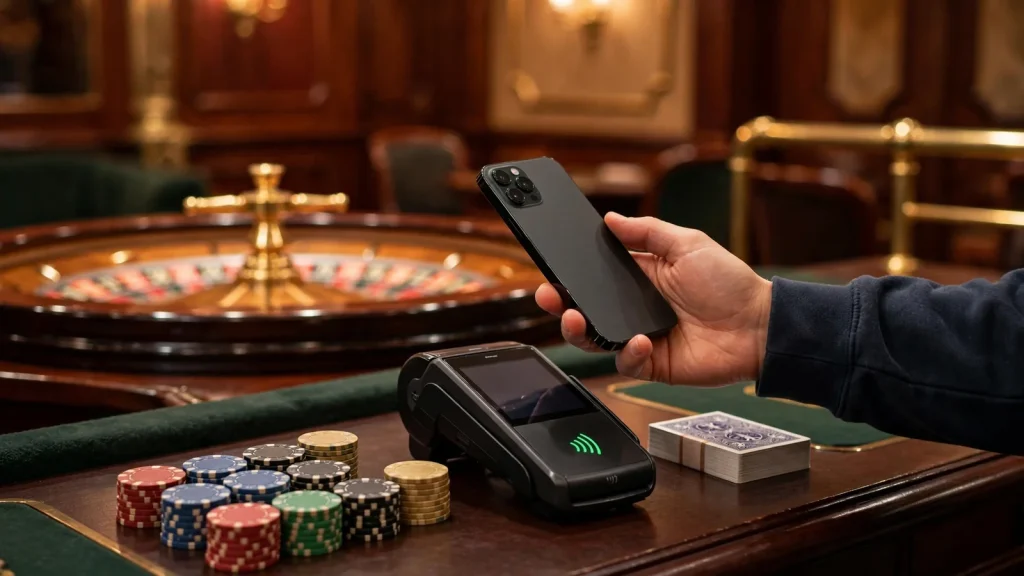
Google Pay availability is transaction-specific, while deposit limits, bonus eligibility and payout timing depend on separate terms.
What's inside this guide
Google Pay Availability Is a Cashier Question, Not a Guaranteed Feature
A casino’s general payment page cannot establish that Google Pay is available for a particular deposit. The practical test is whether Google Pay appears as a selectable option in that casino’s cashier when a deposit is being prepared. If it is not shown there, a reference to cards elsewhere on the site does not fill the gap.
That distinction matters because a payment list and a working cashier answer different questions. A list may describe methods the operator supports in some form; the cashier shows the options presented for the transaction at hand. I treat the first as an indication to investigate, not as confirmation that a specific wallet can be used. A logo or a broad phrase such as “card payments” is not the same thing as a Google Pay selection.
The difference is especially easy to miss when a site names Visa or Mastercard. A specialist review of casino payment options lists those card brands, but that does not confirm Google Pay availability. Nor does it establish that every card product is eligible in the UK. Current card availability and product eligibility need to be checked in the cashier itself. Google Pay should be checked there separately rather than inferred from the presence of a card logo.
Casinos That Accept Monzo in the UK: Payment Guide
For anyone comparing casinos that accept Google Pay in the UK, that makes a published list a starting point rather than a guarantee. Payment information can become outdated, and a site’s general description may not specify whether Google Pay is among the options actually presented for a deposit. A claim that a casino accepts cards therefore cannot be upgraded into a claim that it accepts Google Pay. The two statements are not interchangeable.
I would separate three things when assessing a payment claim: what a site says in its general information, what the cashier displays, and what the deposit screen allows before a transaction is submitted. The second is more useful than the first for confirming availability; the final step makes clear whether the method can be selected for that transaction. There is no need to deposit merely to test a claim. If Google Pay is not shown as an option, the claim has not been confirmed in the place that matters.
Casinos That Accept iDEAL in the UK: What to Check
This is also why a search for Android casinos using Google Pay can produce a misleading impression. A site being usable on an Android device says nothing by itself about which payment methods its cashier offers. Device compatibility and payment acceptance are separate questions. The same applies to claims about new casinos: being newly promoted does not establish that Google Pay is available, and a new site’s payment information still needs to be checked against its live cashier.
The word “best” can obscure the basic test. A site may be described as one of the best Google Pay casinos, or promoted alongside games or bonuses, but those labels do not verify the deposit route. Before relying on such a description, the relevant detail is whether Google Pay appears as a payment choice in the cashier. That check is more concrete than a ranking, a general payment badge or a headline that groups several payment types together.
Availability should be treated as a current, specific fact—not as a permanent feature inferred from a casino’s wider payment offering. If the cashier names only card brands, that is evidence about the options it displays, not proof of Google Pay support. If Google Pay is explicitly listed as a selectable deposit method, the claim has a firmer basis. If the information is unclear, it remains unclear; it should not be rounded up to a yes.
That is the useful boundary for this topic. The broad label “card” does not settle the question, and a casino’s appearance on a list does not settle it either. The cashier does. Check the named method there, before submitting a deposit. No assumption required.
Our top casino picks for the UK
- BeOnBetBonus: 100% up to €500 + 100 FS · Payout speed: 1-3 business days
- WinBeastBonus: €5000 + 500 FS + €650 Freebet · Payout speed: 1-3 business days
- NightWinBonus: £900 + 400 free spins · Payout speed: 1-3 business days
- JetsetspinsBonus: 200% Bonus + 100 Free Spins + Free Royal Wheel · Payout speed: 1-3 business days
- DieselwinBonus: Welcome Pack 250% up to £4000 + 200 FS · Payout speed: 1-3 business days
- EvoSpinBonus: 125% up to €2500 + 125 Free Spins · Payout speed: 1-3 business days
- SpinFormulaBonus: 550% Up To £15,000 + 550 FS · Payout speed: 1-3 business days
- Revery PlayBonus: 100% up to€1,000+ 100 FS · Payout speed: 1-3 business days
When Google Pay Is Not Offered, Other Deposit Routes Work Differently
A missing Google Pay button does not leave one standard replacement. UK casino cashiers may offer a mix of debit cards, bank-based payments, digital wallets and prepaid vouchers, and each route handles the account differently. The useful comparison is not which method sounds most like a phone wallet, but what it can do at that particular site.
Debit Cards
Commonly accepted Visa and Mastercard options; funds go through the card issuer and details must match the account holder.
PayPal
An account-based option used for speed and convenience, allowing transactions without entering card details directly.
Open Banking & Transfers
Connects directly to a bank account and can provide instant deposits and fast withdrawals at many sites.
Paysafecard
A prepaid voucher used exclusively for deposits and not for receiving funds back.
Debit cards are the familiar starting point. UK casinos commonly accept Visa and Mastercard debit cards, although the cashier determines which options are available for a given account. A card payment goes through the card issuer rather than a separate casino wallet, so the name and payment details need to match the account holder. That is a straightforward route, but the presence of a Visa or Mastercard logo on a site does not establish that every card product will work.
PayPal is a separate account-based option. A specialist review describes it as popular for speed and convenience, but that does not make it available at every casino or suitable for every promotion. Its practical appeal is that the casino transaction can be made through the PayPal account rather than by entering card details directly into the cashier. The trade-off is that the casino’s own payment and offer terms still govern how the account can be used.
Open banking and bank transfers connect the transaction to a bank account, though the process depends on the service and the cashier’s setup. A specialist review reports that these routes can provide instant deposits and fast withdrawals at many sites. That is a description of some site offerings, not a promise about every operator or transaction. Bank transfers may also involve a different flow from a one-step card payment: the customer authorises a bank payment, and the casino receives it through the service or transfer route it supports.
Casinos That Accept Apple Pay in the UK
Paysafecard works differently again. It is a prepaid voucher, and its role is deposit-only. That makes it distinct from a bank account or wallet that may be used across more than one stage of an account transaction. It should not be treated as a route for receiving casino funds back.
Skrill and Neteller are digital wallets found at some casino sites. A specialist review reports that both are often excluded from promotions, but terms can differ by operator and offer. Their appearance in a cashier should not be read as confirmation that the same wallet can also receive withdrawals; that needs to be checked separately. The payment route is only one part of the arrangement.
I treat each cashier entry as a specific route, not as proof that a brand supports every possible transaction. A method can appear on a deposit screen while the withdrawal process follows different rules. For bank-based services, cards and wallets alike, the relevant question is what the operator permits for that account and whether the payment account belongs to the same person. Matching ownership details reduces avoidable friction over a transaction.
There is also a difference between an electronic wallet and a mobile payment layer. A wallet’s name in the cashier does not mean it works like Google Pay, and a familiar card brand does not establish that a mobile wallet can be used through it. The payment provider, the casino integration and the account’s own eligibility all matter. A method may therefore be a viable deposit route without being a direct substitute in the technical sense.
Do
- Check the live cashier for available methods
- Review operator terms for restrictions
- Match payment account ownership to the casino account
Don’t
- Rely on a list of logos alone
- Assume a card logo guarantees mobile wallet support
- Treat different payment mechanisms as interchangeable
I would not choose from a list of logos alone. The cashier is where the available deposit methods are shown for the account, while the operator’s terms explain any restrictions on use. The route with the fewest steps may be a card for one customer and a bank-based payment for another; a prepaid voucher may suit someone who wants a deposit-only instrument, but it cannot perform the same job as a method that supports returning funds.
The broad map is simple: cards link the payment to a debit account; PayPal, Skrill and Neteller use separate wallet accounts; open banking and bank transfers rely on bank authorisation or transfer; Paysafecard is deposit-only. These are different mechanisms, not interchangeable labels. Check the cashier and the method’s own conditions before treating any one of them as the replacement for Google Pay.
Deposit Minimums and Promotions Are Separate Conditions
A Google Pay button, a minimum deposit and a promotional offer are three separate terms. Seeing a payment option in a casino’s cashier does not establish the amount needed for a deposit, and meeting that amount does not automatically qualify a deposit for a promotion. I keep those checks separate because they answer different questions: what can be used to pay, how much the transaction must be, and whether the offer applies.
The cashier is where the transaction threshold becomes concrete. A casino may show a payment route but set a different minimum for it than for another route. The figure displayed for a deposit can also depend on the account’s status. A general payment page, or an old description elsewhere on the site, is not a substitute for the amount currently shown in the cashier.
Casinos That Accept Giropay in the UK: What to Check
A specialist review gives a broad indication that casino minimum deposits may fall within £10–£20, with the payment method affecting the figure. That is a guide from a review, not a universal tariff or a promise about a particular account. The cashier’s current terms are more relevant to an actual transaction. Maximum deposits can vary too, whether the operator sets them per transaction, per day or per month, and account status may also matter. The minimum alone does not describe the full deposit range.
A threshold is not a promotion condition
Promotional wording can make these distinctions easy to miss. “No minimum deposit” may describe the offer’s entry requirement, but it does not prove that every payment method is available or that a particular transaction will be accepted at any amount. The cashier still governs the payment options and transaction minimums.
Likewise, a deposit that meets the cashier’s minimum is not necessarily a qualifying deposit for a bonus. The offer’s own terms determine whether the payment route is eligible and what other conditions apply. A displayed promotion and a successful deposit are not, by themselves, evidence that the offer has been attached to the account.
The same applies to “no deposit” or “no wagering” language. Those phrases describe a promotional claim, not a payment method or a guarantee that an offer is available to every account. The relevant terms still need to be read alongside the cashier information. I have seen the wording treated as if it settled the whole transaction; it does not. Different conditions.
Meeting the cashier’s minimum deposit amount does not automatically qualify a deposit for a promotion; the offer’s own terms determine eligibility.
PayPal illustrates why the payment and offer checks cannot be collapsed into one. A specialist review describes PayPal as popular for speed and convenience while noting that it may be excluded from bonus eligibility. That is a reported possibility, not a rule for every casino or promotion. The terms attached to the specific offer are what decide the point.
For a Google Pay deposit, the same logic applies if the option appears in the cashier: its presence would establish a route to attempt a deposit, not the relevant minimum or promotional status. The amount and offer conditions need separate confirmation. A site’s general list of payment brands cannot settle either question for an individual transaction.
In practice, the clean reading order is straightforward: check which methods the cashier currently presents, note the minimum shown for the chosen method, then read the promotion’s payment and eligibility terms independently. If the offer is important to the decision, its status should be clear before the deposit is made; a qualifying amount should not be inferred from a headline. That separation prevents a common misunderstanding: a payment can go through without the promotion applying, and an attractive offer can have conditions that the payment screen does not explain.
Mobile Slots Do Not Depend on a Particular Wallet
A slot game and a payment method do different jobs. The game is part of the casino’s offering; the payment option is part of its cashier. On a phone, those two systems may sit behind the same account, but one does not determine the other. A casino accepting Google Pay would not, by that fact alone, have a distinct catalogue of Google Pay slots.
Casinos That Accept AstroPay in the UK
I keep those checks separate. First comes access to the casino’s mobile site or app and the games it makes available there. Then comes the account’s funding route, which must be visible as an option in the cashier. Searching for real-money mobile slots that can be funded with Google Pay combines those questions; it does not establish that every game works with that wallet, or that a particular game requires it.
That distinction matters when a page uses labels such as “Google Pay slots”. The wording may describe a payment route associated with a casino, not a special version of a slot or a separate game library. The practical question is whether the desired game is available on the casino’s mobile platform and, separately, whether Google Pay is offered for the account. Neither answer can safely be inferred from the other.
Free play is a different case again. A slot available in a free-play mode is not thereby a Google Pay game: no real-money deposit is needed to access that mode. Conversely, a game being offered for real-money play does not show that Google Pay can fund the account. The game’s availability and the cashier’s options need their own checks.
There is also a UK rule that affects how mobile slots operate, regardless of the wallet used. Online slots cannot autoplay in Britain, and each spin must last at least 2.5 seconds. A mobile interface may make the controls easier to reach, but it cannot remove those requirements. That is a game-play rule, not a payment condition.
Casino Payments: Deposits, Withdrawals and Methods
I have seen the two sides blurred in promotional wording. “Mobile-ready” describes access; “Google Pay accepted” describes a cashier option. Neither phrase promises a particular slot catalogue, nor does either change the rules for spins. Separate claims. Separate checks.
Real-Money Play: A Fast Deposit Is Not a Fast Payout
A payment that reaches a casino account quickly does not set the pace for a later withdrawal. These are separate transactions, with different checks and different points at which processing can pause. I have seen “instant” used as if it described the whole money journey. It describes, at most, one stage.
A specialist review reports that a card deposit can be credited instantly, while a payout may take several business days. That comparison is useful as a warning, not a promise about every casino or payment route. A deposit confirms that funds have reached the account for play; a withdrawal request starts a process in which the casino must approve the payment before it is sent out.
The casino’s approval is part of the withdrawal timeline. A specialist review notes that processing can take longer on a first withdrawal while verification is completed. The same review identifies the operator’s internal approval process and the account’s verification status as factors in payout speed. A request marked as submitted is therefore not necessarily a payment already on its way to the bank or payment account.
This matters when assessing claims about playing slots for real money through a particular wallet. The deposit option shown in a cashier does not establish how quickly a withdrawal will be handled, or whether the same route will be used for the return payment. Real-money play and access to a balance are not the same thing as immediate access to winnings.
Casinos That Accept Entropay in the UK: What to Check
For UK players, the clearest expectation is procedural: an account may need to pass verification, and the operator’s review happens before the payment is released. That can make the first payout slower than a later one, even where the initial deposit felt almost immediate. There is no single timeline that can be inferred from the word “fast” on a payment page.
I treat a deposit speed claim and a withdrawal estimate as separate statements. The first concerns money entering the casino account; the second concerns approval and delivery after a withdrawal request. If a site gives a payout estimate, its terms should be read for the stages it includes. A displayed processing time may not describe the whole route from request to receipt.
For any UK real-money casino, the account also has to be verified before the operator can be confident about who is requesting payment. That is a control, not a feature of the wallet or the slot game. Fast funding does not bypass it.
The distinction is simple. Deposit speed is not payout speed.
Card Deposits, Credit-Card Restrictions and Returning Funds
Debit cards remain a familiar way to fund a UK casino account: Visa and Mastercard debit cards are commonly accepted. That does not mean every card carrying either logo will work in every cashier. The card product and the operator’s payment rules matter, so a general card logo is not confirmation that a particular transaction is available.
Credit Card Ban
Remote gambling licensees in the UK are prohibited from accepting credit cards for gambling, including funding routed through wallets.
Google Pay adds another distinction. A payment made through a digital wallet is not a way around the UK restriction on credit-card payments for gambling. The regulator introduced the ban on 14 April 2020, and it remains in force. Remote gambling licensees cannot take credit-card payments for gambling, including credit-card funding routed through a money service business. They also cannot accept wallet payments where the wallet permits credit-card funds to be used for gambling.
The practical point is to distinguish the underlying funding source from the button or wallet used at checkout. A debit card and a credit card are not interchangeable simply because both can be linked to a payment service. A Google Pay option, if displayed, should not be read as permission to fund gambling with a credit card. Keep the transaction within the permitted funding route. No workaround.
Deposits and withdrawals also follow different controls. Anti-money laundering rules generally require a casino to return funds to the original payment source. That closed-loop approach helps establish where money came from and where it is being sent; it is not a promise that every payment method supports withdrawals in the same way. A card used to deposit may therefore be relevant to the withdrawal route, while the casino may need to use another permitted method if the original route cannot receive a payout.
This is why “direct withdrawal” through the same wallet or card should not be assumed from the fact that a deposit was accepted. The cashier’s withdrawal instructions and the operator’s terms determine the available route. Account details and payment details belonging to the same customer can reduce avoidable ownership checks, but they do not remove KYC or other verification requirements.
Casinos That Accept Solana in the UK: What’s Verified
For a card-funded account, the useful distinction is simple: debit cards are commonly accepted; credit-card payments for gambling are prohibited; and returning funds to the original source is a standard anti-money-laundering control. A fast deposit does not settle the payout method. The route still matters.
Bonus Eligibility Depends on the Payment Terms
A payment method appearing in a casino cashier does not, by itself, make a deposit eligible for a welcome offer. I treat the payment list and the promotion rules as separate parts of the account: one says how money can be added, the other sets the conditions for receiving a bonus. The method has to satisfy both.
That distinction matters when comparing Google Pay casinos offering real-money play with claims about a Google Pay welcome bonus. A cashier entry confirms only that a route is available for a transaction at that point. It does not establish that a Google Pay deposit qualifies for a particular promotion, whether that is a slots offer, a bonus code offer or another introductory deal. The promotion’s own terms need to name eligible payment methods or state that the chosen route is excluded.
Payment exclusions can be easy to miss because the headline describes the offer, while the restriction sits in its terms. A specialist review has reported that PayPal can be excluded from bonus eligibility, despite its use for deposits. That is a report about a condition at a particular operator, not a rule that applies to every casino or offer. PayPal’s appearance in a cashier is not enough to settle the question.
Attention: Some e-wallets like PayPal, Skrill, and Neteller may be available for deposits but specifically excluded from bonus eligibility.
The same caution applies to e-wallets. Specialist reviews have reported Skrill and Neteller as available at some sites but excluded from promotions. Those reports do not establish a market-wide policy. Eligibility can depend on the operator and the specific offer, so the relevant terms are the ones attached to the promotion being considered.
I have seen the practical mistake: a player selects a convenient payment route, deposits, and only then discovers that the offer’s payment condition does not include it. The deposit may still reach the account, but that does not make the promotion valid. Read the method restriction before activating a bonus or entering a code.
For searches about slots sites accepting Google Pay, the useful check is therefore not only whether Google Pay is listed, but whether the chosen promotion accepts it. “Bonus included” is a sales phrase; the operative detail is the eligible-payment clause. No assumption.
Small Deposits Still Depend on the Selected Method
A small deposit is not a single site-wide figure. The minimum can change with the payment option selected, so a low amount shown in a general review may not be available through every route in the cashier. One specialist review puts casino minimums in the £10–£20 range, but that is an attributed estimate, not a standard applying to every operator or payment method.
Casinos That Accept POLi in the UK: What to Check
That distinction matters when considering a £5 deposit through Google Pay. The amount cannot be assumed to work simply because a casino accepts Google Pay, or because its general deposit page mentions a low minimum. The cashier’s current terms need to show both that Google Pay is available for the account and that the chosen amount meets its threshold. Payment availability and the minimum transaction size are separate checks.
I have seen deposit limits treated as a minor line in a payment table. In practice, the selected method can determine whether a small top-up is accepted at all. The account can matter too: operators may set maximum deposits per transaction, per day or per month differently according to payment method and account status. A figure displayed before login may therefore not describe the limit that applies once the account is assessed.
For a specific amount, the useful information is the amount field and the terms attached to the selected cashier option—not a broad claim that a casino supports “low deposits”. If the cashier rejects the amount, raising it without checking the displayed minimum does not resolve the underlying question; the threshold may belong to that method rather than to the account as a whole.
The same rule applies to mobile payments. A phone-based payment label does not establish a particular minimum, and “instant deposit” describes neither the smallest amount accepted nor a promise that every transaction will be approved. The transaction screen is where those conditions meet.
Small means method-specific. The cashier decides.
Deposit Minimums
- Minimum deposit amounts can vary depending on the selected payment method
- General site descriptions may not reflect the current cashier threshold
- Account status can influence the maximum deposits permitted per transaction or day
- The transaction screen is the only place to confirm if a specific small amount is accepted
Comparing Alternatives by the Costs That Actually Apply
I do not treat “free” as a complete price. It may mean the casino displays no deposit charge, while the payment provider, bank or currency conversion still affects what leaves the account. A specialist review identifies casino charges, provider fees, issuer or bank fees, exchange-rate spread and network costs as possible parts of a transaction’s cost. Which ones apply depends on the route and the account behind it.
The useful comparison is therefore not a general ranking of Google Pay alternatives. It is a like-for-like calculation for the intended deposit: the same amount, the same account currency and the same route through the payment chain. A method with no stated casino fee is not automatically cheaper if another party applies a charge. Conversely, a fee listed by one provider does not establish that another route will cost less.
Currency conversion deserves particular attention. If the casino account and payment account use different currencies, the exchange rate may include a spread rather than a separate line-item fee. A specialist review notes that this spread can outweigh a visible flat charge. The cost can therefore be less obvious than a fee shown before confirmation; the amount ultimately debited is the practical comparison point.
Network costs can matter too, especially where a transaction passes through more than one service. The cashier’s displayed terms may cover the casino’s own charge but not a bank or provider fee. I have seen the mistake of comparing only the cashier screen and calling the route free. That is not the full cost.
There is no single payment method that is always the lowest-cost choice. The answer can change with the deposit amount, the currencies involved and the charges imposed by the casino, provider, bank or network. Before choosing an alternative to Google Pay, the meaningful check is the total debit against the amount credited to the casino balance, with any conversion rate and separate fees included. No universal winner.
Casinos That Accept Click2Pay in the UK: What to Check
Google Pay and Non-GamStop Claims Need Separate Verification
A Google Pay logo tells me only that a payment route may be available. It does not establish whether a casino is part of GamStop, whether it holds a UK Gambling Commission licence, or what protections apply to its accounts. Those are separate checks, even when a site presents them together as one selling point.
The distinction matters because remote gambling licensees serving Great Britain must hold the relevant UKGC licence, wherever the operator is based. A casino operating outside that system is not made UK-licensed by accepting a familiar wallet. Nor does a claim that a site is “not on GamStop” prove that it is suitable for someone who has chosen self-exclusion. Payment acceptance is not a measure of regulatory status.
For UKGC-licensed casinos, self-exclusion is among the responsible-gambling tools that must be available. Remote operators must also make account-level financial controls accessible and require new customers to set a financial limit before making their first deposit. These obligations concern how a licensed account is managed; they do not confirm that a particular Google Pay transaction or casino-and-wallet combination is available.
I would treat claims about Google Pay at casinos outside GamStop as two claims to verify independently. The cashier can show whether Google Pay is offered for that account and transaction. The operator’s licensing status should be checked separately on the UKGC public register, including its licence details. A payment icon cannot substitute for that check.
The phrase “Google Pay slots” can also blur the distinction between a game and the account used to fund play. A wallet does not establish the casino’s licensing or self-exclusion arrangements. Where a person has registered with a self-exclusion scheme, seeking another route to gambling can undermine that decision; a payment method does not change the underlying risk.
In my experience, the clearest test is to keep the questions separate: who regulates the operator, what account protections apply, and whether the cashier actually offers the payment route. Combining those into one promise leaves important conditions hidden. A logo is not a licence.
Why can a fast-payout casino still delay my withdrawal?
A fast payout method does not bypass the casino’s internal approval process. First withdrawals can take longer while verification is completed, and an account that is not fully verified can also slow payment.
Can I use a credit card at 333 Casino in Great Britain?
No. Credit-card gambling has been banned by the UK regulator since 14 April 2020, and the ban remains in force.
What is the current minimum deposit?
The minimum deposit usually starts at £10–£20, depending on the payment method.
Why must withdrawals return to the deposit method?
Returning funds to the original payment source is a common anti-fraud and anti-money-laundering control. Using the same named account for deposits and withdrawals can also reduce avoidable payment friction.
Payments
Created by the "Ecopayz Casino UK" editorial team.