
£1 Minimum Deposit Casinos in the UK: What to Know
 Available in GB
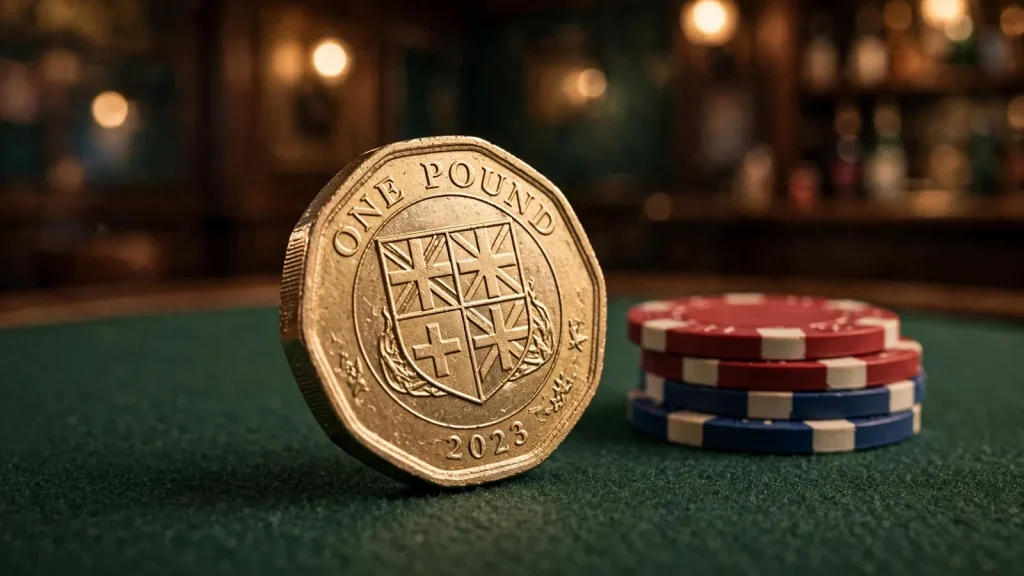
A low cashier minimum can open an account for real-money play, but it does not automatically qualify a deposit for promotions or other benefits.
What's inside this guide
What a £1 Minimum Deposit Actually Gets You
A £1 minimum deposit is a low entry point into an account, not a special type of casino account. If the cashier accepts that amount and the deposit is credited, the balance is available for real-money use under the operator’s account rules. That is the basic transaction. The phrase “minimum deposit” describes the smallest amount accepted under the stated conditions; it does not describe everything the account permits or promises.
Some UK casinos do accept deposits of £1. A specialist review recorded six UK Gambling Commission-licensed casinos with a genuine £1 cashier minimum, but operator terms and cashier settings can change. The useful distinction is between a site that actually allows a £1 deposit and one whose advertising uses “from £1” to describe a narrower route or condition. I have seen how easily that small phrase can carry more weight in an advert than it does in the account.
Once the money reaches the account, it is a cash balance, not a voucher for other benefits. The deposit can establish funds for play, but it does not by itself activate every offer shown on the site. Promotional terms are separate from the cashier minimum. An operator can accept a pound into the account while applying distinct rules to an offer, or offering no promotion at all. The wording matters. “Deposit from £1” is not the same promise as “promotion available with a £1 deposit”.
That difference is easy to miss because a welcome message may sit beside the deposit amount on the same page. In the operating system, though, the two are separate decisions: the cashier processes the deposit, while the promotion has its own eligibility terms. Treating them as one transaction is where expectations start to drift. A successful deposit confirms only that the account was funded.
There are other account conditions before play begins. UK-licensed operators must verify a customer’s age before allowing a deposit, and online gambling is for adults aged 18 and over. New customers must also be prompted to set a financial limit before their first deposit; account-level limit controls must remain accessible. These steps apply whether the intended deposit is £1 or more. A low figure does not bypass identity checks, age checks or the account’s safer-gambling controls.
£20 Minimum Deposit Casinos in the UK: What It Means
I regard that as an important part of the mechanics rather than fine print. The deposit amount is only one field in a wider account process. The operator has to establish who is opening the account and apply the safeguards required for a legal UK gambling service. The small amount does not make the account anonymous, nor does it turn the site’s other rules into optional extras. The boundary remains.
The term “genuine £1 minimum” also needs a little care. It means the operator’s cashier accepts that amount under the relevant account conditions; it does not necessarily mean every part of the service is available on identical terms at that level. A headline can be accurate and still leave out what determines the next step. That is why I separate the amount needed to fund an account from any claim about what the deposit unlocks.
There is no special status attached to the pound once it is credited. It is simply money in the account, subject to the operator’s rules and the player’s own limits. The practical value depends on what the account allows, not on the neatness of the number. A low minimum can make an initial transaction smaller; it cannot guarantee a particular experience or erase conditions that apply to every customer.
The industry often presents a small threshold as “flexible”. What that usually signals in practice is a narrow point of access: the account can be funded at that level. It says nothing by itself about whether the deposit counts toward an offer, whether additional checks are needed, or what account controls apply. Those questions belong to their own terms, not to the cashier figure.
So the plain reading is the safest one: a £1 minimum means that the operator accepts a pound as the starting deposit in the stated circumstances. It is not a guarantee of a bonus, a waiver of account checks, or a promise that every other condition changes with it. The headline is only the entry point.
Online gambling in the UK is for adults aged 18 and over. New customers must be verified and prompted to set a financial limit before their first deposit.
Our top casino picks for the UK
- BeOnBetBonus: 100% up to €500 + 100 FS · Payout speed: 1-3 business days
- WinBeastBonus: €5000 + 500 FS + €650 Freebet · Payout speed: 1-3 business days
- NightWinBonus: £900 + 400 free spins · Payout speed: 1-3 business days
- JetsetspinsBonus: 200% Bonus + 100 Free Spins + Free Royal Wheel · Payout speed: 1-3 business days
- DieselwinBonus: Welcome Pack 250% up to £4000 + 200 FS · Payout speed: 1-3 business days
- EvoSpinBonus: 125% up to €2500 + 125 Free Spins · Payout speed: 1-3 business days
- SpinFormulaBonus: 550% Up To £15,000 + 550 FS · Payout speed: 1-3 business days
- Revery PlayBonus: 100% up to€1,000+ 100 FS · Payout speed: 1-3 business days
How Far a Pound Goes on the Slots
A £1 balance can look like a usable stake until it is translated into individual spins. Many slots accept bets of £0.10 to £0.20 per spin. At the lower stake, a pound covers ten spins; at the higher one, it covers five. That is the whole balance committed if every spin is played at the same level and none of it is returned as a win.
The arithmetic is simple. The experience is less predictable. A win may add funds back to the balance, while a run without a return can use it quickly. The stake does not change the underlying uncertainty of the result. It changes how much of the available balance is exposed each time the reels turn.
I have seen “start small” used as if it described a strategy. It describes the size of the first stake, not how long play will last or what the eventual result will be. A small balance can still be exhausted in a short session, particularly when the chosen stake takes a large share of it each spin. No promise of a long run.
The balance is not the session length
A useful way to assess a small deposit is to divide the balance by the stake, rather than to judge it by the headline amount. With a £1 balance, moving from a £0.10 stake to a £0.20 stake halves the number of spins available before any wins are considered. That is a meaningful difference even though both stakes may appear modest.
£2 Minimum Deposit Casinos in the UK: How It Works
There is another limit on the pace. Online slot spins in Britain must last at least 2.5 seconds, and autoplay is banned. At the permitted minimum duration, five spins take at least 12.5 seconds and ten take at least 25 seconds. Those are bare minimums for the spin sequence, not a prediction of how long a session will feel: loading screens, reading game information and pauses between spins add time. But a low balance cannot be made to last through an autoplay feature; that is not allowed for online slots in Britain.
The comparison is useful because a £1 stake balance and a £1 deposit are not the same measurement. The deposit is the money placed in the account; the balance available for a particular slot can be affected by what has been played and returned. On the reels, the relevant figure is the current balance and the stake selected, not the amount originally deposited.
Game names do not change the arithmetic
Gates of Olympus and Mega Moolah are examples of recognisable slot titles, not recommendations or evidence that either one is suitable for a £1 balance. The title alone does not tell a player what stake is selected in a particular game session. The stake display is the practical detail: a difference between £0.10 and £0.20 per spin changes how many plays a pound can fund.
Do
- Divide the balance by the stake to assess the session
- Compare the displayed stake with the balance before play
- Reduce the stake to increase the number of spins
Don’t
- Treat “start small” as a guaranteed strategy
- Assume a game’s theme or jackpot labels indicate stake value
- Use a low balance as a forecast for winning features
I would not treat a game’s theme, feature labels or prominent jackpot language as a guide to how far a balance will go. Those are separate from the basic stake calculation. Before a spin, the amount shown for that spin is the amount at risk on it. If the balance is limited, even a small increase in stake makes the sequence shorter.
There is no dependable way to turn the number of possible spins into a forecast of winnings. Five spins are not a threshold at which a feature becomes due, and ten spins do not make a result more predictable. The count only describes how many bets the starting balance can cover if the stake stays fixed and no wins are added.
Keep the stake in view
A sensible check is to compare the displayed stake with the balance before play begins. If one spin uses a large portion of that balance, there is little room for repeated bets. Reducing the stake, where the game allows it, can increase the number of spins the balance could fund; it cannot ensure that the money lasts for that number or that any amount will be returned.
UK slot rules also place a maximum stake per game cycle: £5 for customers aged 25 and over, and £2 for those aged 18 to 24. Those are legal ceilings, not suggested stakes, and they do not make a small balance adequate for higher-stake play. The lower end of the available stake range is the relevant comparison when considering how quickly £1 may be used.
Pay by Phone Casinos UK: Deposits and Limits
Before a first deposit, a UK-licensed operator must prompt a new customer to set a financial limit and make account-level limit controls available. I regard that as part of the mechanics, not a decorative account setting: it gives a boundary to the amount available for play. Age must also be verified before deposits are permitted, and online gambling is for adults aged 18 and over.
A pound can fund only a finite sequence of spins at any fixed stake. The exact count at the stakes described here is easy to calculate; the result of those spins is not. That distinction is more useful than treating a low entry amount as a promise of extended play. Short balance. Unknown result.
The 2026 Bonus-Wagering Cap, and What It Changes
Since 19 January 2026, a gambling incentive offered in the UK cannot require customers to wager bonus funds more than ten times. The change sets a ceiling on the wagering condition attached to the bonus itself. It does not mean that every promotional balance is immediately withdrawable, or that all conditions linked to a promotion have disappeared.
I have seen wagering figures do much of the persuasive work in bonus advertising. A large-looking bonus can seem valuable until its terms show how much play is required before the funds can be withdrawn. The new cap limits that particular demand: an operator cannot set a qualifying requirement above ten times the bonus amount. The relevant base is the bonus funds, not the deposit that happened to trigger the offer.
Attention The 2026 wagering cap applies specifically to bonus funds, not to the deposit that triggered the offer or to winnings from free spins.
That distinction matters in a £1 minimum deposit casino. A small deposit is money placed in the account; a bonus is a separate promotional credit, if one is awarded under the offer’s terms. The cap is not a rule that converts the deposit into bonus funds, nor does it establish that a deposit qualifies for a particular promotion. It governs the wagering requirement imposed on the incentive.
The word “cap” can sound broader than it is. It restricts the size of the bonus-wagering requirement; it does not, by itself, settle every detail of how a promotion works. Terms may still explain what counts as eligible play, when the offer applies, and how a balance is treated. Those details need to be read alongside the headline figure rather than inferred from it. Less room for one condition. Not no conditions.
Free-spin winnings have a different calculation
Free spins create a point of confusion because the promotional benefit is spins, while the resulting prize is money. The wagering condition may be written against the total winnings from those spins rather than against a cash bonus credited to the account. Those are different calculation bases.
A specialist review describing free-spin terms reported wagering conditions from 30x to 65x the total amount won. That range should not be read as a general market rule, nor should it be confused with the ten-times cap on wagering bonus funds. It describes conditions reported for winnings generated by free spins, which may be treated separately from bonus funds in the offer wording.
£3 Minimum Deposit Casinos in the UK: What It Means
This is where the headline can obscure the mechanics. An offer may advertise spins, while its terms explain that any resulting winnings remain subject to wagering. The promotional unit is not necessarily the same thing as the balance against which wagering is calculated. A customer looking only for the cap figure could miss that distinction; an operator’s terms may describe the winnings as a separate category.
The useful reading is therefore precise: identify what the wagering condition applies to. If it says bonus funds, the 2026 ceiling applies to that bonus-funds requirement. If it sets a condition against winnings from free spins, that is a different stated basis and should be assessed as such. The presence of the cap does not make the free-spin condition vanish.
What the date changes in practice
For offers governed by the rules from 19 January 2026, a bonus cannot carry a wagering requirement above ten times its value. That gives the reader a clear point of comparison when assessing bonus terms. A larger multiplier against bonus funds would conflict with the stated ceiling; a separate condition on free-spin winnings should not be silently treated as though it uses the same base.
The change also makes careful wording more important, not less. Promotional banners tend to compress an offer into a few phrases; the terms identify whether the offer involves bonus funds, free spins, or winnings subject to a separate condition. In my experience, the arithmetic is rarely the part that causes confusion. It is deciding which amount the arithmetic is applied to.
Bonus Wagering Changes
- Bonus-fund wagering is limited to ten times its value from 19 January 2026
- Conditions on free-spin winnings are calculated separately and may exceed the cap
- The wagering cap does not guarantee that a £1 deposit qualifies for a promotion
A £1 minimum deposit and a wagering cap answer different questions. The cashier minimum concerns the amount accepted to fund an account. The cap concerns how much wagering an incentive can demand against bonus funds. Neither one, on its own, tells the full story of a promotion. The offer terms supply the link between them, if there is one.
The practical change is real but specific: bonus-fund wagering is limited to ten times from the effective date. Conditions attached to free-spin winnings need to be read separately, with the stated basis and wording in view. Treating every promotion as a single balance with one universal wagering rule is precisely how a clear cap becomes misunderstood.
Online Deposits: The Payment Route Can Set the Floor
A cashier minimum is set by the operator, not by the phrase “£1 minimum deposit” on a page elsewhere. The figure shown for an account can apply across its payment options, or the cashier can display different minimums once a route is selected. In my experience, the first detail to establish is whether the threshold belongs to the casino as a whole or to one particular method.
At a given UK operator, the minimum is generally consistent across payment methods. There are exceptions: a casino may require a higher amount for direct banking than for a debit card or e-wallet. That difference matters when a headline suggests an online casino with a £1 minimum deposit. The claim may describe a genuine cashier floor, but it does not, by itself, confirm that every route offered by that casino will accept the same amount.
£10 Minimum Deposit Casinos in the UK: What It Means
The practical check happens inside the cashier. Select a payment option and look at the amount field, any stated minimum, and the terms displayed beside the transaction. A payment button alone does not establish the threshold. If the cashier gives one minimum before a method is chosen and another afterwards, the method-specific figure is the one that governs that deposit.
Which routes are permitted
UK-licensed casinos cannot accept credit cards for gambling. The Gambling Commission’s credit-card gambling ban took effect in 2020, so funding must come from an allowed source: a debit card, a bank account, or an e-wallet funded by debit. This is not a distinction that can be avoided by choosing a different label in the cashier. A wallet or money service must not be used to route credit-card funds into gambling.
Visa and Mastercard debit cards are accepted at almost all UK casinos and can support small deposits. That makes a debit card a straightforward route to check when the intended amount is low, but acceptance does not mean every operator sets the same cashier minimum for it. The operator’s own displayed terms still decide the floor.
Direct banking can also be available, with the payment drawn from a bank account rather than a card. Some operators set a higher minimum for that route than for cards or e-wallets. I would not treat this as a universal rule: the general pattern is one minimum across methods, with selected casinos applying a separate threshold to direct banking. The cashier determines which case applies.
Credit Card Ban
UK-licensed casinos cannot accept credit cards for gambling; funds must come from debit cards, bank accounts, or eligible e-wallets.
An e-wallet is another permitted route only when its funds are eligible. Where the wallet allows credit-card funds to be used for gambling, the operator cannot accept it for that purpose. A payment method’s appearance in a cashier is not a reason to assume every funding source behind it is permitted. The relevant point is the origin of the money as well as the name of the service.
What happens before the payment
The deposit screen is not the first control in a compliant account journey. An operator must verify a customer’s age before allowing a deposit, and UK players must be at least 18. New customers must also be prompted to set a financial limit before their first deposit. These checks can shape the process before a payment is submitted; they are separate from the cashier minimum itself.
I have seen small-deposit claims treated as if the payment route were a minor technical detail. It is not. The method determines where the money comes from, while the cashier minimum determines whether that particular transaction can be submitted. A low figure advertised for one route should not be assumed to apply to direct banking, a debit card and an e-wallet alike.
The cleanest way to read a “£1 minimum deposit” claim is therefore narrow: it may describe the lowest amount the operator accepts under the conditions shown. It does not identify every eligible route or override the restrictions on funding sources. A casino that accepts a small debit-card deposit may still set a higher floor for another payment method.
£4 Minimum Deposit Casinos in the UK: What to Know
The same care applies when a cashier offers several routes side by side. Check the selected method’s own minimum and make sure the source of funds is compliant. If the displayed amount changes after switching routes, that is a real difference in the operator’s payment rules, not a contradiction in the general minimum claim. Small amount. Specific route.
Real-Money Play Without Assuming a £1 Deposit Qualifies
A £1 cashier minimum answers one narrow question: how much money can be used to open or fund an account. It does not settle whether that deposit triggers a welcome offer. In practice, the real-money balance and the promotion are separate parts of the account. The balance may be available for play while the promotional area remains inactive.
A specialist review reported welcome-offer qualifying deposits in the £5 to £10 range. That is a reported range, not a universal rule: the offer’s own terms determine the threshold. A specialist review also noted that some UK casinos do not count a £1 deposit towards a welcome offer. Those reports point to the distinction that matters: a site can accept the deposit without treating it as a qualifying one.
I have seen the wording do a lot of work here. “Minimum deposit” can describe the amount the cashier accepts, while “minimum qualifying deposit” describes the amount required to enter a promotion. They are not interchangeable. A deposit below the promotional threshold may still appear as cash in the account, but it does not follow that bonus funds or spins will be added.
A "minimum deposit" is the amount the cashier accepts, whereas a "minimum qualifying deposit" is the amount required to trigger a promotion.
The offer can also have its own activation steps. Terms may require an eligible deposit and, where stated, acceptance of the promotion before funding. A welcome banner alone is not proof that a particular deposit qualifies. The decisive detail is the offer’s eligibility wording, including any stated qualifying amount and the point at which the promotion must be claimed.
For mobile casino accounts, the same distinction applies. Using a phone rather than a desktop does not turn a cashier minimum into a promotional threshold. The account may accept £1 as real money, while the offer attached to that account sets a higher entry condition. The screen can make both figures look like parts of one deal. They are separate rules.
I treat a small deposit as a way to fund an account, not as a promise of extra value. If the aim is real-money play, the relevant terms are the cashier minimum and the account conditions. If the aim is a welcome offer, the qualifying deposit and activation wording matter instead. Before any first deposit, UK operators must verify age and prompt new customers to set a financial limit; those account safeguards do not change promotion eligibility.
The practical outcome is simple: £1 may be enough to put money into an account, but it should not be assumed to unlock a deal. Read the offer terms as a separate contract from the cashier’s entry point. The distinction is small on the page. It changes what the deposit buys.
No Minimum Deposit Casinos in the UK: What It Means
‘Not on Gamstop’ Is a Separate Question from a £1 Deposit
A £1 cashier minimum says how little an account may accept. It says nothing, by itself, about the operator’s licence or whether a site is connected to GamStop. Those are separate checks, and treating the price point as evidence of either is a mistake I have seen people make.
“Not on GamStop” is a description of self-exclusion status, not a regulatory category. It does not mean a casino is approved for the British market, nor does it prove that a site is unlicensed. For operators offering remote gambling to customers in Great Britain, the relevant operating licence must come from the UK Gambling Commission. A site’s deposit threshold cannot replace that check.
The distinction matters for a search such as “£1 minimum deposit casino not on GamStop”. The phrase can bring together two unrelated features: a low cashier minimum and a claim about exclusion coverage. Neither confirms the other. A small deposit does not weaken the age rules or other account safeguards, either. UK players must be at least 18, and an operator must verify age before allowing a deposit. New customers must also be prompted to set a financial limit before their first deposit, with account-level controls available.
I would treat the wording as a prompt to establish what the site actually offers, not as reassurance. If a person has used GamStop to exclude themselves, looking for a site outside that arrangement can undermine the purpose of the exclusion. A low entry amount changes no part of that risk.
Claims of being "not on GamStop" do not prove a site is licensed by the UK Gambling Commission or is a lawful alternative for the British market.
There is also a legal boundary. Online gambling in the UK is legal only through sites holding the appropriate UK Gambling Commission licence. Offshore casinos operate outside that system; a claim that a site is “not on GamStop” does not make it a lawful British-market alternative. Licensed operators must provide an internal complaints process and access to an approved Alternative Dispute Resolution service.
The practical test is not the pound. It is the operator’s status, the safeguards around the account, and what the self-exclusion claim means in context. Separate questions.
Small Deposits, E-Wallets and the Cost of a Transaction
A payment button does not tell the whole story about the cost of a small deposit. The cashier may accept a low-value transaction, while the payment provider applies a separate charge or the chosen method has its own limit. For a £1 payment, a flat fee matters disproportionately: a specialist review reports fees of £1 to £3 for some payment-provider transactions. That is a reported range, not a charge to assume for every card or wallet.
I have seen small deposits treated as a simple convenience, when the useful comparison is the amount that actually reaches the gambling balance. A fee can absorb the entire deposit or exceed it. The provider’s terms and the casino cashier both matter; an accepted payment is not necessarily a cost-free one.
Online Casinos That Accept SMS Deposits: Boku Guide
Debit cards and some e-wallets can handle transactions of £1, according to a specialist review. That does not establish that every wallet works at that amount, or that PayPal specifically supports a £1 casino deposit. Availability depends on the casino’s cashier and the payment account’s own rules. E-wallets used for gambling must also be funded in a way that complies with UK rules: credit-card funding cannot be used to get around the ban on credit-card gambling payments.
The transaction in and the transaction out are separate checks. A specialist review describes minimum withdrawal thresholds from £1 to £5 at some casinos, but that range should not be treated as a fixed market rule. The operator’s cashier terms determine what applies to a particular account. A small deposit may be possible even when a small cash-out is not.
I would compare the provider’s fee, any method-specific limit and the operator’s withdrawal terms before treating a £1 transaction as genuinely small. The headline amount is only the starting point. The net cost counts.
How £1 Sits at the Bottom of the Deposit Ladder
A £1 cashier minimum sits at the very bottom of the UK deposit ladder, but it is not the standard against which every casino should be judged. A specialist market review places the typical minimum for casinos accepting direct banking at £10, with some operators setting it at £5 and others at £20. Those figures describe a market snapshot, not a rule shared by every cashier.
The gap matters. A casino described as a low-deposit option may simply have a lower entry point than the direct-banking figure commonly reported in reviews; it need not accept a pound. “Low deposit” is relative language. The cashier decides the actual floor.
Rare Lowest Tier
£1 minimum deposits, often linked to specific routes like Boku or Payforit mobile billing
Common Low Tier
Typical minimums of £5 or £10 seen at various operators
Direct Banking Tier
Standard minimums for direct banking often reported around £10, though some reach £20
A separate specialist review identifies £1 as the rare lowest tier and links it to particular routes, such as Boku or Payforit mobile billing. That makes a pound an exception rather than a reliable benchmark for comparing all UK casinos. The operator may advertise a low minimum while the available route determines whether that threshold is reachable.
I learned to separate the advertised figure from the tier a particular payment route can use. Otherwise, a comparison can make a £5 or £10 cashier look like a £1 option simply because it is cheaper than another operator’s standard entry point. It is not the same thing.
The useful distinction is straightforward: £1 is the lowest tier reported, while direct-banking minimums sit higher in the specialist review’s comparison. “Low” does not mean “lowest”.
A £1 Deposit Is Not the Same as a £1 Cash-Out
A cashier minimum describes the smallest amount accepted when money goes into an account. It says nothing, by itself, about the smallest balance that can be withdrawn. I have seen those two figures treated as if they were a matched pair; they are separate rules, and the withdrawal terms need their own check.
A debit card or some e-wallets may support a £1 transaction, but the casino can still set a higher minimum cash-out. A specialist review has reported withdrawal thresholds of £1 to £5 at some operators. That is a report about particular terms, not a promise that a £1 balance can be paid out wherever a £1 deposit is accepted.
The gap can be more noticeable at other casinos: a specialist review has cited minimum withdrawals of £10 to £20. Under that kind of rule, a smaller balance remains in the account until it reaches the stated threshold, subject to the operator’s terms. The entry point was low. The exit point was not.
£5 Minimum Deposit Casinos in the UK: What to Know
I would read the withdrawal section before treating a small deposit as money that can be taken back in the same amount. It should say the minimum cash-out, any applicable payment-method conditions and how the operator handles a balance below the threshold. A low deposit figure is only one side of the transaction.
This distinction matters most when the balance is small: the account may accept the deposit, while its withdrawal rule sets a higher amount before a cash-out can be requested. Check the terms, not the symmetry.
Checking the Cashier Minimum Before Choosing a Casino
A headline saying “£1 minimum” is only useful if that figure applies to the UK account and the payment route being used. I check the cashier’s own deposit screen and the operator’s terms, rather than relying on a promotional banner: the displayed minimum can be specific to an account or payment method, and an old review may no longer match the live cashier.
A specialist casino review identified NetBet as the sole UKGC-listed operator on its checked list with a genuine £1 cashier minimum. That is a report about that list, not a guarantee that the figure remains available for every account or payment option. The practical check is to open the UK site, select an allowed payment method and confirm that the cashier accepts £1 before submitting a deposit.
The same review listed Zodiac, Luxury Casino and UK Casino Club with a £10 minimum for UK accounts and no sign-up bonus. Those examples make the distinction clear: a casino may be legitimate and available to UK customers without offering a £1 entry point. I would treat a minimum shown on an unrelated country’s page as irrelevant to a UK account.
Before depositing, confirm the operator’s current UK Gambling Commission licence, the amount shown in the UK cashier, and any account checks required before funds can be added. The operator must verify age before accepting a deposit; new customers must also be prompted to set a financial limit before their first deposit. Read the live terms, not just the banner. Details matter.
Why do online casinos accept a minimum deposit of £1?
A £1 minimum lets players fund an account with a smaller initial amount. It does not automatically qualify the deposit for a bonus or remove account checks.
What is the best £1 minimum deposit casino in the UK?
NetBet is the only UKGC-listed casino identified as accepting a genuine £1 minimum deposit. Check its cashier and terms before depositing, as conditions can change.
What is the lowest deposit available at UKGC-licensed casinos?
The lowest verified deposit tier is £1, but it is rare and may be limited to particular payment methods.
What is the maximum wagering requirement in Great Britain?
Since 19 January 2026, wagering requirements on gambling incentives cannot exceed 10× the bonus funds.
Can I use a £1 deposit to claim all welcome bonuses?
No. Welcome offers commonly require a £5–£10 deposit, and some exclude the lowest deposit tier altogether.
Can I use a credit card at 333 Casino in Great Britain?
No. Credit card gambling deposits are banned in Great Britain, so deposits must use an eligible alternative such as a debit card or bank account.
What is the minimum deposit at UK casinos accepting direct banking?
The typical minimum is £10, although some operators set it at £5 or £20.
Payments
Published by the Ecopayz Casino UK team.