
Credit card casino sites in the UK: the rules
 Available in GB
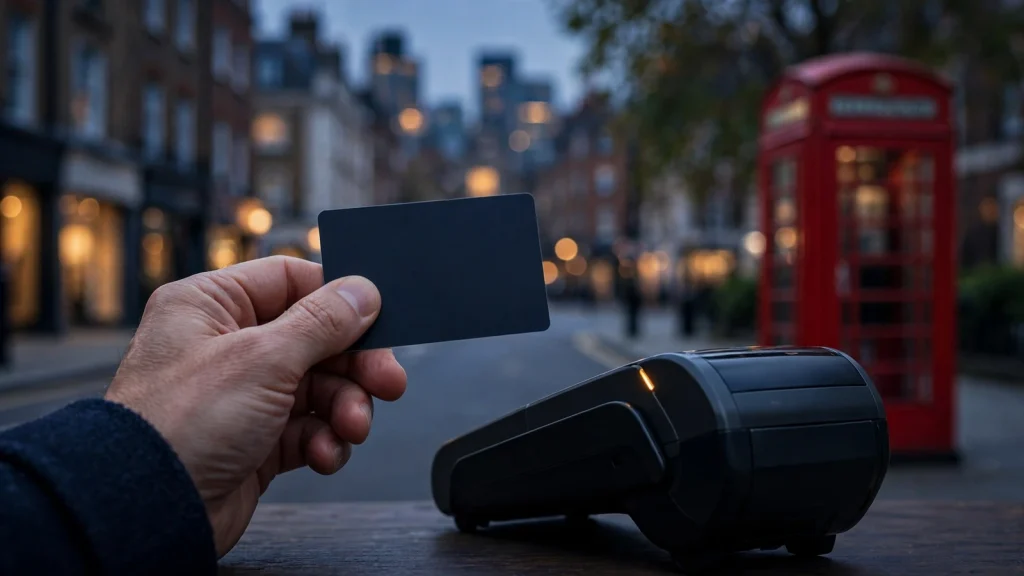
UK gambling rules prohibit licensed casinos from accepting credit cards, while payment options and withdrawal rules raise separate questions.
What's inside this guide
Why a UK-Licensed Casino Cannot Take a Credit Card
A UK-licensed casino cannot accept a credit-card payment for gambling. This is not a preference set by an individual cashier, nor a temporary restriction that varies from one licensed site to another. It is a regulatory rule applying to remote gambling in the British market. The ban took effect on 14 April 2020 and has not been relaxed.
That distinction matters because payment pages can make the issue look like a matter of choice. A cashier may display several ways to move money, and a card brand may be familiar from everyday shopping. But the payment route is not permitted for gambling just because the card works elsewhere or the casino’s software could technically process it. The rule governs what a remote gambling licensee may accept, not what a payment system can technically handle.
I found it useful to separate the rule from the machinery. A casino cashier is the interface; the licence conditions are the boundary. A method appearing in a general payment list does not override that boundary. Nor does a player’s ability to make a purchase with a credit card turn that purchase into an acceptable gambling deposit.
The rule is about credit-card payments for gambling
The restriction concerns using credit to fund gambling. It is not a blanket statement that every card payment is forbidden, and it does not mean a UK-licensed casino has stopped taking all card payments. UK casinos commonly accept debit cards, including Visa and Mastercard. The key distinction is the card product and the purpose of the transaction, not simply the fact that the payment is made by card.
That difference can be easy to miss in a short cashier label. “Card” may describe the channel, while the casino still has to ensure the underlying payment is eligible. A credit card remains a credit card even when the payment is routed through another service. Remote gambling operators cannot accept credit-card payments for gambling through a money service business, either. Interposing a payment company does not change the nature of the funds.
Casino Payments: Deposits, Withdrawals and Methods
The same principle applies to wallets where credit-card funds can be used for gambling. A wallet is not a way around the restriction if it allows the prohibited source of money to reach the gambling account. In operational terms, the route matters as well as the label: a payment that passes through another account does not automatically become acceptable.
No workaround. Just a boundary.
Why the ban is not a cashier setting
The ban is sometimes described as a site policy, which makes it sound as though another casino could choose differently. A UK-licensed remote operator cannot make that choice. The rule applies across the regulated market, so a licensed casino cannot advertise credit-card deposits as an exception or decide to permit them for selected customers.
This is also why a failed credit-card transaction should not be read as a temporary technical inconvenience. A declined payment can have many possible causes in ordinary commerce, but a UK casino must not accept credit-card payments for gambling in the first place. Repeatedly trying another screen or a different route does not change the rule. The operator is responsible for keeping the transaction within its permitted payment arrangements.
From the operator’s side, payment controls have to distinguish what may be accepted from what must be blocked. That is a compliance decision, not a customer-service concession. A support agent cannot authorise a prohibited deposit simply because the customer owns the card, has available credit or has used it successfully for other purchases.
What the date tells us
The regulator introduced the credit-card gambling ban on 14 April 2020. The date is useful because it separates the current rule from older descriptions of online casino payments. Content or advice written before the ban may describe a different position; that does not establish what a licensed casino may accept now.
The important point is not that the rule appeared on a particular day and then became optional. It remains in force. A UK-licensed casino cannot accept a credit card for gambling today, and describing a payment option as a card deposit does not remove that restriction.
Credit Card Ban
UK-licensed casinos are prohibited from accepting credit-card payments for gambling, including transactions routed through money service businesses or wallets.
This is the practical answer to whether credit cards are allowed at UK online casinos: not for gambling deposits at UK-licensed sites. The statement is narrower than “cards are banned” and firmer than “some casinos may not support them”. It identifies the prohibited funding source without confusing it with every other card-based payment.
In the course of checking payment explanations, I have seen how easily a broad phrase such as “card payments” hides the detail that matters. The rule is specific: credit-card payments for gambling are prohibited, including when routed through a money service business, and a wallet cannot be used to pass credit-card funds into gambling. Debit cards are a separate category and are commonly accepted by UK casinos.
That is the line. The method must fit it.
What “Credit Card Casinos” Means in the UK
The phrase “credit card casino” sounds like a payment category: a casino where a player can choose a credit card at the cashier. In Britain, that reading leads to a dead end. A UK-licensed casino cannot accept credit-card payments for gambling. The phrase still appears in page titles, payment summaries and casino reviews, but its presence does not establish that a credit card can fund an account.
Casinos That Accept Wirecard in the UK: Payment Checks
I have seen this kind of wording create a mismatch between what a page seems to promise and what its payment information actually shows. A heading may use familiar card language because people recognise it, while the detail below refers to a card brand, a payment method that is not credit, or a site operating outside the UK regulatory system. Those are different things. The distinction matters more than the label.
A card logo is not a permission slip
Visa and Mastercard are payment networks, not a guarantee that every card carrying their logos can be used for every transaction. A specialist casino review may list those brands among a site’s payment options, but that listing does not settle whether a particular card product is eligible for gambling transactions in the UK. Nor does it establish what the casino currently allows.
The cashier is where the live payment choices appear. Even there, a displayed card option should not be read as permission to use a credit card for gambling at a UK-licensed casino. The product type matters. A debit card and a credit card can carry the same network logo while working differently; the logo alone does not tell the whole story.
This is one reason lists headed as credit-card casino sites can be misleading. They may combine a site’s general card branding with a claim that sounds specific to credit. The first does not prove the second. A payment summary is a starting point for checking, not a substitute for the operator’s actual terms and cashier controls.
Card Logos
Visa and Mastercard logos indicate the payment network and do not guarantee that a credit card product is eligible for gambling transactions in the UK.
What the wording may be signalling
When a page describes a casino as accepting cards, it may mean that the casino supports a card network for an eligible payment product. It may also be using broad language for a category of payment rather than making a claim about credit. Without a clear distinction, “card accepted” can be mistaken for “credit card accepted”.
There is a second possibility: the page is describing a casino that is not licensed by the UK Gambling Commission. That does not make it a UK-licensed casino with an alternative card policy. Remote gambling licensees serving customers in Great Britain must hold the relevant UK licence, wherever the operator is based. A casino outside that system is a different proposition, not an exception within it.
That difference can disappear in a short headline. A phrase such as “UK casinos that accept credit cards” may group together UK-facing material, card logos and sites that do not operate under the UK rules. The headline alone cannot show which meaning is intended. I would treat the description as unresolved until the licensing status and the payment terms are clear.
“Not on GamStop” does not answer the card question
Some pages pair credit-card language with claims about being “not on GamStop”. That phrase concerns a separate issue from whether a UK-licensed casino can accept credit-card payments. It does not turn a prohibited payment route into an allowed one, and it does not establish that a site is licensed to serve British customers.
Casino sites that accept Jeton in the UK
The same applies to searches for credit-card casinos outside a particular self-exclusion scheme. A site’s position on that scheme cannot be used as a shortcut for judging its regulatory status or its payment rules. In Britain, real-money gambling sites serving customers must fall within the UK licensing framework. Offshore sites sit outside that system; their availability online does not make them UK-licensed.
The wording can sound like a feature comparison, as though “not on” were simply another cashier option. It is not. Payment acceptance, licensing and self-exclusion are separate questions, and one answer does not settle the others. A label that combines them may be designed to catch attention rather than explain how the account works.
Why “best” lists can overstate what is known
A page promising the best credit-card casino sites in the UK implies that there are UK-licensed casinos where credit cards can be used for gambling. That implication conflicts with the rule governing those operators. A ranking cannot make the underlying payment route permissible, and a list of card logos cannot demonstrate credit-card eligibility.
In practice, lists can blur together several claims: that an operator accepts Visa or Mastercard, that some card product is available, that the site serves British customers, or that a credit card itself can be used. Those statements are not interchangeable. The more compressed the description, the easier it is for a reader to infer a promise that the details do not support.
I would not treat “best credit card casino sites” as a reliable category for comparing UK-licensed casinos. It may be a loose label for general card payments, or it may refer to sites outside the UK licensing system. Neither reading gives a sound basis for assuming a credit card can be used at a licensed casino.
Do
- Check the operator’s license status
- Review the actual payment terms
- Verify the specific card product
Don’t
- Trust headlines promising credit card use
- Assume card logos allow credit deposits
- Rely on “best” lists as a regulatory guarantee
The useful distinction
For a UK-licensed casino, the practical meaning is straightforward: the casino cannot accept credit-card payments for gambling. If a page says otherwise, the wording needs to be tested against the operator’s licence and the actual payment terms. A Visa or Mastercard mention, on its own, is not enough.
This does not mean every reference to cards is false. It means “card” is too broad to settle the question. The network, the card product, the operator’s licensing status and the cashier’s current options all have to be understood separately. A general payment list may be accurate about a network while still failing to establish that credit-card deposits are available.
That is why I read the headline and the payment detail as separate claims. The headline tells me how the site is being described; the cashier and licensing information tell me what the description amounts to. When those do not align, the safer interpretation is not that the rule has quietly changed. It is that the label is doing more work than the facts beneath it.
Our top casino picks for the UK
- BeOnBetBonus: 100% up to €500 + 100 FS · Payout speed: 1-3 business days
- WinBeastBonus: €5000 + 500 FS + €650 Freebet · Payout speed: 1-3 business days
- NightWinBonus: £900 + 400 free spins · Payout speed: 1-3 business days
- JetsetspinsBonus: 200% Bonus + 100 Free Spins + Free Royal Wheel · Payout speed: 1-3 business days
- DieselwinBonus: Welcome Pack 250% up to £4000 + 200 FS · Payout speed: 1-3 business days
- EvoSpinBonus: 125% up to €2500 + 125 Free Spins · Payout speed: 1-3 business days
- SpinFormulaBonus: 550% Up To £15,000 + 550 FS · Payout speed: 1-3 business days
- Revery PlayBonus: 100% up to€1,000+ 100 FS · Payout speed: 1-3 business days
Depositing Without a Credit Card
A UK casino cashier can still offer several ways to fund an account without a credit card. Debit cards are a familiar route: UK casinos commonly accept Visa and Mastercard debit cards. The important distinction is the card product, not merely the logo. A credit card is not an acceptable substitute, and a payment option appearing in a general list does not prove that every card issued under that brand will work.
Casinos That Accept Citadel in the UK: Availability
I have found it more useful to treat the cashier as the current record of what an operator accepts than to rely on a payment-method list elsewhere. Availability can differ between casinos and can change. The relevant question is whether the specific method is displayed for the account and transaction in question. The account itself also has to pass the operator’s checks: remote gambling operators must verify a customer’s age before allowing a deposit, and new customers must be prompted to set a financial limit before making their first one. Limit controls must remain accessible through the account.
Debit cards and bank-based payments
A debit card draws on money held in a bank account rather than a credit facility. That makes it a practical alternative for a deposit, provided the cashier accepts the card and the issuer permits the payment. Visa and Mastercard are both used for debit cards at UK casinos; their presence does not mean that a credit card on the same network can be used for gambling.
Bank transfer and open banking are other possible routes. A bank transfer moves money through the banking system, while open banking lets a customer approve a payment through a connected bank account. A specialist review describes these methods as capable of providing instant deposits and fast withdrawals at many sites. That is a reported possibility, not a promise for every operator or bank. The cashier’s instructions matter, and a transfer’s progress may depend on how the selected service handles the payment.
Debit Cards
Draws on bank account funds; commonly accepted via Visa and Mastercard networks.
Bank Transfer
Money moved directly through the banking system to the operator.
Open Banking
Payments approved through a connected bank account for potential instant deposits.
The names can be confusing because a casino may present a bank-linked service alongside ordinary transfers even though the payment steps differ. With open banking, approval may take place through the bank rather than by entering card details. With a transfer, the operator may provide separate instructions for sending funds. Neither label should be taken as proof that the same route will be available for every account.
One operational point is easy to overlook: the payment account should belong to the same person as the gambling account. Matching ownership details reduces the chance of avoidable questions when a payment is checked. It does not replace KYC, but it keeps basic account information consistent.
E-wallets and other deposit routes
Some operators also show e-wallets in their cashier. Skrill and Neteller are available at some sites. A specialist review reports that these wallets are often excluded from promotions, so the payment choice can affect which offer applies. That condition is operator-specific: the promotion terms, rather than the wallet’s name alone, determine eligibility.
PayPal is another payment name associated with casino payments. A specialist review describes it as popular for speed and convenience, while also noting that it may be excluded from bonus eligibility. That is a report about the method’s appeal and a possible promotion condition, not a guarantee that PayPal is available at a particular casino or account. The cashier and the relevant offer terms settle those points.
UK casino sites that accept EcoPayz: what to check
Some UKGC-licensed casinos accept Apple Pay for deposits. Its presence is not universal, and it should be treated as a deposit route only unless the cashier separately confirms that it can be used for withdrawals. Paysafecard is also a deposit option at some sites, but it is deposit-only. That distinction matters before choosing a method: a way to put money in is not automatically a way to receive a payout.
There is no need to force a wallet into the process just because it appears in a payment menu. If it is funded by a credit card, the payment chain can run into the UK restriction on credit-card payments for gambling. Operators cannot accept wallet payments where the wallet allows credit-card funds to be used for gambling. A debit-card or bank-account source is not interchangeable with a credit-funded balance simply because both pass through the same wallet.
The cashier may also show methods that are absent from another casino. I would read the list as a set of operator-specific routes, not as a promise that each method works for every customer. The payment option, the funding source and the account holder all matter.
Checking the practical terms
Before making a deposit, the minimum shown by the cashier should be checked for the chosen method. A specialist review puts the minimum deposit at £10–£20, depending on the payment method, but that range is not a fixed rule for every casino. The live cashier is the useful reference because the operator sets its own terms and may show a different minimum for a particular route.
Deposit Verification
- Check the minimum deposit amount in the live cashier
- Confirm the funding source is permitted
- Ensure payment account details match the gambling account
- Review any promotion conditions tied to the payment method
The same check should cover any promotion condition attached to the payment method. A wallet can be accepted for deposits yet excluded from a bonus; a payment option can be deposit-only; and the operator may offer different routes to different customers. “Accepted” is a narrow statement. It does not by itself describe bonus eligibility or payout support.
For a straightforward deposit, the practical sequence is simple: confirm that the method is shown in the casino cashier, check that its funding source is permitted, and make sure the payment account’s details match the gambling account. If the cashier identifies a method as deposit-only, that is the limit of what it does. No assumptions.
Paying In and Getting Money Out Are Different Questions
A payment method listed beside the deposit button does not, by itself, tell much about how a withdrawal will be handled. Paying money into an account and receiving a payout are separate stages, with different checks and sometimes different routes. I have seen the distinction cause confusion: a deposit can appear in the casino balance quickly, while a withdrawal still waits for approval and account checks.
For UK casino accounts, the starting point is the closed-loop approach. Anti-money-laundering rules generally mean that a payout should go back to the payment source used to fund the account. This is an anti-fraud control as well as a way to keep the movement of funds traceable. It is not simply a preference for one cashier option over another.
Upaycard at UK Casinos: How to Check Availability
That principle matters when a payment provider offers several ways to add money. The casino may need to establish which account or instrument supplied the funds before deciding where a payout can go. A route that works for a deposit should not be assumed to work in reverse. The cashier’s withdrawal options and the operator’s terms determine what is available for the account in question.
Why the original source matters
The source-of-funds trail is easier to follow when the account and payment route belong to the same customer. Using another person’s payment details can create a mismatch that the operator may need to resolve before processing a transaction. The same applies if a player expects a payout to go to a different account simply because it is more convenient. An alternative route may be possible, but it can require additional verification.
This is where “instant” can be a misleading label. It may describe how quickly a deposit reaches the casino balance, not how quickly money can be withdrawn. The casino still has to review the payout, and the receiving provider or bank has its own part in the process. A deposit and a withdrawal are not mirror images.
For a credit-card-related search, the practical point is that a deposit option cannot be treated as evidence of a matching cash-out route. UK-licensed casinos cannot accept credit-card payments for gambling. For other payment methods, the withdrawal route depends on the casino’s rules, the source recorded on the account, and the options actually offered in the cashier.
Attention: A payment method available for deposits is not automatically available for withdrawals, as payouts typically follow a closed-loop approach to the original source.
The cleanest arrangement is often one named account used consistently for paying in and receiving money. That does not remove the operator’s checks, but it can avoid an unnecessary ownership mismatch. Small detail. Real consequence.
Verification can affect the clock
Withdrawal processing time is not just the time taken by a bank or payment service to deliver funds. The casino’s internal approval is part of the total, and the account’s verification status can affect when that approval happens. A specialist review of casino payment procedures notes that first withdrawals may take longer while verification is completed. That is a description of the process, not a fixed timetable for every operator.
KYC is central to this stage. If the casino needs to confirm identity or check that payment details belong to the account holder, the payout may remain under review until those checks are resolved. A fully verified account can avoid one source of delay, although the casino still has to process the withdrawal and the payment provider still has to deliver it.
I would separate three stages when reading a withdrawal estimate: the casino’s review, any verification still outstanding, and the transfer after the casino releases the funds. A time estimate that covers only the last stage can sound much faster than the full journey. The operator’s stated processing terms are therefore more useful than a payment method’s deposit speed.
Casinos That Accept Echeck in the UK: Payment Checks
A specialist payment review identifies PayPal, open banking services and debit cards connected to fast payout systems among the quicker withdrawal routes it discusses. That should be read as an account of those methods in the review, not a guarantee that every casino supports them for withdrawals or that they will be the fastest option for every account. Availability can differ between operators, and the cashier is the place to confirm the route supported for a particular account.
When the usual route is unavailable
A payment account can change, close or become inaccessible. In that situation, funds do not automatically become payable through any alternative selected by the player. The operator may need evidence explaining the change and may ask for further checks before accepting a replacement route. Returning funds to the original source remains a common anti-fraud and anti-money-laundering control, so a request to use another destination can involve additional verification.
This can also explain why two customers using the same casino do not necessarily see identical withdrawal options. Their recorded deposit methods, account status and verification position may differ. A method being named in a general payment list is not proof that it is available for a particular payout.
The same distinction applies to timing. A specialist review describes withdrawal speed as dependent on both the casino’s internal approval process and whether the account is fully verified. The actual path can then depend on the payment route. Bank transfers, for instance, can be affected by cut-off times, weekends and currency conversion, as described in specialist payment coverage. Those delivery factors come after the casino’s decision to release the payout; they do not replace that first step.
Withdrawal Process
- Payouts generally return to the original funding source
- Internal casino approval and KYC verification affect processing times
- Alternative withdrawal routes may require additional verification
- Delivery speed depends on both the operator and the payment provider
The useful test is not “Can this method deposit?” but “Can this account withdraw through it, and what checks happen first?” Those are separate cashier questions. A clear answer should identify the supported payout route and explain any verification needed, rather than relying on a deposit badge or a speed claim attached to the payment method.
What “Pay by Credit Card” Leaves Out
A payment method’s name does not tell the whole cost story. In a UK casino cashier, a card option may look straightforward, but the final amount can be affected by the casino’s charges, the payment provider’s fees, the card issuer’s or bank’s fees, currency conversion and network costs. These are separate parts of the transaction, and the cashier may not display them all in one place.
Currency is an easy detail to overlook. If the casino account is held in a currency different from the one used by the card or bank, conversion can add a spread to the exchange rate. A visible flat fee is simple to spot; a less favourable conversion rate is harder to compare and can cost more. I have found that a payment labelled “fee-free” can still carry a cost through the exchange rate. The label is not the total.
Before making a transaction, the useful comparison is between the amount sent and the amount credited, alongside any charges shown by the casino, provider and bank. The same method can have different costs depending on the account currency and the amount involved. Network fees may also apply, depending on the route.
There is no single cheapest payment method for every transaction. Compare the casino charge, provider fee, issuer or bank fee, currency spread and any network cost for the specific amount and currency. A method with no stated casino fee may still be more expensive once conversion is included. Small print matters.
Card Payments Do Not Change the Rules for Online Slots
Whether a slot session is funded by a debit card, bank transfer or another permitted route does not alter the rules for play. Nor does the phrase “play slots with a credit card” describe an available funding option at a UK-licensed casino: credit-card payments for gambling are prohibited. The payment method and the game rules are separate matters.
For online slots in Britain, autoplay is banned. Each spin must also last at least 2.5 seconds. Those requirements apply to the game itself, not to how the account was funded. A fast deposit cannot make a spin quicker, and a different payment route cannot switch autoplay back on.
The stake limits also apply regardless of payment method. The maximum stake per game cycle is £5 for customers aged 25 and over, and £2 for customers aged 18 to 24. The £5 limit for all adults came into effect on 9 April 2025. These are limits on a slot stake, not on a deposit or payment transaction.
I have seen payment language blur the distinction. A cashier may list accepted ways to fund an account, while a game page describes how a slot behaves. They answer different questions. A card logo beside a deposit option does not mean every kind of card is eligible, and it does not override the restrictions on credit-card gambling.
There is another control before play begins: remote gambling operators must verify a customer’s age before allowing a deposit. UKGC rules also require a new customer to be prompted to set a financial limit before the first deposit, with account-level limit controls available. These checks sit alongside the slot rules; they are not optional features tied to a particular payment method.
The practical distinction is simple. Funding an account and spinning a slot are separate regulated steps. Neither a payment label nor a promotional description changes the rules governing online slot play in Britain.
Which payment methods are accepted in Great Britain?
UK casinos commonly accept Visa and Mastercard debit cards, bank transfers and e-wallets such as PayPal, Skrill and Neteller. Some also offer open banking, Apple Pay or Paysafecard; availability varies by casino and method.
Which method has the lowest fees?
There is no universally lowest-fee method. Compare the casino’s charges, provider or bank fees, currency-conversion spread and any network costs for the amount you plan to transfer.
Are fast casino withdrawals guaranteed?
No. Withdrawal speed depends on the casino’s approval process and whether your account is verified; first withdrawals may take longer while checks are completed.
What is the current minimum deposit?
Minimum deposits usually start at £10–£20, depending on the payment method.
Are Visa and Mastercard deposits definitely debit cards?
No. Visa and Mastercard are card brands, not a guarantee that the card is debit; check the card product and its eligibility in the casino cashier. UK-licensed casinos cannot accept credit-card payments for gambling.
Payments
Created by the "Ecopayz Casino UK" editorial team.