
Monopoly Live Casino UK: How It Works
 Available in GB
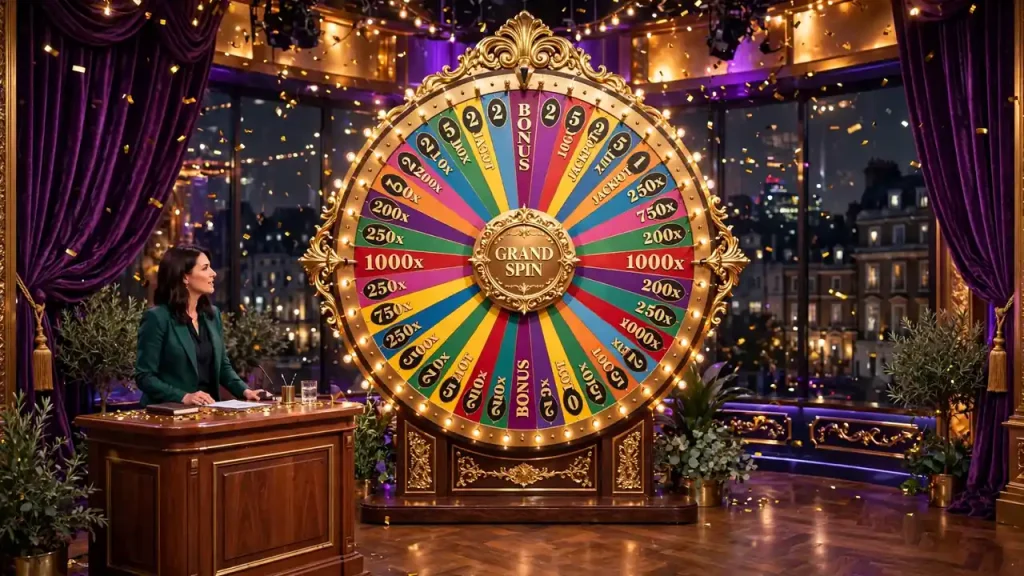
A practical look at the hosted format, casino checks, payments and what results or stake limits can—and cannot—show.
What's inside this guide
Monopoly Live in Context: A Live Casino Game Show
Monopoly Live belongs to the live-casino part of online gambling, but the label does not mean that it works like a conventional blackjack or roulette table. It is presented as a game-show-style experience: the format puts a hosted, studio-like presentation at the centre, rather than asking players to follow only the familiar layout of a casino table. That difference shapes how the game is encountered, even before considering any particular rules.
The distinction matters because “live casino” covers more than one kind of product. A table game is organised around a recognised casino game and its decisions: cards are dealt, a wheel is spun, or a hand is resolved. A game-show format may borrow the visual language of television entertainment and present a casino game through a more theatrical frame. The two can sit under the same broad live-casino label, while giving players quite different experiences.
I have seen marketing blur those categories together. “Live” can sound like a guarantee of a particular level of interaction, or a promise that every familiar casino feature is present. It is better understood as a description of the format, not a complete account of what happens during a session. The name Monopoly Live identifies the product; it does not, by itself, establish every detail of its rules, interface or availability.
That is a useful starting point for anyone looking at Monopoly Live in a UK online casino. The subject is not simply a digital version of a board game, nor should the word “Monopoly” be taken as evidence that the familiar board-game mechanics carry over unchanged. A branded title can draw on recognisable imagery while being a distinct casino product. In practical terms, the game should be approached as a live-casino offering whose presentation is built around a show format.
Online Bingo UK: How Bingo and Casino Games Differ
This also explains why a comparison with a standard online table can be misleading. In a conventional table game, the table itself is the main reference point: it organises the action and makes the casino structure immediately visible. In a game-show presentation, the screen may feel more like a hosted event. That does not make it a different category of gambling, and it does not remove the need to understand the terms that apply to play. Presentation is not the same thing as a change in the underlying stakes of gambling.
The “show” element is often what attracts attention. It can make the product feel less like a quiet table and more like entertainment designed for a screen. But entertainment language is still language. It should not be mistaken for evidence that the experience is safer, more predictable or more generous than another casino game. A polished set and recognisable branding explain how the product is packaged; they do not tell anyone what outcome to expect.
The title also creates a small but important naming trap. People may refer to it as live Monopoly, Monopoly casino, or a Monopoly game in a live casino. Those phrases point to the same general subject, but they can imply different things if read too literally. The game is not necessarily a physical board game reproduced online, and “casino” in the name does not mean that it behaves like every table game offered by an online operator.
I tend to separate three questions when a product is presented this way: what kind of experience is being sold, what gambling activity sits behind that presentation, and what conditions apply at the site hosting it. The first is about format. The second concerns how the game itself works. The third belongs to the operator and the account through which play is offered. Keeping those questions apart avoids treating a familiar brand or a lively presentation as an answer to matters they cannot settle.
Mines Casino Game in the UK: What to Know
For the same reason, a listing that says an online casino offers Monopoly Live is only a starting point for understanding the experience. The label may help identify the game, but the casino’s own display and terms determine how the product is presented there. Availability can be a practical matter too: the existence of a game title does not mean every casino carries it or that every player will see the same lobby. A catalogue entry is not a full explanation.
There is a broader point here about live casino products. The word “live” describes a mode of presentation associated with real-time casino entertainment, while “game show” describes the style in which a product is framed. Neither phrase should be stretched into an assumption about detailed rules or outcomes. Those have to be considered on their own terms.
So Monopoly Live is best placed as a branded, live game-show-style casino product, rather than casually grouped with standard online tables. That is a modest distinction, but a useful one. It keeps the description clear without letting television-style presentation do more work than it should. Show format, casino product.
Our top casino picks for the UK
- BeOnBetBonus: 100% up to €500 + 100 FS · Payout speed: 1-3 business days
- WinBeastBonus: €5000 + 500 FS + €650 Freebet · Payout speed: 1-3 business days
- NightWinBonus: £900 + 400 free spins · Payout speed: 1-3 business days
- JetsetspinsBonus: 200% Bonus + 100 Free Spins + Free Royal Wheel · Payout speed: 1-3 business days
- DieselwinBonus: Welcome Pack 250% up to £4000 + 200 FS · Payout speed: 1-3 business days
- EvoSpinBonus: 125% up to €2500 + 125 Free Spins · Payout speed: 1-3 business days
- SpinFormulaBonus: 550% Up To £15,000 + 550 FS · Payout speed: 1-3 business days
- Revery PlayBonus: 100% up to€1,000+ 100 FS · Payout speed: 1-3 business days
Playing Online: The Account and Payment Conditions That Matter
Searching for a way to play Monopoly Live online can make the game seem like the main decision. In practice, access starts with the account. A remote casino has to establish that a customer is old enough before it permits a deposit; an account form alone does not mean that this check is complete. In the UK, real-money online gambling is for adults aged eighteen and over, and operators must verify age before accepting deposited funds.
Keno Online Casinos in the UK: Draws and Payouts
That order matters. Registration, verification and depositing are separate stages, even when a site presents them as one smooth process. A request for further information can therefore arise before money is paid in. From the operator’s side, age checks are a required control, not an optional inconvenience to be bypassed. From the player’s side, it is sensible to resolve account checks before planning a session.
Payment methods have boundaries
The payment screen is not simply a menu of convenient ways to move money. UK-licensed remote casinos cannot accept credit cards for gambling. The restriction also covers credit-card funding routed through a money service business, so changing the route does not make credit-card gambling acceptable. Nor can an operator accept a wallet for gambling if that wallet allows credit-card funds to be used.
Those restrictions can affect a payment even when the casino itself displays a familiar payment brand. What matters is whether the funds and route comply with the rules, not just whether a button appears at checkout. If a transaction is declined or a method is unavailable, that does not by itself establish that the game or account is at fault. The funding route may be the issue.
I have seen payment wording treated as a sales detail. It is not. It marks the boundary between a method an operator may offer and one it must refuse. No workaround.
Limits belong to the account
Before a new customer makes a first deposit, a remote operator must prompt them to set a financial limit. Account-level limit controls must also remain accessible, so limits are not confined to a one-time registration screen. This gives the account a practical control point: the amount available for gambling can be considered before a session rather than only after spending has begun.
Financial Limits
Only gamble what can be afforded to lose. A limit should reflect money that can be lost without affecting essential spending.
The wording and layout may vary between casinos, but the purpose is straightforward. A limit is a personal safeguard, not a prediction of what a session will cost and not a reason to treat a deposit as disposable. It should reflect money that can be lost without affecting essential spending. Only gamble what can be afforded to lose.
A financial limit is also distinct from a payment method. A card or other permitted route determines how funds may be transferred; the account controls help set boundaries around gambling. Confusing the two can make the payment page look more protective than it is. A completed deposit is not, by itself, evidence that spending is within a comfortable budget.
When an account is used to access an online casino Monopoly Live offering, these conditions still apply. The game’s presence does not remove the operator’s responsibilities around age verification, permitted funding and account controls. Nor does a smooth route from registration to the table change those obligations. The mechanics are less glamorous than a live show, but they determine whether real-money play can begin and how it is managed.
For me, that is the useful test of the sign-up process: whether it makes the required checks and controls clear before money is committed. If the first deposit is treated as the only step that matters, the account is being presented too narrowly. The protections sit around the transaction, not just on the payment button.
Online casino tournaments in the UK: rules and entry
Checking a Casino’s Licence Before Depositing
A search for Monopoly Live may lead to several casino sites, but the game’s presence does not establish that the operator is authorised to offer gambling in Great Britain. I treat the operator’s licence as a separate question from the game itself. The relevant check is on the UK Gambling Commission’s public register, before money is deposited.
The Commission is the regulator for commercial gambling in Great Britain and oversees remote gambling offered to consumers there. That responsibility does not depend on where a casino’s servers or other key equipment are located. A business based elsewhere can still fall within the British licensing framework when it offers remote gambling to consumers in Great Britain.
This matters because a website’s location, branding or polished presentation can create a misleading impression of where it is regulated. The Gambling Commission issues operating licences to businesses and personal licences to individuals working in regulated roles. For a player assessing an online casino, the business’s operating licence is the central point: it is the operator, rather than the game title, that must be authorised to provide the gambling service.
What the register check establishes
The register is a way to verify whether the business behind a casino holds the relevant licence. It is not a consumer rating, an assessment of the site’s quality or a guarantee that every interaction will be trouble-free. A listing should be read as evidence of regulatory status, not as a Commission endorsement of a particular casino or its Monopoly Live offering.
Regulatory Status
A listing on the Gambling Commission’s public register is evidence of regulatory status, not a consumer rating or an endorsement of a particular casino.
I would start with the casino’s own legal terms, where the operating company and any licence details should be identified, then compare those details with the Commission’s register. The name on the register may be the business name rather than the name displayed in the casino’s advertising. That is why a matching brand alone is not enough: the company operating the site, the licence information and the website domain should make sense together.
A useful check is specific, not impressionistic. Search the public register for the stated operator and inspect the entry rather than relying on a badge in the footer or a claim on a landing page. Then check whether the domain being used is associated with that operator. If the site’s terms name one company, its footer names another, or the register entry does not connect clearly to the website, the gap deserves attention before any deposit is made.
I have seen how licensing language is used in marketing: a real regulatory reference can be placed beside claims about a casino and make the whole presentation feel officially approved. It is not. The regulator’s role is to oversee commercial gambling and issue licences; it does not recommend a casino, rank monopoly live casinos or certify that a particular game is suitable for an individual.
A register entry also needs to be relevant to the service being offered. A company name appearing somewhere in a search result does not, by itself, show that the casino domain in front of the player is covered. The practical point is to establish a clear connection between the operating business, its licence and the site accepting the account. If that connection cannot be established, promotional wording is not a substitute.
Plinko Casinos in the UK: Games, Access and Terms
Why brand searches can mislead
Casino brands and corporate names do not always match. Some sites trade under a name that differs from the company in their terms, while similar names can belong to different businesses. I would therefore avoid treating a search result, a logo or a copied licence number as proof. The exact details matter.
The date of a register check matters too. A result found earlier may not reflect the register’s current position.
The same discipline applies when evaluating “best” claims. A site may describe itself as one of the best Monopoly Live casinos, but that wording says nothing by itself about its licensing status. Nor does a licence establish that it offers a particular game, that a game is available at a given moment or that the experience will match a promotional description. Those are separate matters.
For the legal position, the dividing line is not whether the casino calls itself British, displays a familiar logo or accepts visitors from the UK. Remote operators serving consumers in Great Britain are required to hold the relevant Gambling Commission licence. The Commission’s reach over remote gambling does not disappear because key equipment is abroad. A site operating outside the UK regulatory system is not made locally licensed by presenting itself as an alternative to a British casino.
That distinction is important when a site uses the general phrase “licensed” without making clear which authority issued the licence. A foreign licence and a Gambling Commission licence are not interchangeable descriptions. The register check should answer the British licensing question directly, rather than leaving it to a badge or a broad statement about regulation.
Verifying a Casino
Identify the business
Find the operating company name and licence details in the casino’s legal terms.
Search the register
Check the UK Gambling Commission’s public register for the stated operator.
Confirm the domain
Ensure the website domain is clearly connected to the operator listed on the register.
For a casino with Monopoly Live, the sensible sequence is therefore straightforward: identify the operating business, verify its entry and relevant site details on the Commission’s public register, and do that before depositing. The regulator’s status is a threshold check, not a recommendation. Gambling is for adults aged 18 and over at appropriately licensed sites, and only what can be afforded to lose should be gambled.
What Playing Monopoly Live Involves—and What the Evidence Does Not Confirm
Playing Monopoly Live through a UK casino means entering a gambling environment, not simply opening a familiar board-game adaptation. The title alone does not establish the rules, the way a round works, the available wager options or whether a particular operator offers the game at all. Those details need to come from the casino’s own game information and the terms shown at the point of play.
I have learned not to treat a recognisable name as a rulebook. Casino pages often use short descriptions to help customers find a title; those descriptions are not a substitute for the rules displayed in the game. Before staking money, the relevant questions are practical: what action starts a round, how a wager is placed, which outcomes are available and how any resulting return is calculated. If the rules are unclear, there is no sound basis for guessing.
The same caution applies to access. A casino’s website, mobile layout or app may present games differently, and the presence of a title in a general promotional page does not prove it can be opened on every device or account. The operator’s live game lobby and the information attached to the game are the useful checks. No specific Monopoly Live app, interface or set of controls should be assumed from the game name.
With real-money play, the account safeguards matter as much as the game screen. In Great Britain, gambling operators must verify a customer’s age before allowing a deposit. Online gambling is for adults aged eighteen and over at properly licensed sites. That check is not a box to work around; it is part of the operator’s obligation before money enters the gambling account.
Online casino without ID in the UK: what to know
Licensed operators must also provide tools intended to keep gambling within a person’s control. New customers must be prompted to set a financial limit before their first deposit, and account-level limit controls must remain accessible. Self-exclusion must also be available. These are not features of Monopoly Live itself, and they do not make a wager safe by default. They are safeguards around the account.
In my experience, the distinction matters because game presentation can make the act of wagering feel separate from ordinary spending. A vivid screen or familiar branding does not change the financial decision underneath. A limit is useful only if it reflects what can genuinely be lost without affecting bills, commitments or daily life. If gambling stops feeling manageable, the sensible response is to stop rather than raise a limit or chase losses.
There is no need to turn uncertainty into a claim. Unless the operator’s information explains a game feature, it should not be presented as a rule. That includes assumptions about how a round begins, how a result is determined, what controls are available, or whether a particular version is accessible through an app. The game information is the reference point. Guesswork is not.
For anyone choosing to play Monopoly Live for money, the basic standard remains plain: understand the displayed rules, use the account safeguards, and gamble only what can be afforded to lose. Familiarity is not protection.
Results, Randomness and the Limits of ‘Best’ Claims
A page of recent Monopoly Live results can look more informative than it is. It records outcomes that have already happened; it does not, by itself, show what the next round will produce. I treat a result history as a record, not a forecast. A run of similar outcomes, or a long gap since one particular outcome, is not evidence that the next result is due to change.
That distinction matters whenever a results table is presented alongside strategy advice. Describing what appeared in the past is different from showing that a wagering approach can predict what comes next. A confident tone, a chart or a streak label cannot bridge that gap. Unless a reliable rule establishes a connection between earlier and later rounds, past results should not be treated as a signal about future ones.
What a results page can show
A results display may help explain what a particular site reports as having occurred. Its usefulness depends on basic questions: is the record current, is its scope clear, and can the entries be understood without selective omissions? A cropped image or a handful of highlighted outcomes offers little basis for a broad claim. A longer record may provide more context, but length alone does not turn historical data into a prediction.
The wording around the display deserves the same scrutiny as the entries themselves. “Hot” and “cold” are labels, not evidence that an outcome has become more or less likely. “Due” suggests a pattern has a force that has not been established. This is where presentation can do more work than the data. The visual impression is persuasive; the inference may not be.
Strategy is not a forecast
Some strategy material discusses stake selection or when to stop. Those are decisions about managing participation, not proof of control over an outcome. A plan can set a personal boundary, but it cannot make a previous result determine a future one. Nor does a record of someone’s successful session establish that the same approach will work for another player.
I keep the distinction plain: a strategy can shape behaviour; it should not be sold as a way to read the next result. The game’s rules explain how play is structured, while a results history describes what has already been recorded. Neither should be stretched into a promise of a winning sequence. No reliable shortcut.
Do
- Treat result history as a record
- Use a tracker for personal record-keeping
- Set a level that is affordable to lose
Don’t
- Treat past results as a forecast
- Use “hot” or “cold” labels as evidence
- Chase losses by raising limits
What “best” should mean
A claim about the best place to play Monopoly Live needs a defined basis. It might refer to access, customer terms, support or another measurable feature, but those are different comparisons and require evidence that can be checked. Without a consistent, current comparison across operators, a ranked list is an opinion dressed as a measurement. A prominent placement is not proof of superiority.
The same caution applies to a casino bonus. Promotional value alone does not establish that a site is better for a particular player, and the terms determine what the offer actually requires. A bonus should not be treated as evidence about game results or as a strategy. Its wording and conditions are a separate matter.
I would therefore read “best” as a claim to test, not a conclusion to accept. Look for a stated criterion and supporting information; if neither is present, the ranking does not tell much. Results can be recorded, terms can be compared and opinions can be labelled as opinions. None of those turns past outcomes into a dependable forecast.
Any wagering carries the possibility of loss. Gamble only what can be afforded to lose.
Live Casino Games in the UK: Tables, Shows and Providers
The live-casino label covers more than one kind of screen. A traditional table game presents a familiar casino format, such as roulette or blackjack, with a live dealer and a table layout. A game-show-style title uses a more entertainment-led presentation. Both sit within the broader live-casino category, but they are not interchangeable experiences.
UK Casino Games: Slots, Live Tables and More
That distinction helps place Monopoly Live. It is discussed as a live casino game show rather than as a conventional dealer-led table game. The name connects it with a recognisable board-game property, while the game-show framing signals a different style of presentation. That classification says something about the format, not the rules or the precise way a particular version is run.
In reviews, I find that category labels can do too much work. “Live casino” may sound like a single product type, when it is really an umbrella for different formats. A table title and a show-style game can both involve casino play, yet differ in how the screen is organised and what the presentation emphasises. The label alone does not establish the details of play.
From casino tables to game shows
A live table usually keeps attention on the game surface: the dealer, cards or wheel, and the layout used for play. The studio element supports that central activity. A game-show format puts more weight on presentation and spectacle, with the casino game framed as entertainment as well as a wagering product. The balance differs by title.
This is why a Monopoly Live game review should begin by identifying the format rather than treating it as another roulette or blackjack table. The comparison can clarify what kind of experience is being described, but it should not turn into assumptions about rules, features or outcomes. Those details need to be considered separately.
The same distinction matters when searching for how the game works. A description of the wider live-casino category cannot substitute for the specific rules shown by the operator offering the title. Category first. Details second.
A longer UK live-casino history
Grosvenor introduced its live casino games in 2013, with offerings that included Blackjack, Texas Hold’em and Roulette. That early range illustrates the familiar table-game side of the category: recognisable casino formats presented live. The wider market now uses the live-casino label for both those tables and more entertainment-led show formats.
Providers and operators also play different roles in this landscape. A game provider develops titles; an operator makes games available through its casino. Those roles should not be collapsed into one simply because a title appears on a casino site.
I have seen category language used as shorthand in marketing. It can help orient a reader, but it does not prove that two games work alike. Tables and shows share a broad setting. Their formats remain distinct.
Stats and Strategy: What Stake Limits Do—and Do Not—Tell You
A tracker can record what happened during a session: wagers, results and the order in which events appeared. That is useful for keeping a clear record, but it does not turn a short run of results into a strategy. I have seen “stats” used as if the word itself proves an edge. It does not. A record describes past play; it cannot establish what will happen next.
The same care applies to claims about Monopoly Live statistics. A tracker may organise observations, but its figures need context: what was recorded, over what period and under what conditions. Without that, a chart can look precise while telling very little. Historical records are not a forecast. A strategy built on the assumption that a previous result makes a different one more likely is still a guess.
Keep slot rules in their lane
A specialist review reports Great Britain online slot stake limits of £5 per game cycle for adults aged 25 or over and £2 for adults aged 18 to 24. The review also says those limits do not cover roulette or blackjack. Those are specific statements about slots and the named table games; they should not be stretched to cover every product presented in a casino lobby.
That distinction matters when a game combines visual elements associated with a board game and a casino show. The appearance of a wheel, a bonus feature or a game-show presentation does not, by itself, establish how the product is classified for stake-limit purposes. I would not apply the slot figures to Monopoly Live without a reliable basis for treating it as an online slot. A label is not a classification.
What a tracker can actually help with
A Monopoly Live tracker is best treated as a personal record-keeping tool, not a source of advantage. It may help make the pattern of a session visible, including how much was wagered and whether play is continuing longer than intended. It cannot verify that a strategy works just because a sequence looks compelling after the event.
There is a practical difference between measuring behaviour and trying to predict outcomes. The first can support a decision to pause or stop. The second risks turning random-looking history into a promise of control. “Hot” and “due” are persuasive labels, not evidence.
Attention: A maximum stake limit is a boundary, not a recommendation to wager that amount.
Stake limits are also not a sensible target. A maximum is a boundary, not a recommendation to wager that amount. My rule is to set a level that remains affordable to lose and stop when that boundary is reached. A tracker should support that discipline, not encourage chasing a pattern. No system changes the cost of continuing.
Trying a Demo: Check What the Site Actually Offers
A search for a Monopoly Live casino demo can lead to pages using “demo” as a headline even when the play option is not clearly available. I treat the label as a claim to check, not a feature to assume. On the casino’s own page, look for an actual way to start a non-real-money session and for wording that makes clear whether it is available to visitors or only after signing in.
The distinction matters because a game description, video or promotional image is not playable demo access. Nor does a button labelled “play” explain by itself whether a session uses virtual credits or real funds. The site should state what happens before the game opens. If that remains unclear, there is no sound basis for treating the page as a demo.
I also check whether the option is specific to Monopoly Live or simply a general casino preview. A practice mode for another game does not establish that this one can be tried without wagering. Availability can differ between sites and may change, so an old review or cached page is not confirmation of what the casino currently offers.
A demo, where genuinely provided, can show how the interface is presented. It cannot establish how a real-money session will feel financially, and its outcomes should not be taken as a guide to future results. That is the boundary. A preview is not evidence of an advantage.
If a site redirects into real-money play, asks for a deposit, or leaves the terms of the session ambiguous, stop and clarify the conditions rather than assuming the mode is risk-free. The same basic discipline applies to any gambling: only wager what can be afforded to lose.
A Cautious Review of Free-Play and Real-Money Claims
A phrase such as “play free” can describe very different things: a no-cost mode, a promotion, or simply advertising language around a game. It does not, by itself, establish that Monopoly Live is available without payment. I treat the wording as a prompt to inspect the actual offer, not as proof of what the site provides.
The distinction matters because a free-play option and real-money gambling are not interchangeable. A promotion may have conditions attached, while real-money play means funds can be lost. If an offer uses “free” prominently, the practical details should make clear what access is being offered, whether any action or payment is required, and what terms apply. If those details are hard to find, the headline is doing more work than the offer.
A Monopoly Live review should be equally careful with its language. Calling a game “free” or “risk-free” can blur the line between trying something without wagering and playing for money. I would not infer a free version from a banner, nor treat promotional wording as evidence that real-money play carries no financial risk. The wording is not the condition.
For real-money gambling, operators must verify a customer’s age before allowing a deposit. That safeguard does not change the basic financial point: a wager can be lost. Any decision to play should be made with money that can be afforded to lose, not funds needed for bills or other commitments. If the terms are unclear, pausing is more sensible than relying on the most generous reading of the promotion.
“Free” is a label. The terms do the explaining.
Are online casino games licensed and regulated?
Yes. The UK Gambling Commission regulates online gambling offered to consumers in Great Britain, and remote operators serving them must hold the relevant licence.
What are the online slot stake limits in Great Britain?
The maximum stake is £5 per game cycle for adults aged 25 and over, and £2 for adults aged 18 to 24. These limits do not apply to roulette or blackjack.
Is LuckyPays licensed by the UK Gambling Commission?
The Commission’s public register dated 26 September 2026 does not list LuckyPays under that brand or its stated domain, luckypays.io. Remote operators serving Great Britain consumers are required to hold the relevant licence.
Games
Prepared by the Ecopayz Casino UK editorial staff.