
ecoPayz Two-Factor Authentication for Casino Users: SMS, App and Hardware Compared
 Available in GB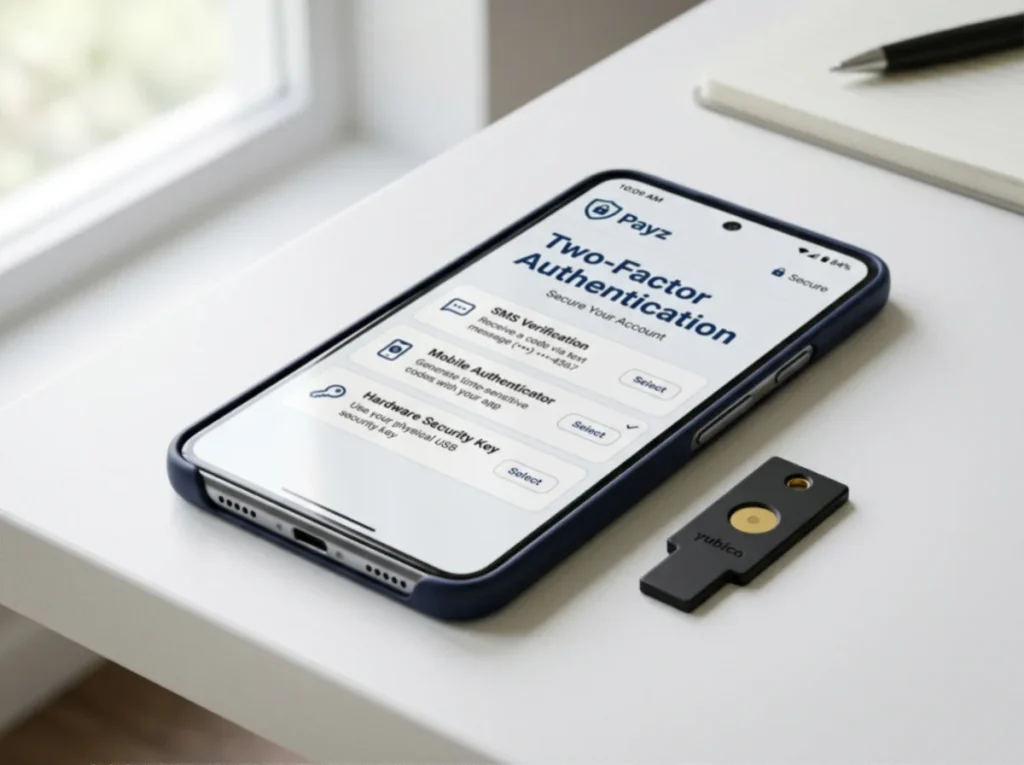
The security setting that affects every deposit you make
I have one rule I push on every Payz user who deposits at UK casinos: don’t leave 2FA at the SMS default. The default works, and the wallet will function with SMS 2FA in place indefinitely, but it produces a slower and less secure experience than the alternatives. The configuration choice ripples through every single deposit you make from then on, which makes it one of the highest-leverage settings on the account.
What's inside this guide
This piece walks through the four main 2FA configurations available on Payz, what each does to your casino deposit flow, and how to recover when the system locks you out. The choice matters more than most players realise, and the right configuration takes about ten minutes to set up.
SMS 2FA defaults and limits
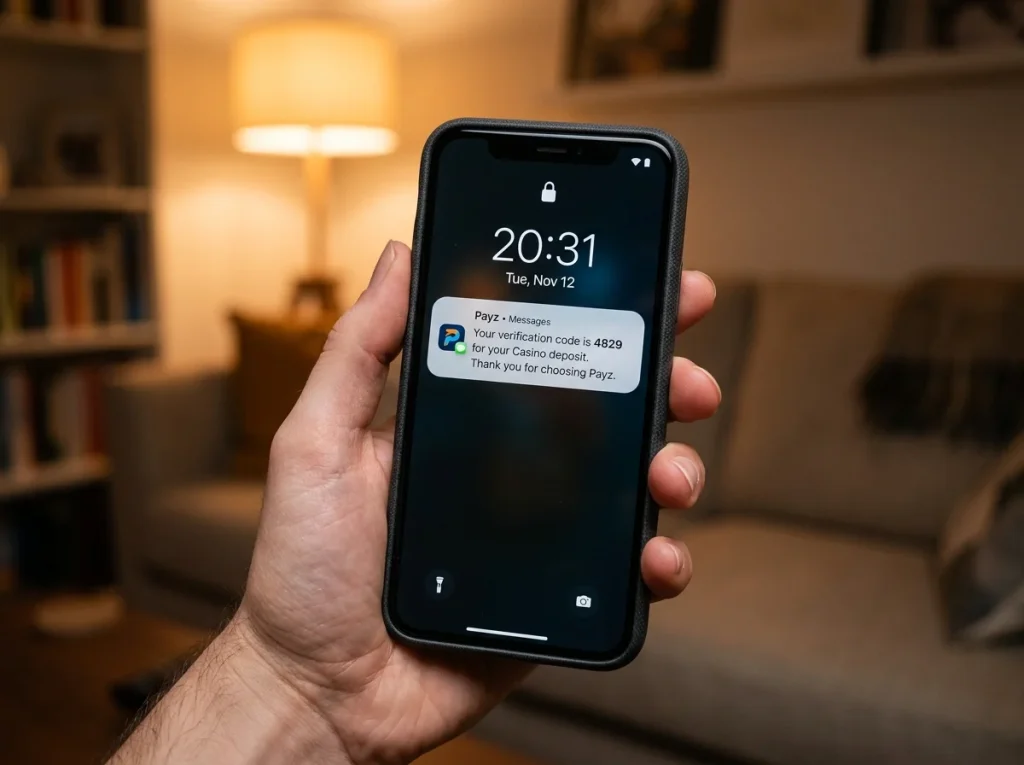
SMS 2FA is the default factor activated on every new Payz account once phone verification is complete. The wallet sends a numeric code to your registered mobile number every time you log in or authorise a sensitive transaction, and you type the code into the wallet’s interface.
The strengths of SMS are familiarity and lack of additional setup — you already have a phone, you already receive texts. The weaknesses are significant. SMS delivery times vary from one second to several minutes depending on the carrier, the time of day and the regional network conditions. SMS codes can be intercepted by SIM-swap attacks, which are uncommon but not unheard of in the UK. And SMS as an authentication factor has been formally classified as weaker than app-based alternatives by NIST and by various regulators including the FCA.
For casino deposit flow specifically, SMS 2FA introduces 15-60 seconds of latency per deposit that requires authentication. This is fine for slot play where the timing isn’t critical. It’s marginal for live dealer where betting windows can be tight. It’s frustrating across high-frequency reload patterns where the cumulative time spent waiting for texts adds up across a session.
SMS 2FA also has session-level limits. Most wallets, including Payz, require fresh 2FA at unpredictable intervals as a security measure — sometimes every transaction, sometimes only on new devices, sometimes randomly to confirm the session. The unpredictability means you can’t just authenticate once at the start of a session and ride that through.
Authenticator app setup walkthrough
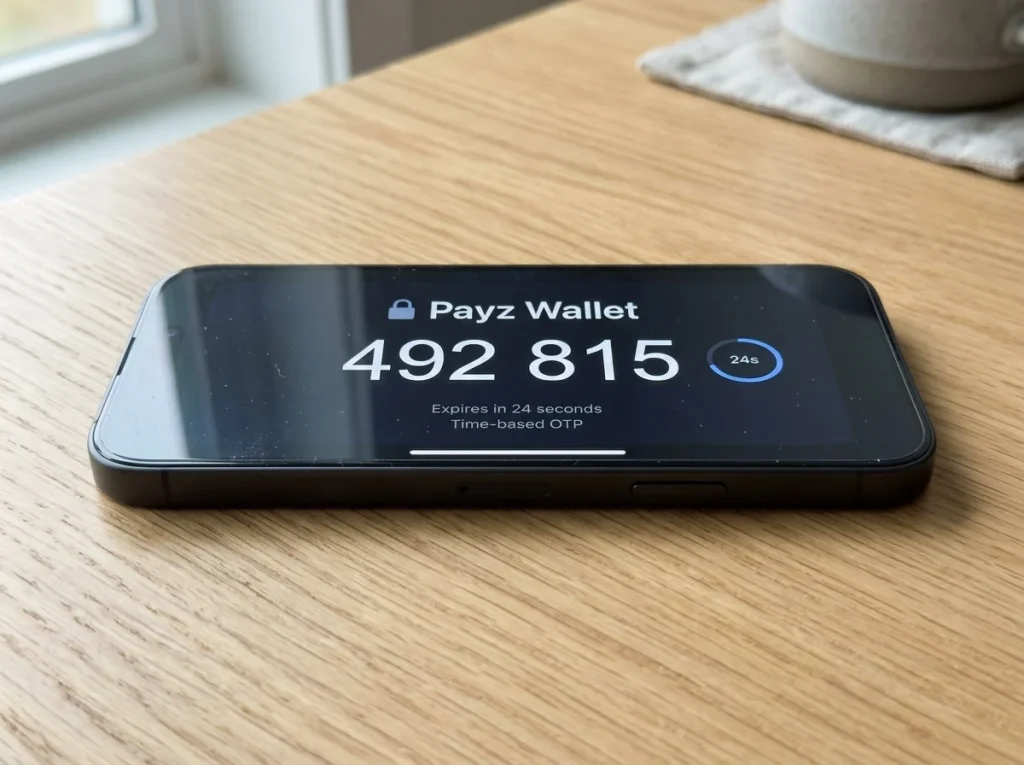
The strongest single upgrade for most users is moving from SMS to a TOTP authenticator app. Time-based one-time passwords are generated locally on your phone every 30 seconds, no network round trip required, and they’re significantly more resistant to interception than SMS codes.
The setup process on Payz takes about ten minutes. Open the Payz app or web interface, navigate to security settings, find the 2FA section, and select “authenticator app” as the method. The wallet displays a QR code. Open your authenticator app of choice — Google Authenticator, Microsoft Authenticator, Authy, 1Password, or one of dozens of equivalent apps — and scan the QR code to add the Payz account. The authenticator app starts generating six-digit codes that change every 30 seconds.
To complete the switch, the wallet asks you to enter the current code from your authenticator to confirm the link. Once verified, future authentication challenges will use the authenticator app instead of SMS. The transition is reversible — if you change phones or lose access to the authenticator, you can fall back to SMS via the recovery process.
The casino deposit impact is immediate. Where SMS introduced 15-60 seconds per challenge, the authenticator app introduces 2-5 seconds — the time to open the app and read a code. Combined with biometric unlock on the authenticator (most modern authenticator apps support Face ID or fingerprint), the total time to produce a 2FA code can be under three seconds.
The smartphone-centric nature of this flow matters because around 80% of UK online gamblers now use smartphone as their primary device. The setup time investment of switching to an authenticator app is paid back across hundreds of subsequent deposit transactions for any active user.
Hardware keys and passkeys
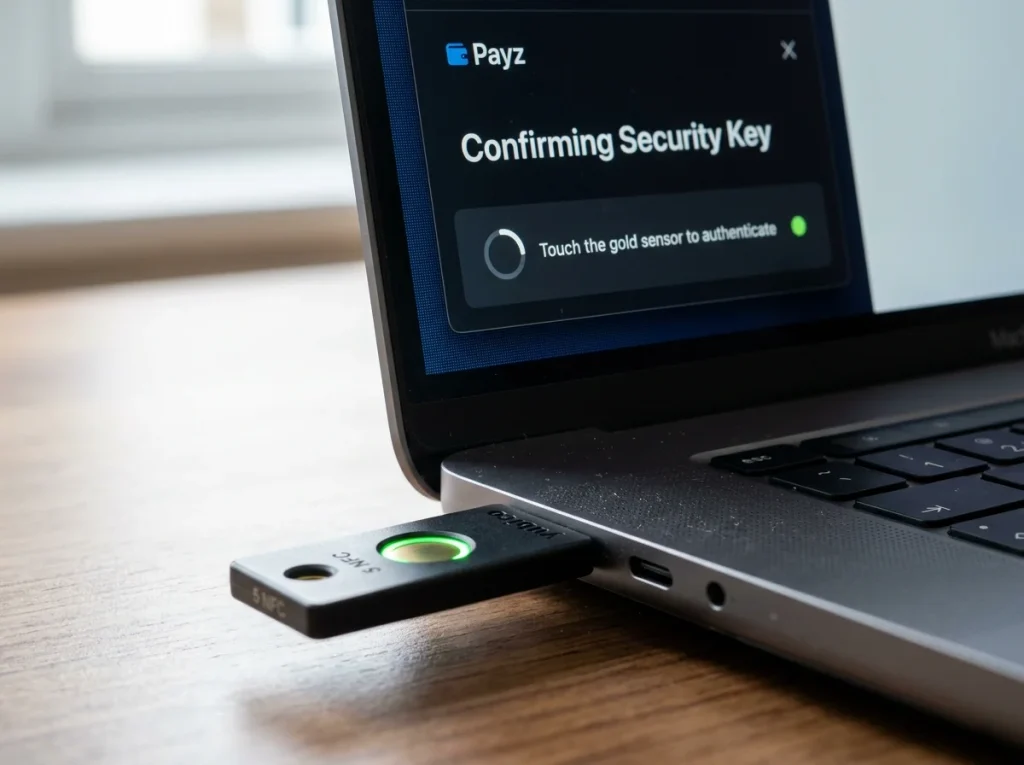
Above the authenticator app sits the hardware-key tier — physical security devices like YubiKeys that produce authentication tokens via USB, NFC or Bluetooth. Hardware keys are the strongest practical 2FA factor available to consumers. Payz supports them through the FIDO2 standard, alongside passkeys which provide similar security characteristics in a software form factor.
The strength of hardware keys is that they’re impossible to phish — a key only authenticates against the specific domain it was registered to, so even a convincing phishing site can’t extract a usable code from the key. They’re also fast in active use, faster than authenticator apps, because authentication is a single touch or tap rather than reading and typing a code.
The weakness is the device. Hardware keys cost £25-£60 each, you need at least two for redundancy (a primary and a backup), and you have to physically carry them. For most UK casino users this is over-engineered. For higher-balance accounts where the wallet is part of a meaningful financial position, the upgrade is worth considering.
Passkeys, which use the FIDO2 standard but store keys on the phone or laptop rather than on a separate device, offer most of the security benefit of hardware keys without the carrying overhead. Apple, Google and Microsoft have all rolled out passkey support across their ecosystems, and Payz allows passkey enrolment on accounts that meet the verification threshold. Passkeys are the format I expect to dominate Payz 2FA configurations by 2027 — they’re as secure as hardware keys for most threat models and as convenient as biometric app login.
Recovery when 2FA locks you out
The flip side of strong 2FA is the recovery problem when the factor stops working. Lost phones, factory-reset devices, deleted authenticator apps, and expired SIMs all produce 2FA failures that can lock you out of the wallet entirely.
Payz operates a recovery process for these situations that’s deliberately slower than the standard login flow. You contact PSI-Pay support, identify yourself through the documentation chain you established at registration, and the support team verifies your identity before allowing 2FA reset. The recovery process is intentionally friction-heavy because the alternative is making the wallet trivially compromisable through fake “lost device” claims.
The verification chain that supports recovery is what makes the rebuilding process trustworthy. PSI-Pay CEO Phil Davies described the underlying philosophy in a Trulioo case study: “We need to be crystal clear to prove that what our customers are providing is real and authentic. We are also required to conduct checks on politically exposed persons and OFAC because of our relationship with MasterCard — an American company with a different set of standards.” The standards Davies references apply to onboarding and to recovery alike. The same care that gets you into the account in the first place is required to re-enable access to a locked account.
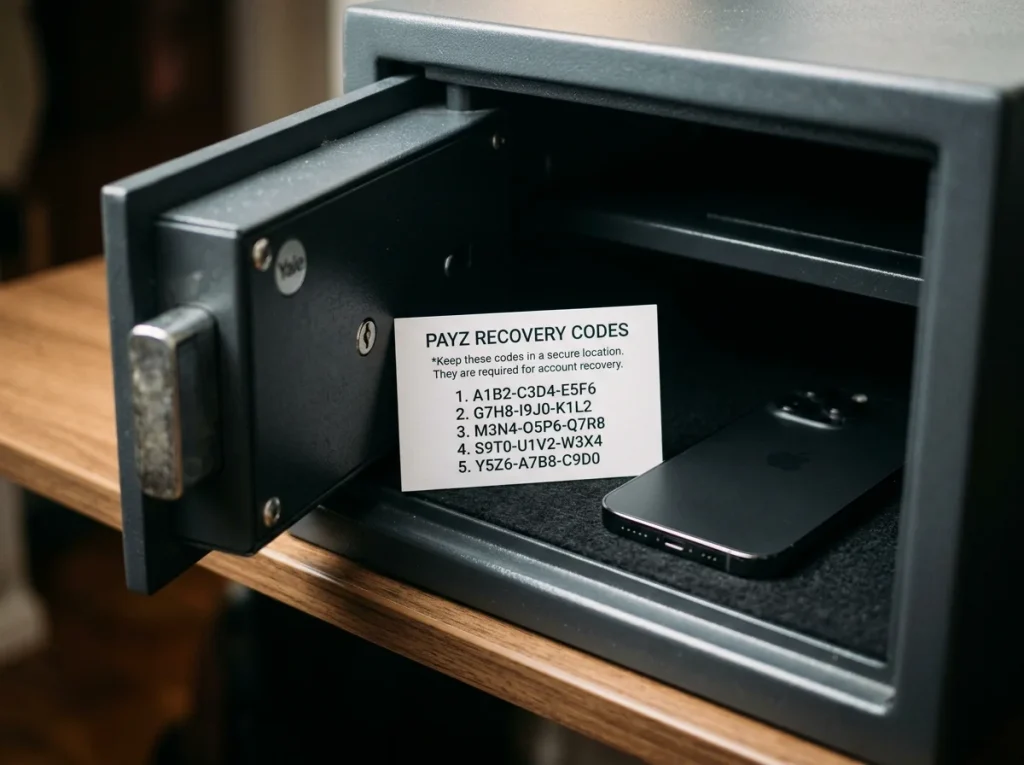
Practical recovery preparation is worth doing in advance. Store the QR code or backup secret from your authenticator app setup somewhere safe and offline — a printed copy in a sealed envelope, or a secure password manager backup. Keep a second authenticator app with the same account loaded as a phone-loss fallback. Document your registration phone number, email and address in a place you can access if your phone is unavailable. Players who do this preparation can recover in hours rather than days when something goes wrong.
Casino-side 2FA versus Payz 2FA
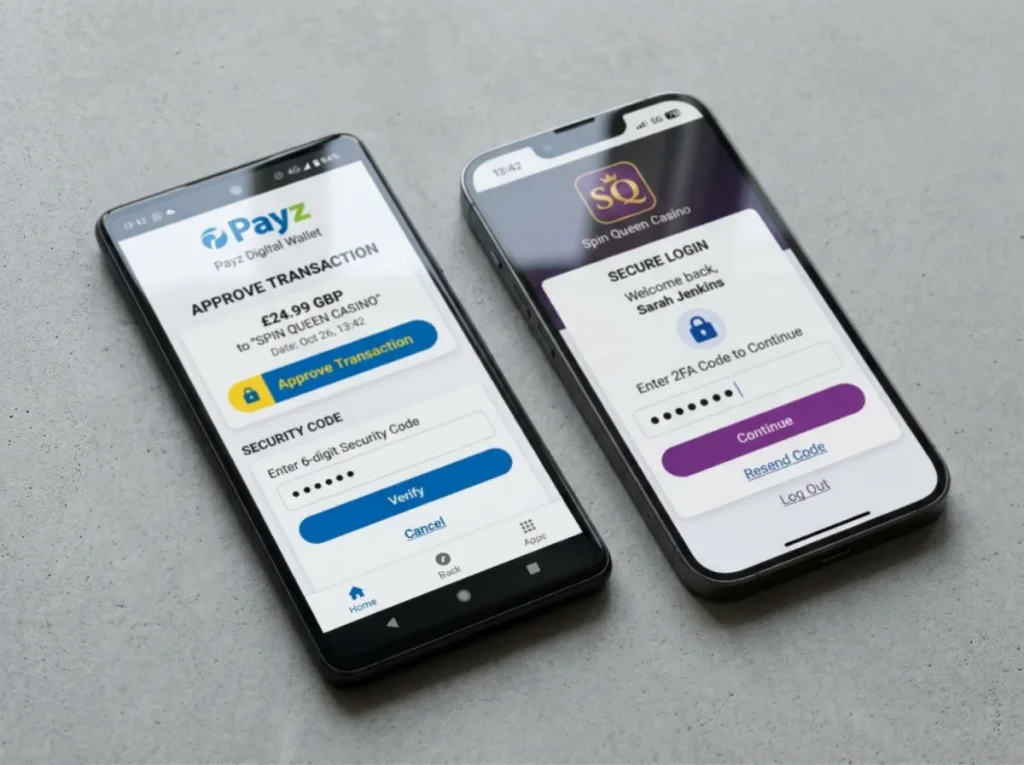
The Payz 2FA layer is independent of any 2FA the casino itself runs on your casino account. These are two separate authentication systems protecting two separate accounts, and configuring them is a separate exercise on each side.
Most UK casinos now offer some form of 2FA for the casino account itself, usually SMS-based and sometimes opt-in rather than mandatory. The casino 2FA protects access to the casino account; the Payz 2FA protects access to the wallet. When you deposit from Payz to a casino on a fully secured account, you may pass through both layers in sequence — log into the casino with casino 2FA, initiate a deposit, authenticate to Payz with wallet 2FA, complete the deposit.
With mobile now accounting for 71% of all online wagers in the UK, both authentication layers happen on the phone for most users, which makes the configuration choices on each side compound directly into the deposit experience. App-based authentication on both wallet and casino, with biometric unlock, produces the smoothest deposit flow. SMS on either side introduces friction. SMS on both sides produces the longest possible authentication latency in the standard flow. The card-level authentication layer that sometimes appears on top of these two — for top-ups funded from a debit card — is covered in the breakdown of 3D Secure for Payz casino deposits.
Does losing my Payz 2FA also lock my casino balance, or only Payz withdrawals?
It locks Payz withdrawals and Payz-funded deposits. Your casino balance itself is separate and remains accessible via the casino account, including for withdrawal to alternative methods that don"t depend on Payz. The lock affects the wallet leg of any future Payz transaction.
Is SMS 2FA on Payz strong enough by FCA PS25/12 standards from 7 May 2026?
SMS satisfies the minimum bar for SCA under the rules, but it sits at the weakest end of acceptable. The PS25/12 framework encourages stronger factors and expects firms to evaluate and improve authentication quality over time. For player-side decisions, moving above SMS makes both security and usability sense, regardless of the regulatory minimum.
Can I use the same authenticator app for both Payz and my casino account?
Yes. Authenticator apps like Google Authenticator, Authy or 1Password support multiple accounts simultaneously. Adding Payz as one entry and your casino as another is the standard configuration and doesn"t create any conflict. Each account generates its own independent codes.
ecoPayz Casino Articles: UK Market Trends and Payment Data
Written by the editors at Ecopayz Casino UK.