
ecoPayz Silver Tier: UK Casino Limits and Account Upgrades
 Available in GB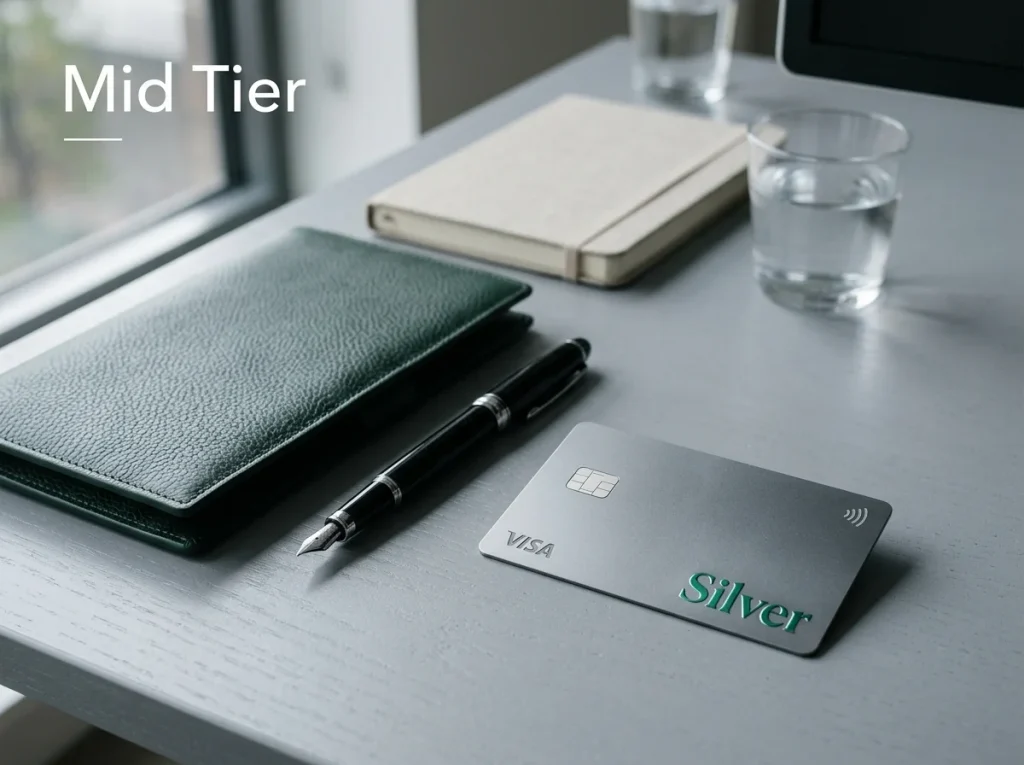
Silver Tier Strategy: Necessary Stepping Stone or Final Destination
Silver is the Payz tier most players upgrade to and then question whether they should have bothered. The headline that gets thrown around — “Silver doesn’t change the FX rate” — is true and misleading at the same time. The FX rate stays at 2.99%, same as Classic. But everything else moves, and several of those movements matter at British casinos in ways the FX rate doesn’t.
What's inside this guide
I see Silver work best for two profiles: players who’ve outgrown Classic limits but don’t yet have the monthly volume to justify Gold’s subscription, and players who want the higher caps for a one-off larger withdrawal cycle without committing to a paid tier. This piece walks through what Silver actually unlocks, what it leaves untouched, and how to decide between staying at Silver and skipping ahead to Gold.
How Silver actually differs from Classic in everyday casino use
Silver is built around limit headroom, not fee reduction. That distinction is the single most important thing to understand before upgrading.
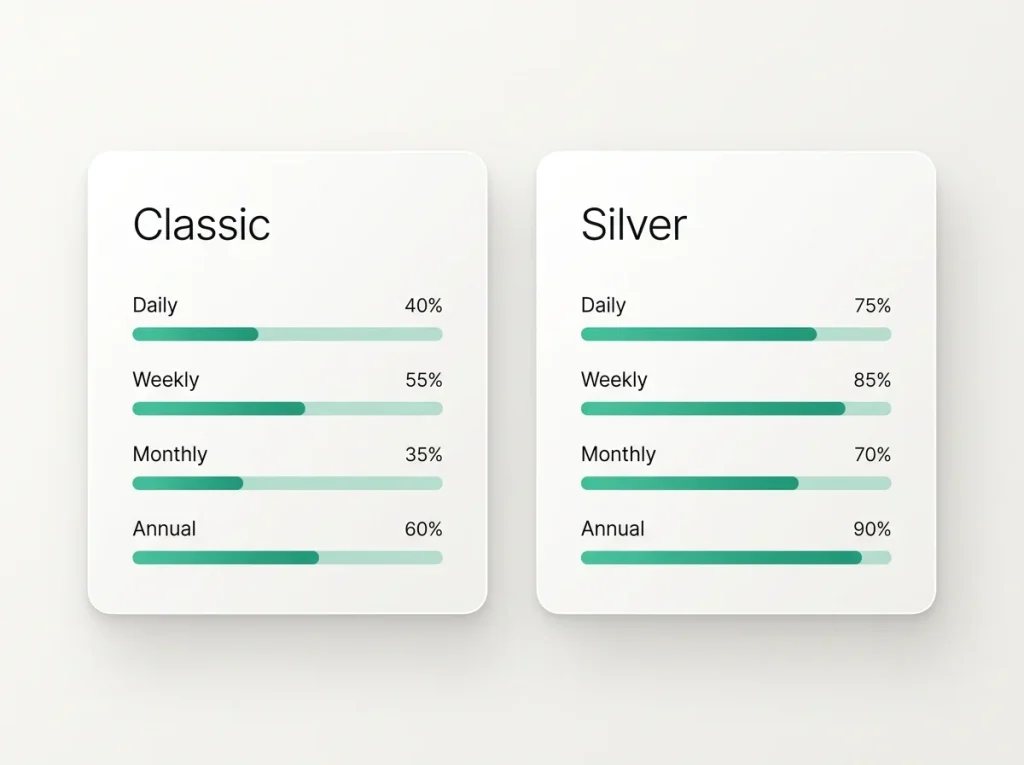
What changes when you move from Classic to Silver: your annual top-up ceiling lifts substantially, your monthly funding caps lift, your single-transaction limits expand, and your withdrawal headroom widens. The Payz Mastercard daily ATM cap moves up too. For someone who’d been hitting Classic ceilings every six weeks, Silver opens enough room that the next two years usually pass without limit issues.
What doesn’t change: the FX rate stays at 2.99% (the same as Classic), there’s still no per-transaction deposit fee at the wallet side, and the contactless ceiling on the Mastercard stays at £100 because that’s a scheme rule. PSI-Pay’s balance-sheet position — total assets sat at £64.97 million at the end of its last reported financial year — provides the underlying liquidity that lets Silver users move larger sums without throttling. That’s worth noticing as context, not as a guarantee.
The casino-side experience is the same as Classic. Cashiers don’t see your tier and don’t behave differently because of it. The only place Silver shows up in casino play is in how often you bump into a wallet limit.
The Silver limits that matter for casino activity
Limit numbers shift periodically, so I’ll describe the relationships rather than fix exact figures. What’s worth knowing in 2026: Silver lifts the daily, weekly, monthly and annual top-up caps to a level where regular weekly play of £100 to £400 sessions never bumps the ceiling. The withdrawal limits widen in parallel — the headroom for a casino cashout landing into Payz, and then onward to a bank or Mastercard, sits well above what a typical UK casino player needs in a single cycle.
The Mastercard limits move up at Silver compared to Classic. Daily ATM withdrawals get a bigger window. Single-purchase ceilings open. For a player using the physical card to spend casino winnings — buying groceries, paying for a meal — the practical effect is that more of the winnings become spendable without re-tiering.
What Silver doesn’t do is remove the contactless cap of £100. That stays. If you’re using the card for in-person purchases, every transaction above £100 needs a chip-and-PIN entry. Silver also doesn’t change the monthly subscription model — Silver has no monthly fee, which is part of why it makes sense as an interim step.
For most British casino players who’ve outgrown Classic, Silver provides three to twelve months of unimpeded play before the question of moving to Gold becomes relevant.
The FX rate and the deposit fees on Silver
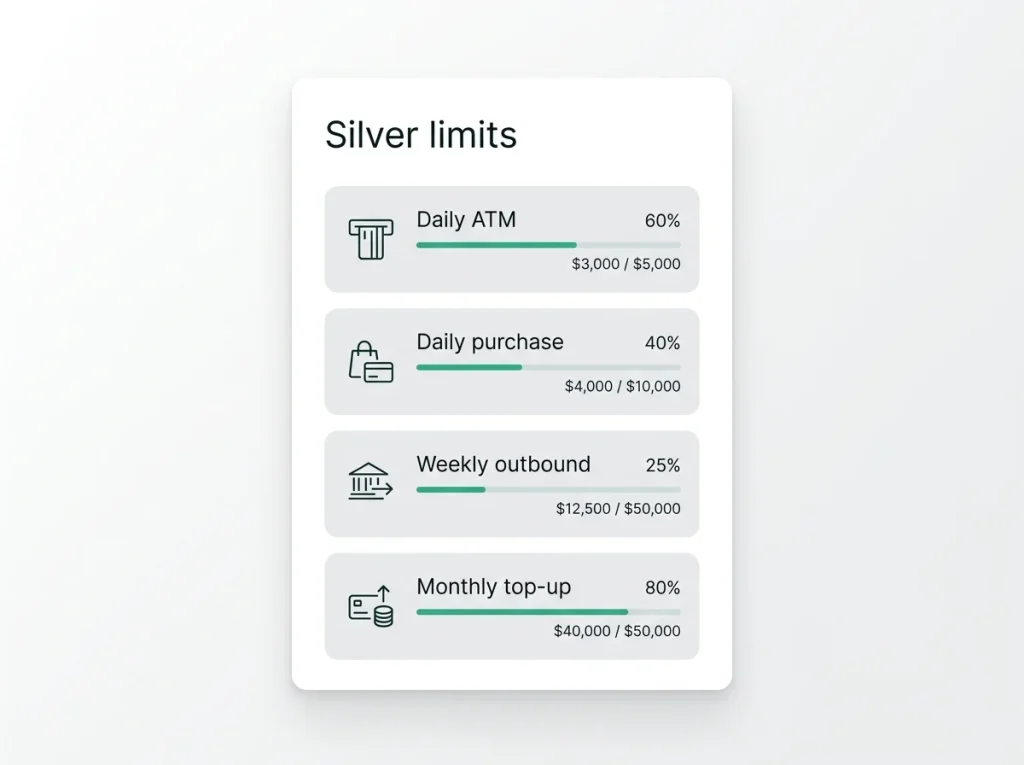
Silver-tier FX stays at 2.99%, identical to Classic. This is the single biggest reason I tell players not to upgrade for fee reasons alone — the fee structure isn’t what changes.
What this means for casino arithmetic: a £100 deposit at a EUR-billing casino costs the same ~£3 in conversion at Silver as it did at Classic. A £400 monthly cross-currency volume costs the same ~£12. Nothing about Silver shifts that maths. If you’re moving up specifically to reduce FX costs at cross-currency casinos, you’d be moving for the wrong reason — Gold is the tier that actually changes the rate, dropping it to 1.49%.
Where Silver does affect cost: the higher transaction limits mean fewer split deposits. If Classic forced you to break a £600 monthly funding budget into multiple top-ups (each touching whatever per-transaction cost your funding source carried), Silver lets you do it in one or two. That’s a small saving, but real.
The honest summary: Silver is a limits tier, not a fees tier. Upgrade for the limits if you need them. Skip Silver and head straight to Gold if your motivation is FX savings.
The documents you’ll actually need to upload
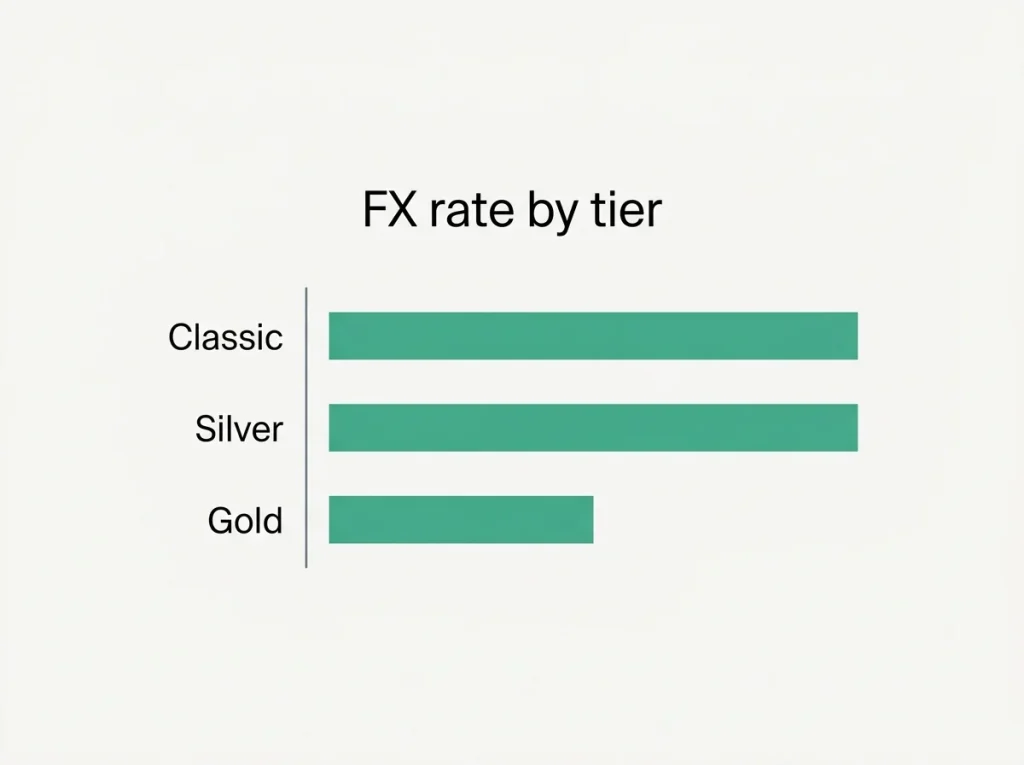
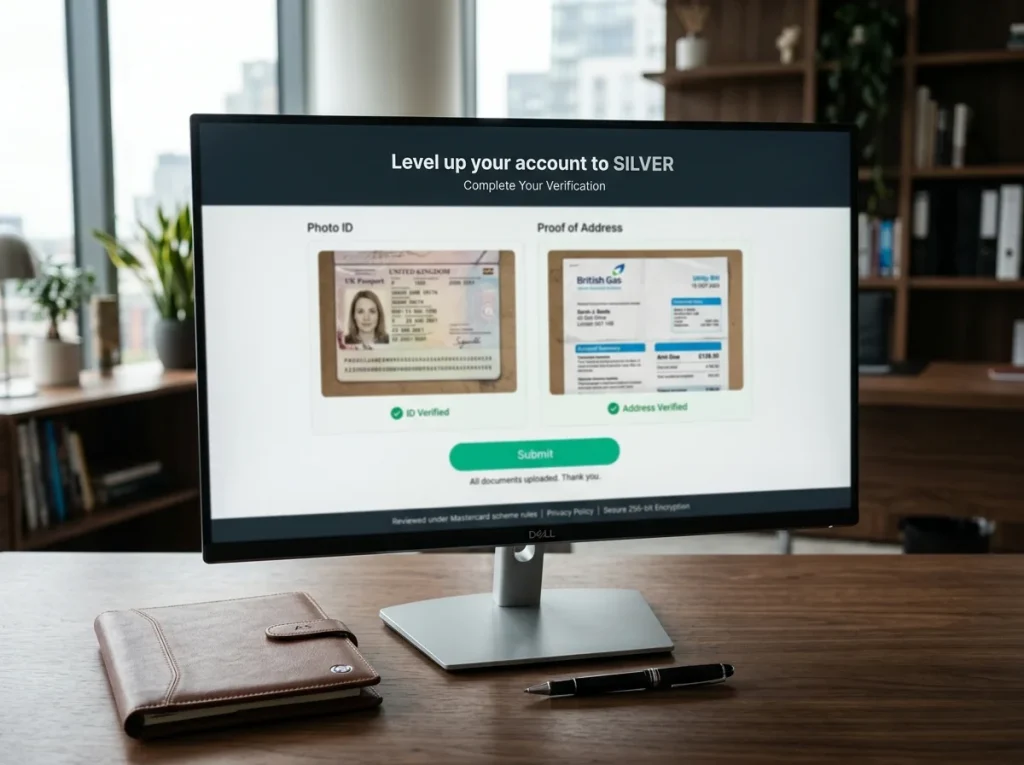
Moving from Classic to Silver is a single document round at the Payz side. Expect: a valid photo ID (passport or UK driving licence), a proof of address (utility bill, bank statement or council tax letter from the last three months), and confirmation of your phone number through a one-time code.
The verification is faster than most casino-side KYC. Routine cases clear within an hour or two in my experience; edge cases — names with diacritics that the OCR struggles with, addresses that don’t match the document — take longer because they go to manual review. PSI-Pay’s CEO Phil Davies put the underlying principle plainly: “We need to be crystal clear to prove that what our customers are providing is real and authentic. We are also required to conduct checks on politically exposed persons and OFAC because of our relationship with MasterCard.” That last reference is to PSI-Pay’s status as a Mastercard Principal Member, which imports the scheme’s enhanced screening requirements into every tier upgrade.
What this means at Silver specifically: the screening is real but proportionate. The document round is one cycle of upload, review, approval — not the iterative back-and-forth that some casinos run on their own KYC. Once Silver clears, the higher tier is live on your account within minutes.
The Silver-vs-Gold decision in numbers
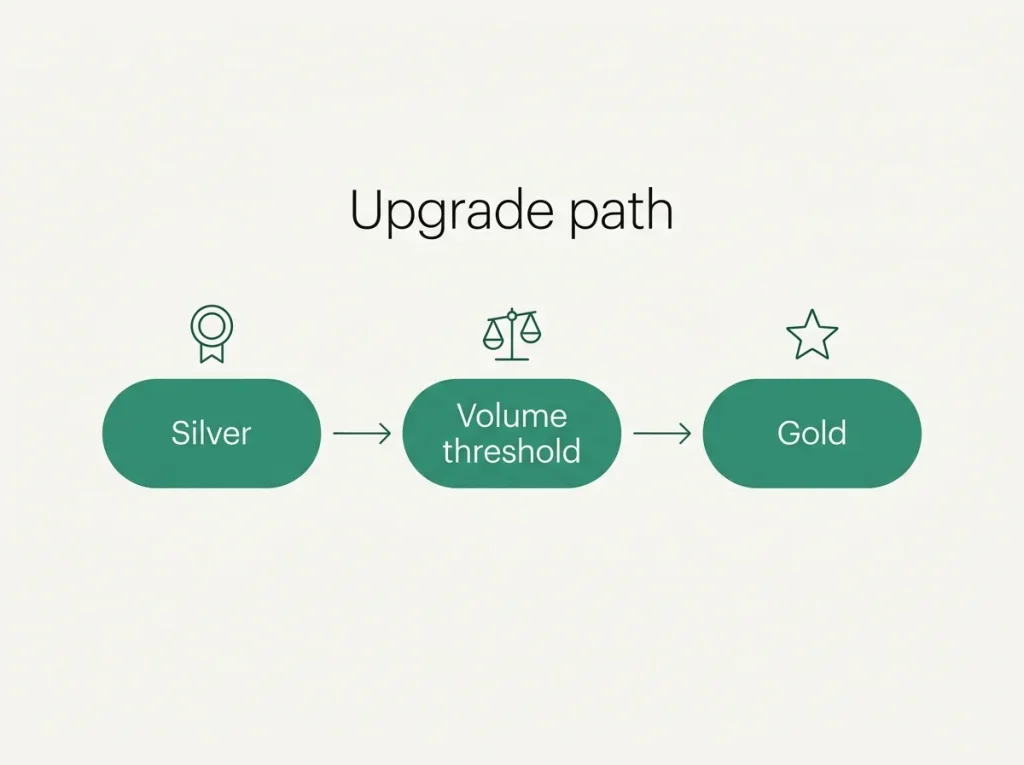
The cleanest test: does your monthly cross-currency casino volume sit above or below roughly £300? Below, stay at Silver — Gold’s monthly subscription fee will eat the FX saving. Above, Gold pays for itself within two to three months and stays cheaper from there on.
Other reasons to skip Silver and go straight to Gold: if you anticipate needing the higher ATM withdrawal limits Gold opens, if you play at platforms whose VIP programmes care about wallet tier, or if you want the lower FX rate available across the whole year rather than gated by future upgrades. The Gold-tier maths is detailed in my breakdown of when Gold’s 1.49% FX rate pays for itself.
If you’re not sure, default to Silver. The upgrade to Gold from Silver is faster than the upgrade from Classic to Gold, because Silver-tier KYC documents are already on file. You lose nothing by stepping through Silver first.
Why is the Silver FX rate the same 2.99% as Classic — what actually changes?
Silver is structured around limit headroom rather than fee reduction. The FX rate stays identical to Classic because PSI-Pay treats the first two tiers as a single FX band. What changes are the inbound funding caps, the single-transaction limits, the Mastercard ATM daily ceiling and the withdrawal headroom. If you want the FX rate to drop, the next tier that moves it is Gold.
Does upgrading mid-month to Silver retroactively lower fees on this month"s casino deposits?
No. Tier changes apply forward only. Any deposits processed before the upgrade clear at the previous tier"s rate and limits. From the moment Silver is approved, new transactions use Silver limits — but the underlying FX rate is identical to Classic anyway, so the retroactivity question matters more when stepping up to Gold.
ecoPayz Casino Articles: UK Market Trends and Payment Data
Prepared by the Ecopayz Casino UK editorial staff.