
ecoPayz Casino Withdrawal Delays in the UK: Where the Hours Actually Go
 Available in GB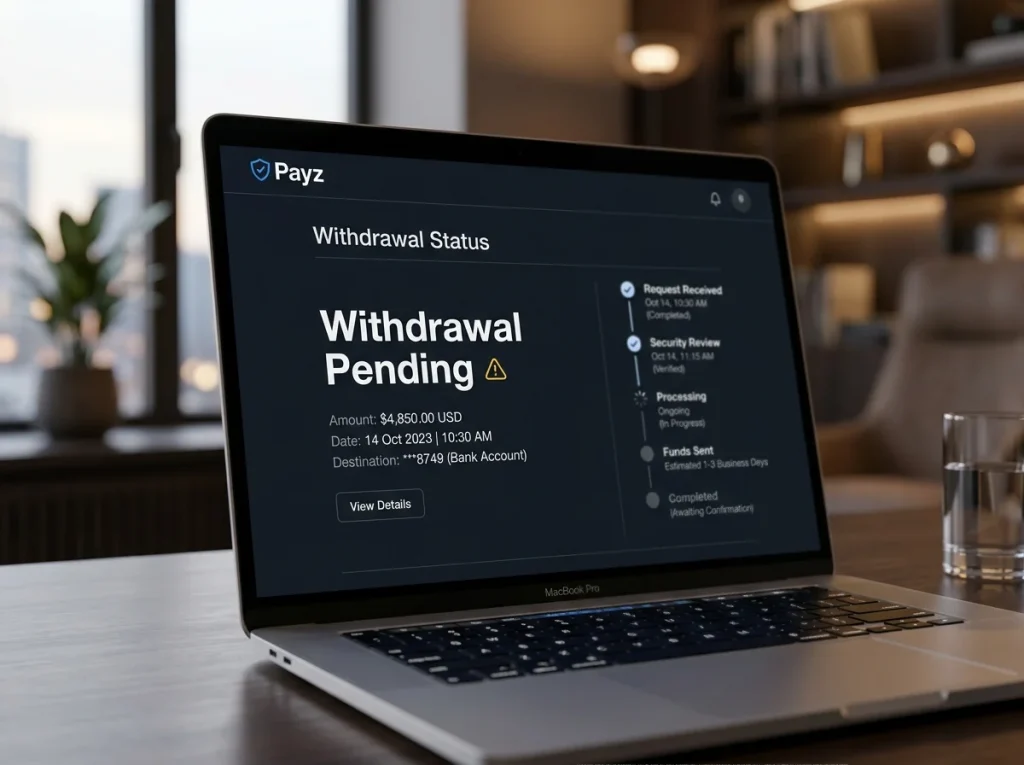
The withdrawal that took four days for no obvious reason
A reader in Cardiff sent me a timeline of his most recent Payz withdrawal that ran across four working days. The casino’s published payout time was “up to 24 hours”. The actual sequence was: request submitted Tuesday afternoon, KYC document re-request Wednesday morning, document approval Thursday afternoon, AML hold Thursday evening, hold released Friday morning, payment instruction sent Friday lunchtime, Payz balance credited Friday lunchtime. Each individual step had a defensible explanation. The cumulative effect was a withdrawal that took almost four days to produce funds.
What's inside this guide
This kind of pattern has become more common than it used to be. Between May and December 2025, the UKGC issued thirteen public enforcement actions against UK operators, with total fines exceeding £50m largely tied to AML and social-responsibility failings. The downstream effect on every operator’s withdrawal process has been a measurable tightening. This piece walks through where the hours actually accumulate so you can predict — and shorten — your own withdrawal timelines.
Why pending status is the default now
“Pending” used to be a status reserved for unusual withdrawals — large amounts, first cashouts, accounts with red flags. It has now become the default state for almost every withdrawal at most UK operators. The shift happened gradually through 2024 and accelerated through 2025 as the enforcement environment tightened.
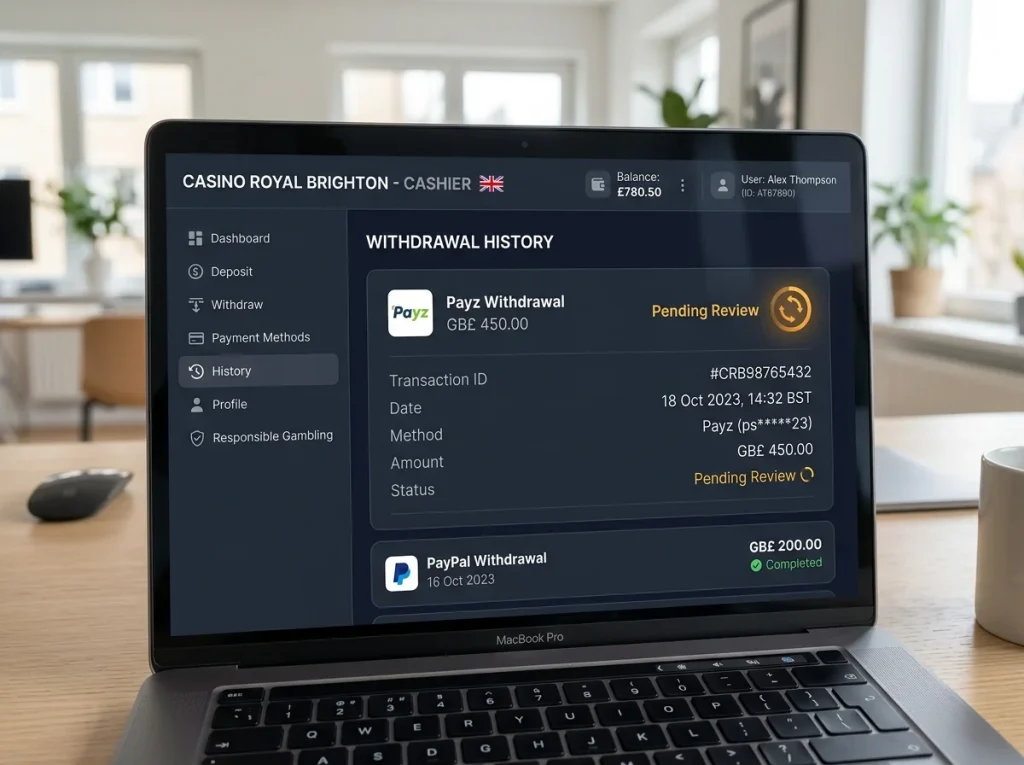
The thirteen enforcement actions between May and December 2025 covered a wide range of operator sizes and a wider range of compliance shortfalls, but the common thread across the published findings was that operators had not applied withdrawal-side checks consistently. The regulator’s expectation, made explicit in subsequent guidance, is that withdrawal review is the most reliable point at which to identify and respond to social-responsibility concerns, because by definition the player has accumulated activity by the time they’re cashing out.
The operator-side response has been to expand the review queue. What was once an automated approval for any withdrawal under, say, £500 on an established account is now usually a manual review of every withdrawal regardless of size. The review may take only a few minutes — sometimes it does — but it consumes operator resources, and operators staff the review function based on average load rather than peak. So withdrawals that arrive during peak hours wait longer in the queue.
From a player’s perspective, the headline observation is that the “instant withdrawal” marketing language at most UK casinos no longer reflects the practical timing. The marketing describes the payment-rail leg of the journey, which is genuinely fast on Payz. The review queue sits in front of that leg and consumes most of the visible elapsed time.
KYC resubmission loops
The single most common source of multi-day withdrawal delays is the KYC resubmission loop. The player submits documents at registration or first deposit. Months later, a withdrawal triggers a review, and the operator decides the original documents are too old or insufficient. New documents are requested. The player submits them. The reviewer asks for clarification. The player responds. Each round of correspondence takes hours or a day, and a withdrawal can spend a week bouncing through this loop before clearing.
The loops are usually preventable. Proof of address must be dated within three months for most operators — older bills get rejected. Identity documents must be unexpired. Names must match exactly across documents. Any name discrepancy, even something as minor as “Robert” on one document and “Bob” on another, can trigger a clarification request. Source-of-funds documentation, when requested, must show a clear chain from earnings to deposits.
The fix is documentation hygiene done proactively. Players who maintain a folder of current documents — passport scan, latest utility bill, recent bank statement, recent payslip — can respond to a KYC request in minutes rather than days. Players who scramble to find documents in response to a request often submit something inadequate, triggering another round of requests. The compound effect on withdrawal timing is large: a well-prepared player clears a KYC trigger in 24 hours, an unprepared one in 4-5 days.

AML flag categories
AML flags are the second major source of withdrawal delay, and they’re harder to clear quickly because they require the operator’s compliance team rather than just a document reviewer. The relevant flag categories at UK casinos include velocity flags, pattern flags, source-of-funds flags and sanctions-screening flags.
Velocity flags trigger when deposit or withdrawal activity exceeds historical norms for the account. A player who normally deposits £50 a week suddenly depositing £500 in a day will trigger a velocity flag, even if the source is legitimate. The flag pauses the withdrawal until a human reviews it.
Pattern flags trigger on activity sequences consistent with money laundering or bonus abuse. Deposits from multiple methods followed by withdrawal to one. Long sessions with minimal stake variation. Activity at unusual hours relative to the player’s profile. Each pattern has a defensible explanation in most cases, but the operator has to surface and document that explanation.
Source-of-funds flags trigger when cumulative deposit volume exceeds the operator’s threshold for enhanced due diligence, often £2,000-£5,000. The NetBet £650,000 fine in 2025 was specifically about operators allowing players to cross these thresholds without proper documentation. The post-fine reaction across the industry has been to tighten the threshold trigger and to apply the check earlier in the deposit lifecycle.

Sanctions-screening flags are rarer but more severe — they fire when an account’s name or activity matches a sanctions-list pattern. These almost always require human review and often produce withdrawal holds that extend across multiple working days while the compliance team investigates. They’re rare but disproportionately disruptive when they hit.
Weekend and bank holiday effects
UK operator compliance teams operate primarily on business-day hours, which produces a systematic delay pattern for withdrawals requested outside Monday-Friday daytime. A withdrawal requested Saturday morning typically enters a review queue that doesn’t substantively work until Monday morning, regardless of how the cashier displays the status during the weekend.
The pattern compounds on bank holidays. A Friday-evening withdrawal heading into a long weekend can sit untouched for three full days. Operators don’t usually communicate this explicitly — the status remains “pending review” throughout — but the practical effect is that the review timer starts on the next working day, not at submission.

Payz’s own side of the process runs continuously and doesn’t have weekend delays. The wallet credits incoming gambling withdrawals in real time, twenty-four hours a day, seven days a week. The delay you experience over a weekend is purely the casino’s review queue.
For players who can choose when to request withdrawals, Monday or Tuesday morning is the optimum slot. The review queue is shortest at the start of the working week, and a withdrawal requested then often clears the same day. A withdrawal requested Friday afternoon faces both end-of-week queue depth and the weekend gap.
Escalation routes when the wait becomes unreasonable
Most withdrawals clear within the operator’s published timeframes, even if those timeframes are longer than the marketing suggests. When they don’t, the escalation routes available to UK players are predictable and worth knowing.
The first step is always the operator’s own complaints procedure. UK operators are required to have a formal complaints process under their UKGC licence, with stated response timeframes — typically eight weeks for final resolution but with interim acknowledgement within 48-72 hours. Submitting a formal complaint, rather than continuing to email general support, often surfaces the withdrawal to a different level of the operator’s organisation and produces faster movement.

The second step, if the complaint isn’t resolved within the operator’s stated timeframe, is alternative dispute resolution through the operator’s nominated ADR provider. IBAS is the most common ADR for UK gambling complaints, and they can mediate withdrawal disputes between players and operators. The ADR step is free to the player and produces written outcomes that are binding on the operator.
The third step, rarely needed, is direct complaint to the UKGC. The Commission doesn’t resolve individual disputes but does take systematic complaints into account when reviewing operator conduct. A pattern of withdrawal-delay complaints can contribute to enforcement action against an operator, though it doesn’t directly resolve the individual case.
Payz itself can be involved in disputes only where the delay is on the wallet’s side rather than the casino’s, which is rare. PSI-Pay’s customer support can confirm whether a payment instruction has been received from the casino, which is often useful as evidence in a casino-side dispute. The full picture of what “instant” means as a comparison point — and why some withdrawals do still clear in under an hour — is covered in the breakdown of Payz instant withdrawal casinos in the UK.
Can I formally complain to IBAS if Payz cleared but the casino is still sitting on the cashout?
Yes, if the operator has used IBAS as their nominated ADR provider and you"ve completed the operator"s own complaints procedure first. The ADR step is free to the player and binding on the operator if their decision goes against the casino. Most UK casino licences nominate IBAS or eCOGRA for these disputes.
Why does the same Payz tier process some withdrawals in 30 minutes and others in 30 hours?
The wallet tier doesn"t drive the timing — the operator"s review queue does. Two withdrawals from the same account can take different times depending on the queue depth when each was submitted, whether either triggered an AML or KYC flag, and the time of day or day of week the request was made.
Does it help to contact the casino"s support team during a pending review?
Rarely. Support agents typically can"t accelerate compliance reviews — they can confirm a withdrawal is in queue but can"t move it forward. The exception is when you have new information (clarifying a deposit source, providing a missing document) that addresses what"s holding the review.
ecoPayz Casino Articles: UK Market Trends and Payment Data
Written by the editors at Ecopayz Casino UK.