
ecoPayz Gold Tier: 1.49% FX Rate and UK Casino Limits
 Available in GB
Gold Tier Economics: Reaching the Cost-Effective Volume Threshold
Gold is the first Payz tier where the underlying fee structure actually shifts, and that’s why most players who use Payz seriously eventually land there. Classic and Silver both run at 2.99% FX. Gold drops that to 1.49% — a halving, not a trim. I’ve helped clients work through the upgrade decision dozens of times, and the conversation always lands on the same question: at what monthly volume does the lower rate cover Gold’s subscription fee? The answer is more specific than the brochures suggest.
What's inside this guide
This piece walks through the exact arithmetic, the limits that move alongside the FX rate, the monthly fee that has to be earned back, and the player profile where Gold actually pays off. If you’re depositing under £200 a month in pure sterling at UK casinos, Gold is wrong for you. If you’re moving £400+ across a mix of GBP and EUR platforms, it’s almost certainly right. Most British casino players sit somewhere in between, and that band is where the decision deserves real attention.
High-volume players who exceed these monthly thresholds will automatically qualify for the exclusive ecoPayz Platinum and True VIP tiers, unlocking significantly lower FX rates.
What Gold delivers that Silver doesn’t
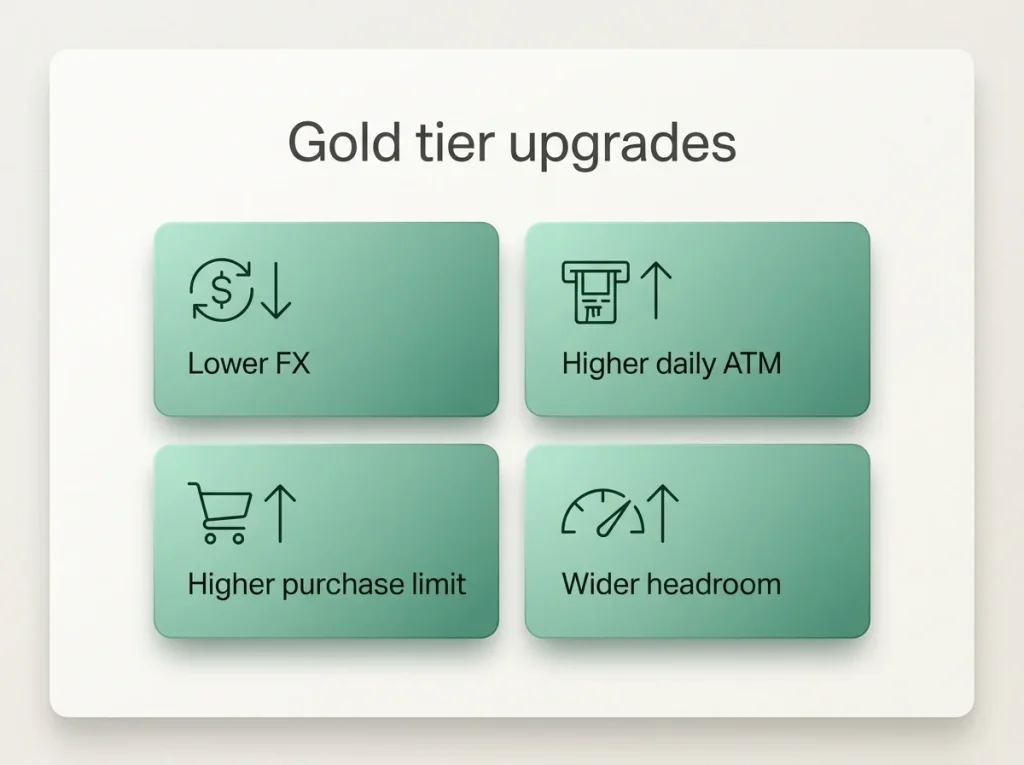
The FX rate is the headline, and rightly. Gold drops the conversion rate to 1.49%, half of what Classic and Silver charge. For any cross-currency casino activity, that’s the single biggest variable in your monthly Payz bill.
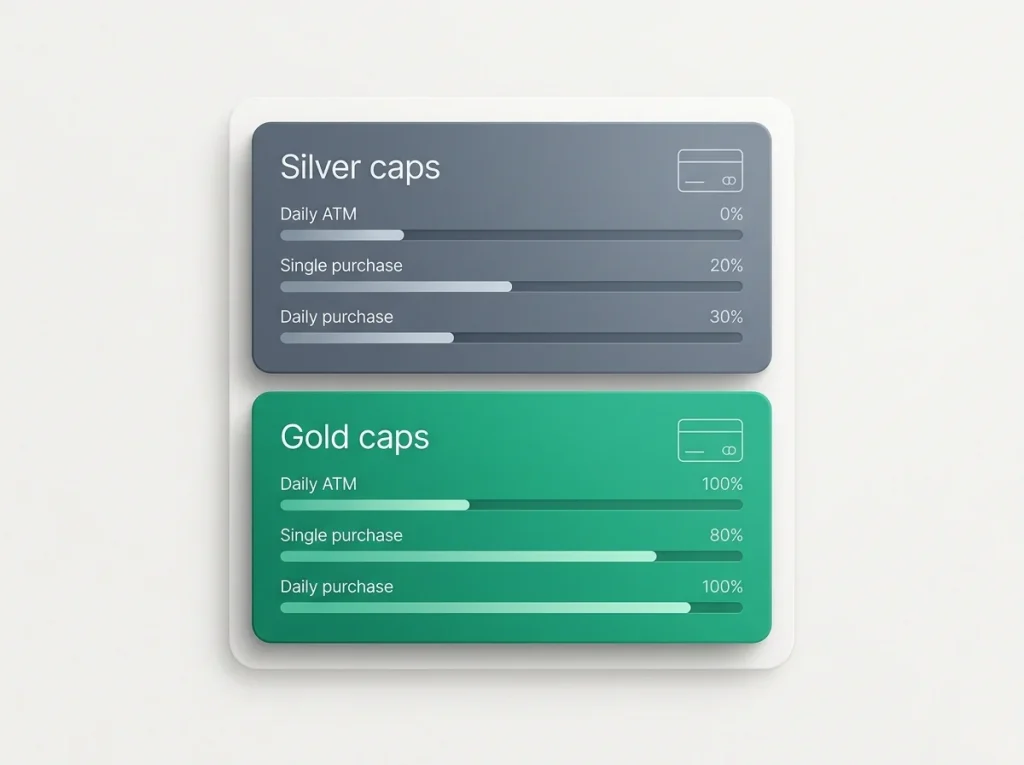
Alongside the FX change, Gold expands the limit envelope further than Silver did. Daily, weekly, monthly and annual top-up caps all step up. Single-transaction limits widen. The Payz Mastercard daily ATM ceiling sits at up to €750, and the daily purchase limit can reach €5,500 — both substantially larger than the equivalent Classic and Silver caps. For a player whose winnings might genuinely warrant a larger single cash-out, Gold provides the room.
What stays the same: the contactless ceiling on the Mastercard remains £100 because that’s a Mastercard scheme rule, not a Payz one. The wallet-side per-transaction deposit fee remains zero — you pay no fee for funding a casino balance from a GBP Payz balance. KYC requirements step up at Gold, so the upgrade itself is a slightly longer process, but the steady-state experience after upgrade is calmer.
The casino-side experience is identical to lower tiers. The wallet’s appearance in the cashier doesn’t change because of your Payz tier — only the fees and limits behind it do.
The Gold FX savings, in concrete pounds
This is the section the upgrade decision turns on. Let’s run the maths for a few realistic profiles.
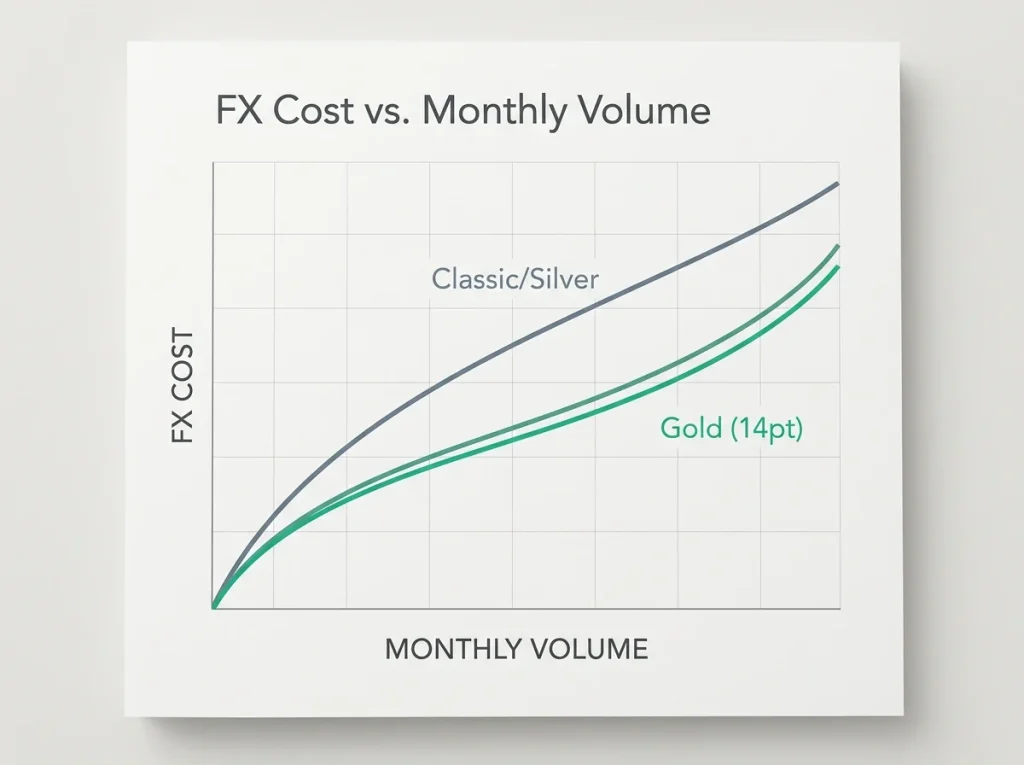
Profile one: £200 monthly cross-currency casino spend. At Classic/Silver (2.99%), the FX cost is about £6 per month, or £72 per year. At Gold (1.49%), the FX cost drops to about £3 per month, or £36 per year. The annual saving is £36. If Gold’s monthly subscription fee exceeds about £3 per month, Gold loses money on this profile.
Profile two: £400 monthly cross-currency casino spend. At Classic/Silver, the FX cost is about £12 per month, £144 per year. At Gold, it’s about £6 per month, £72 per year. The annual saving is £72. Gold’s subscription needs to stay under about £6 per month to pay off.
Profile three: £800 monthly cross-currency volume. Classic/Silver costs about £24 monthly, £288 yearly. Gold costs about £12 monthly, £144 yearly. The annual saving is £144 — comfortably ahead of any reasonable subscription fee.
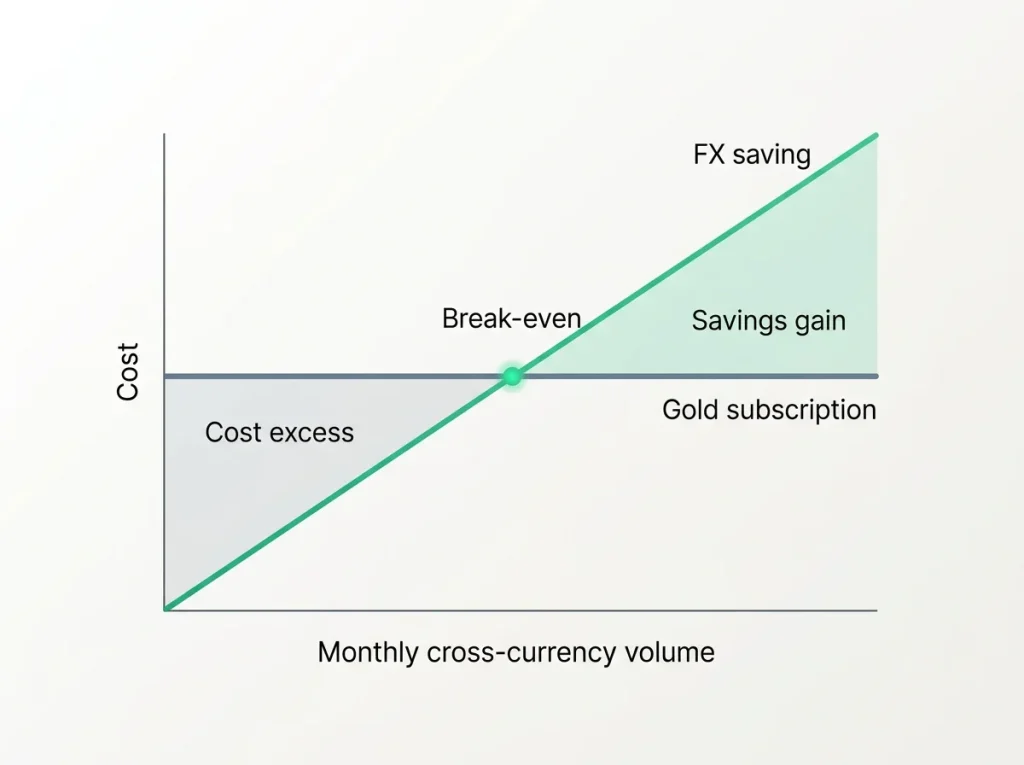
The breakpoint where Gold genuinely pays for itself sits at roughly £300 to £400 of monthly cross-currency volume. Below that, stay at Silver. Above that, Gold pays off cleanly. The same arithmetic doesn’t apply to pure sterling play at UK casinos — there the FX rate is zero regardless of tier, so Gold’s subscription has nothing to earn back.
What’s worth noticing in these calculations: the saving is linear in volume. Double the spend, double the saving. Gold’s subscription is fixed. That fixed-cost-variable-saving structure is why volume is the right variable to optimise against, not session frequency or casino count.
The limit changes that affect casino play directly
Beyond the FX rate, Gold lifts limits in ways that quietly change the practical experience of using Payz at British casinos.
Withdrawal headroom expands. A casino payout landing into a Gold-tier Payz balance has more room to onward-route to a Mastercard or bank before bumping a wallet-side weekly or monthly ceiling. For a player on a winning streak, that matters — Silver users sometimes find they’ve maxed a weekly outbound limit just as the next casino payout arrives.
Funding caps lift in parallel. Daily top-up ceilings rise to a level where serious play volumes never bump them. The annual top-up ceiling is high enough that a typical British casino player runs nowhere near it.
The Mastercard becomes substantially more useful at Gold. Daily ATM up to €750 means a full casino winnings cycle can be turned into cash in two to three ATM visits rather than five or six. Daily purchase limits up to €5,500 mean you can pay for almost any real-world transaction from the card without re-tiering. For a player who treats casino winnings as actual income, these higher caps matter more than the FX rate does.
The monthly fee trade-off
Gold carries a recurring subscription. The exact amount has shifted in the Payz fee schedule over the years; check the current rate before upgrading. The fee is debited from the Payz balance monthly, automatically, until you downgrade or close the account.
For the upgrade to make financial sense, the FX saving plus the marginal value of the higher limits has to exceed the subscription. The FX-only break-even is the easy half of the calculation. The harder half is putting a number on the higher limits.
Most players I work with value the limits at zero — they upgrade for FX savings alone. That’s the conservative approach and it produces clean decisions. A small group values the limits substantially — players who actively use the higher Mastercard caps for real-world spending, or who’d otherwise be hitting Silver wallet ceilings monthly. For that group, the subscription pays off below the £300 cross-currency threshold.
The cleanest way to test: track your Payz activity at Silver for two months. If you bumped any Silver limit even once, the upgrade adds value beyond FX. If you didn’t, the upgrade is a pure FX bet, and the cross-currency volume test settles it.
The Gold-tier player profile
Gold suits the player whose monthly cross-currency casino volume comfortably exceeds £300, who wants room to grow on the wallet side without further upgrade friction, and who values the higher Mastercard caps for real-world spending. This profile gets the FX saving plus the limit headroom plus the subscription cost in a package that comes out positive every month.
Gold doesn’t suit the casual sterling-only player. There’s no FX rate to save, and the subscription is a pure cost. Stay at Classic or Silver.
Gold also sits at an interesting decision boundary: if your volume is large enough that Gold pays off, you might also consider whether Platinum or True VIP would pay off harder. The 1.25% rate at Platinum and True VIP is another 0.24 percentage points lower — and at high volume, that 0.24 points compounds. The path from Gold to whether Platinum or True VIP makes sense for high-volume British casino players is the next decision worth reading through before any upgrade.
Maximize your gambling budget by selecting a premium operator from our leading UK Payz casino directory.

Below what monthly casino spend does Gold start being cheaper than Silver?
The break-even sits at roughly £300 to £400 of monthly cross-currency casino volume. Below that, Gold"s subscription costs more than the FX saving recovers. Above £400, Gold pays for itself comfortably and the gap widens with volume. Pure GBP-only play at UK casinos doesn"t trigger the FX rate at all, so Gold"s subscription has nothing to earn back in that scenario.
Does Gold tier reduce KYC re-verification frequency on casino-flagged withdrawals?
Indirectly, yes. Gold accounts have already cleared a more rigorous KYC stack at the wallet side, which means PSI-Pay"s risk engine flags fewer transactions for re-verification. The casino-side KYC is independent and unaffected by Payz tier. So Payz-side re-verifications drop; casino-side ones don"t.
ecoPayz Casino Articles: UK Market Trends and Payment Data
Prepared by the Ecopayz Casino UK editorial staff.