
ecoPayz Casino Deposit Not Working: Diagnose the Three Most Common UK Failures
 Available in GB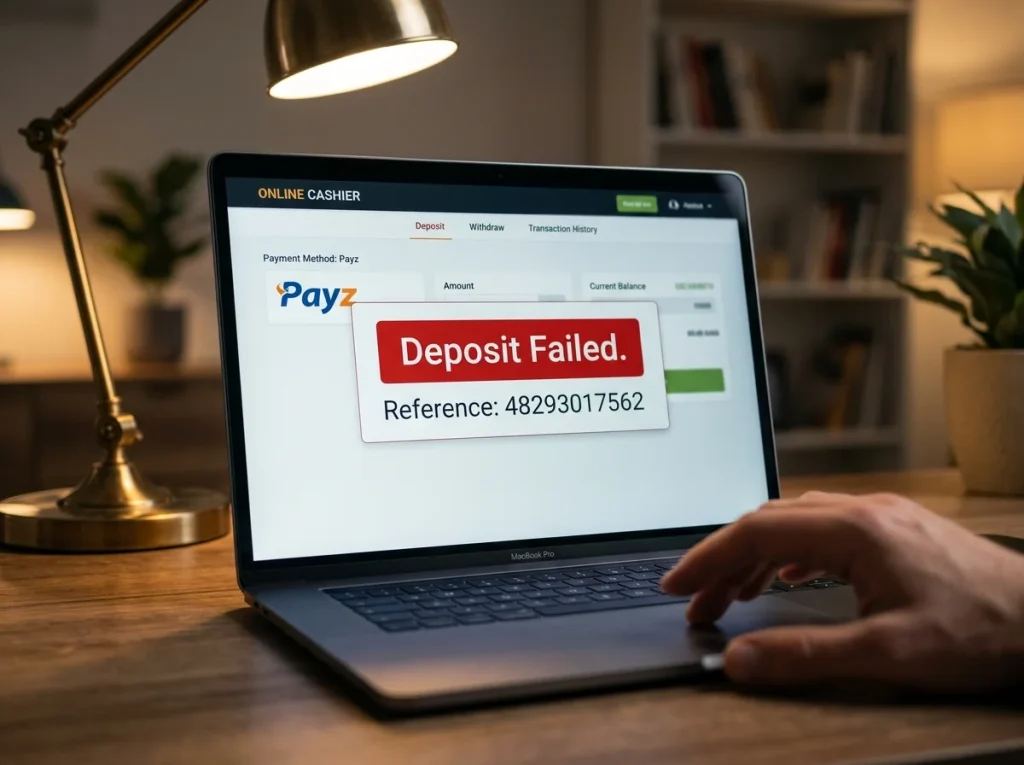
The error message that explains nothing
A failed Payz casino deposit almost always produces the same singularly unhelpful message: “Transaction not permitted. Please contact support.” Sometimes there’s a reference number. Usually there isn’t. The casino’s support agent will tell you it’s a Payz issue. Payz support will tell you it’s a casino issue. The reader who emailed me about this last week described two days of email tennis between the two before he got his £50 deposit to clear.
What's inside this guide
The truth is that Payz casino deposits fail in three distinct categories, each with different fixes. With a small amount of upfront diagnosis you can usually identify the category in two minutes and shortcut the support-tennis problem. The compliance environment around UK casinos has tightened materially over 2025 — the FCA flagged a 65% shortfall in some operator categories that’s reshaped how deposits are screened, and the operator-side caution that follows from this is one of the main reasons “transaction not permitted” has become a more frequent message than it was two years ago.
Failure category one: Payz-side
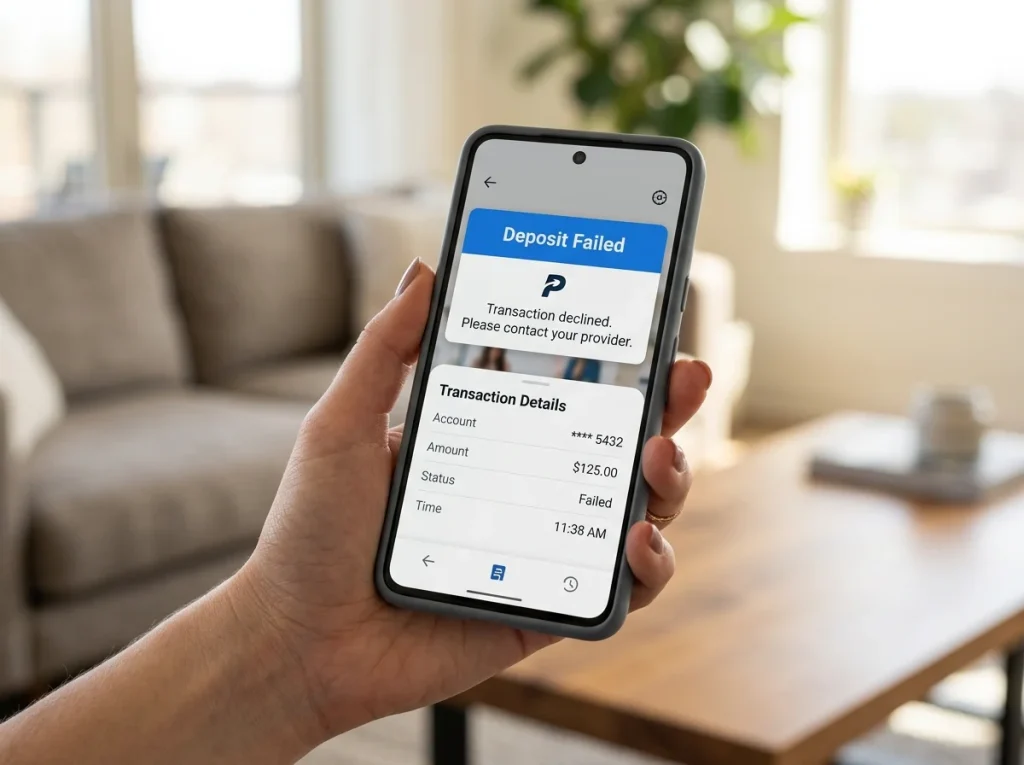
Failures on the wallet side are usually the easiest to diagnose because the Payz app or web interface will show the failure context if you check before assuming the problem is on the casino end. The pattern is almost always one of three: insufficient balance once fees are accounted for, a tier-limit breach, or a Payz-internal AML hold on the account.
Insufficient balance is the most common and the most overlooked. You see £50 in the wallet, you try to deposit £50, the deposit fails. The reason is usually FX or a pending reserve. If your balance is in a currency that doesn’t match the casino’s processing currency, Payz applies the tier FX rate — 2.99% on Classic — which means the effective available amount is £48.50, not £50. Some operators also place a small reserve on pending deposits that temporarily reduces visible balance. The fix is to fund the wallet slightly above the intended deposit amount.
Tier-limit breaches happen when a deposit exceeds the per-transaction or daily limit at your tier. Classic accounts have modest per-transaction limits; Silver, Gold and the higher tiers have progressively more headroom. If you’re trying to deposit £500 from a Classic account and the limit is £400 per transaction, the deposit fails with a vague error. The fix is either to split the deposit into smaller transactions or to upgrade the tier.
AML holds on the Payz account itself are rarer but more disruptive. PSI-Pay’s compliance team can flag an account for review based on unusual activity patterns, and during the review the wallet’s outbound transactions are blocked. The Payz app usually shows a banner about the hold; if it does, the only fix is to respond to the verification request the wallet sends and wait for the review to clear, typically 24-72 hours.
Failure category two: casino-side
Casino-side failures are more diverse than wallet-side ones because each operator has slightly different rules about what triggers a decline. The common patterns are bonus-eligibility mismatches, deposit-limit caps the player set themselves, KYC freezes pending document review, and operator-imposed velocity limits.
Bonus-eligibility declines happen when a player has an active bonus on their casino account and tries to make a deposit that violates the bonus terms. Most welcome offers prohibit second deposits during wagering on certain terms; some prohibit any deposits at all from specific funding methods. The cashier doesn’t always explain this, it just declines. The fix is to either complete or forfeit the active bonus, then redeposit.
Player-set deposit limits are the obvious one that gets overlooked anyway. If you set a £200 monthly limit three months ago and forgot about it, you’ll hit the cap on your fourth deposit and not understand why. The fix is to review your casino account’s responsible gambling settings and either accept the limit or adjust it (with the operator’s mandatory cooling-off period for upward changes).
KYC freezes are increasingly common across the UK market in the wake of the regulatory enforcement intensity through 2025. UKGC Director of Enforcement John Pierce framed the operator-side obligations clearly: “Operators are required to have effective Social Responsibility and Anti-Money Laundering policies, procedures and controls as a condition of holding an operating licence … the operator’s monthly deposit limits were found to be ineffective when tested in practice and AML controls were not applied to the standards we expect.” The £650,000 Videoslots fine that prompted that statement, alongside others through the year, has pushed every UK operator to tighten exactly the controls Pierce referenced. The practical result is that deposits which once cleared instantly now sometimes pause for a KYC document review, even on established accounts.
Our top casino picks for the UK
- BeOnBetBonus: 100% up to €500 + 100 FS · Payout speed: 1-3 business days
- WinBeastBonus: €5000 + 500 FS + €650 Freebet · Payout speed: 1-3 business days
- NightWinBonus: £900 + 400 free spins · Payout speed: 1-3 business days
- JetsetspinsBonus: 200% Bonus + 100 Free Spins + Free Royal Wheel · Payout speed: 1-3 business days
- DieselwinBonus: Welcome Pack 250% up to £4000 + 200 FS · Payout speed: 1-3 business days
- EvoSpinBonus: 125% up to €2500 + 125 Free Spins · Payout speed: 1-3 business days
- SpinFormulaBonus: 550% Up To £15,000 + 550 FS · Payout speed: 1-3 business days
- Revery PlayBonus: 100% up to€1,000+ 100 FS · Payout speed: 1-3 business days
Failure category three: network and 3D Secure
The third category is the smallest in volume but the most frustrating to diagnose because the failure is genuinely between the two systems rather than caused by either. Network-layer failures, 3D Secure authentication failures, and payment gateway timeouts all sit here.
Payment gateway timeouts happen when the casino’s payment processor — the intermediary between casino and wallet — has a slow response and the transaction times out at one end before the other completes. The deposit appears as failed on the casino side but successful on the Payz side. The funds eventually reconcile but the initial failure produces an error message that suggests something more serious. The fix is to wait 5-10 minutes and check whether the funds have actually credited; if they have, the failed-deposit message was misleading and you can ignore it.
3D Secure failures are more common when the underlying funding source for the Payz balance is a debit card that has SCA enabled. If the card-issuer’s authentication challenge times out or is rejected, the Payz top-up that was meant to enable the casino deposit fails upstream, and the casino deposit fails downstream as a result. Diagnosing this requires looking at the bank statement, not the Payz statement, because the failure occurred before Payz received the funds. The fix is to retry the top-up with the SCA prompt complete this time.
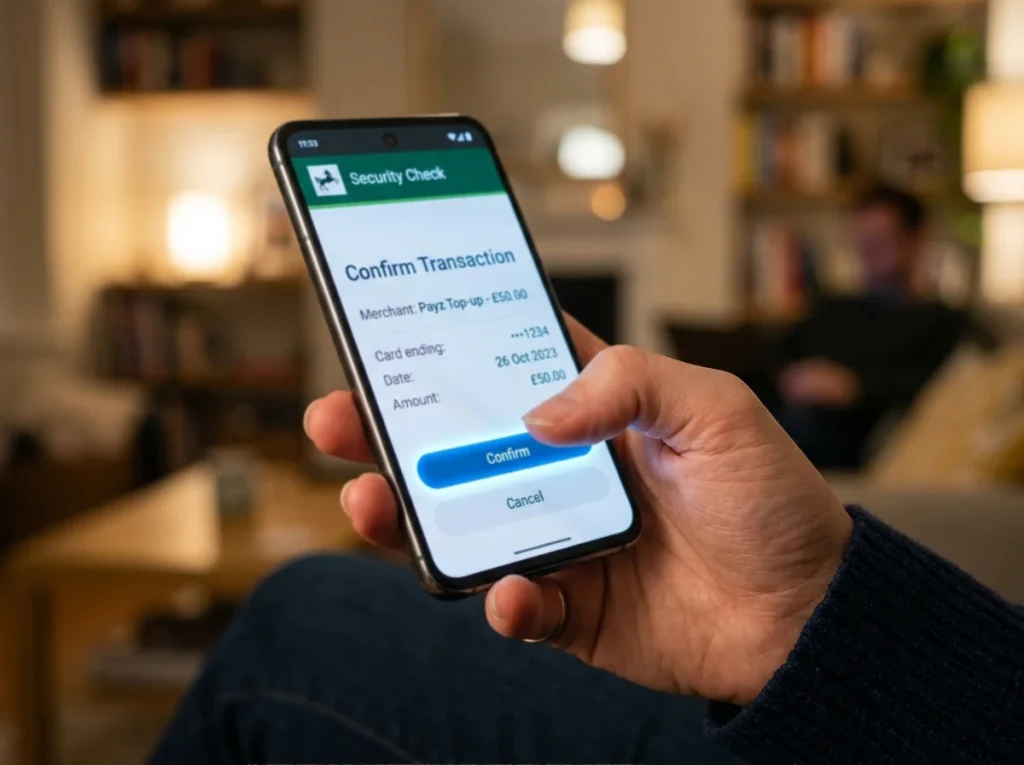
The 7 May 2026 implementation of FCA PS25/12 has tightened SCA application across UK payments, which has marginally increased the rate of 3DS-related casino deposit failures while the implementation settles. The pattern is expected to stabilise by mid-2026 as banks and merchants align with the updated rules.
What the casino actually sees when Payz declines
The casino’s view of a Payz decline is much less detailed than the wallet’s. The casino’s payment gateway receives a generic decline code from Payz — typically just a numeric identifier — and presents it to the customer as the “transaction not permitted” message. The support agent can usually see the decline code in their internal logs but rarely has visibility into the underlying reason.
This is the source of the support-tennis problem. Casino support sees a decline code and tells the player to contact Payz. Payz support, when contacted, often has more context — they can see whether the decline was tier-limit, AML, or balance-related — but is usually constrained from telling the casino’s support agent directly, because of customer privacy and inter-operator communication norms.
The Spreadex £2,022,000 fine — one of the larger UKGC actions of the year — was partly about exactly this gap. Operators were expected to have controls that could identify decline reasons proactively rather than passing the problem back to the customer. The expectation since then has been that casinos give players more diagnostic information about declines, but uptake has been uneven. Some operators have improved meaningfully; others still produce the bare minimum error message.

Step-by-step recovery
The fastest recovery path for a “transaction not permitted” Payz deposit is the diagnostic flow rather than the support call. Start with the Payz app or web interface and check three things in sequence: the available balance after FX and reserves, the per-transaction tier limit, and any compliance banner on the account. If all three are clear, the problem is casino-side.
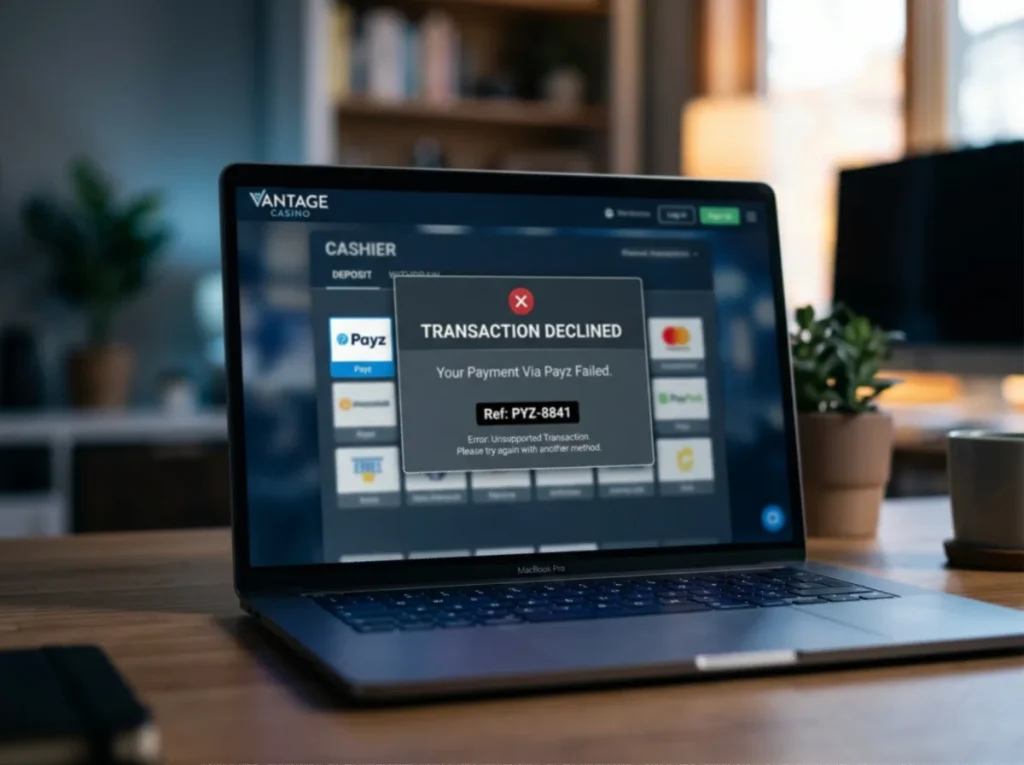
If the problem is casino-side, check four things on the casino account: any active bonus and its terms, your responsible gambling deposit limits, any KYC document requests, and whether the casino’s status page shows any payment processor incidents. If all four are clear and the deposit still fails, contact the casino’s support with the specific decline code visible in the cashier’s error message — this gives them the information needed to escalate to their payment team rather than passing you to Payz.
If the issue is network or 3DS related, the wait-and-retry approach usually resolves it within an hour. If it persists, the underlying card or bank account funding the Payz balance is the place to look rather than the wallet or the casino. The deposit walkthrough itself is a useful reset reference for anyone unsure whether their workflow is correct, and the full Payz casino deposits tutorial covers the standard happy-path flow against which to compare your failed attempt.

Why does the casino blame Payz but Payz blames the casino — how do I confirm which is right?
Check the Payz app first. If the wallet shows the transaction as declined with a specific reason (tier limit, balance, AML hold), the issue is wallet-side. If the Payz app shows no record of the transaction at all, the issue is casino-side and never reached the wallet. The presence or absence of the transaction in the Payz statement is the clearest signal.
Does a failed Payz deposit leave a temporary hold on my balance?
Sometimes, for up to a few hours. Payment processors occasionally place a soft reserve on funds for a failed transaction while reconciliation runs. The reserve usually releases within 1-4 hours. If the reserve persists beyond 24 hours, contact Payz support with the transaction reference.
If a deposit appears successful in Payz but the casino balance hasn"t updated, what"s the right next step?
Wait 15-30 minutes — the most common cause is a payment gateway timeout that reconciles automatically. If the casino balance still hasn"t updated, contact the casino with the Payz transaction reference. The reference is the casino"s lookup key for tracing the funds; without it, recovery takes longer.
ecoPayz Casino Articles: UK Market Trends and Payment Data
Written by the editors at Ecopayz Casino UK.