
Live Dream Catcher Casino UK: What to Check
 Available in GB
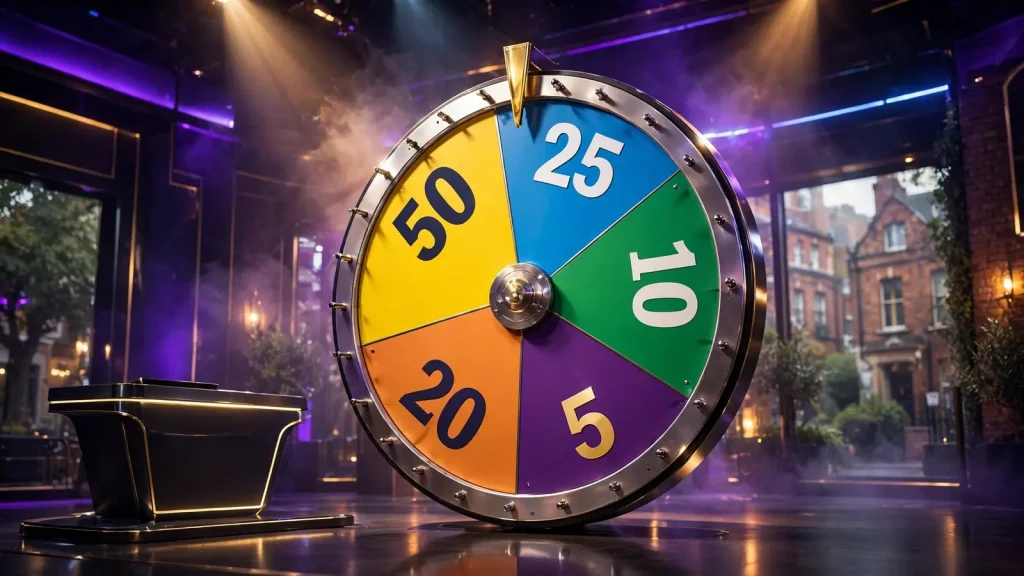
A practical guide to identifying the live format, checking game rules and assessing casino listings before staking.
What's inside this guide
What “online Dream Catcher” means in a live casino
When someone looks for Dream Catcher at an online casino, the practical question is usually about availability: is the title offered through a live-casino section, or is it merely mentioned somewhere in a site’s wider games catalogue? Those are different things. A catalogue can contain many kinds of casino entertainment; a live-casino lobby identifies a particular type of offering. Seeing a name on a broad games page does not, by itself, tell me which format a casino provides.
I separate the two because casino sites group products for navigation, not always to explain how they work. A general lobby may bring together games supplied in different formats and organise them under broad headings. A live-casino area is a narrower category: it is where an operator presents games as live casino entertainment. The label describes the way the offering is presented, not a full account of a particular title’s rules or features.
That distinction matters for Dream Catcher. “Available at the casino” can mean that a title appears in a search result, a promotional page, a provider list or an actual playable lobby. Those are not interchangeable signals. The useful point is whether the operator’s own current game interface places Dream Catcher in its live-casino offering. A general casino-games catalogue may help locate a title, but it does not always make the format clear.
I have seen how this kind of ambiguity arises from the way casino sites are assembled. Different sections serve different purposes: one is designed to let people browse broadly, another to organise a particular type of game, and promotional pages are written to draw attention to selected products. A title can be easy to spot in one place and harder to interpret in another. The site’s category labels therefore carry more practical meaning than a banner or a mention in a long list.
Live Casino Lightning Roulette in the UK: How to Check
A live casino is not simply another phrase for “casino game online”. It is a category within the online casino, set apart from the wider collection of games. In ordinary use, a person looking for a live Dream Catcher experience is not necessarily asking about every game on a casino site, nor about a physical casino. The likely distinction is between finding this named title in a live offering and finding it somewhere among all available online games.
There is a longer UK context for that category. Grosvenor first unveiled live casino games in 2013, with a range that included Blackjack, Texas Hold’em and Roulette. That is an example of an operator presenting live casino games as part of an online offering. It does not establish that Dream Catcher was among those games; the historical example is about the live-casino format, not the availability of this particular title.
The wording on a site can still blur the line. “Live” may appear in a menu, a filter, a tile or a page heading, and each can be used differently by an operator. A category name is a starting point rather than a complete description. The clearest indication is the game’s placement in the operator’s own interface, where the title and its format are shown together. If the title is listed only in an unqualified catalogue, the format remains uncertain.
This is also why a result for “Dream Catcher casino online” should not be treated as proof that every casino listing it offers is a live version. The phrase can refer generally to online access, while a live-casino label is more specific. In practice, the two ideas overlap only when the operator actually presents the title within its live section. Naming the game and naming the format are separate pieces of information.
I would read the lobby as a map, not as a promise. A general games page answers, at most, what the site chooses to display across its catalogue. A live-casino lobby narrows that view to a format. The title’s presence there is the relevant signal for someone seeking Dream Catcher in a live casino, while an isolated mention elsewhere may only show that the site uses the name. Small distinction. Important one.
A general casino-games catalogue may help locate a title, but it does not always make the format clear; a title’s presence in a search result is not proof of a live version.
The phrase “online casino with Dream Catcher” can therefore conceal two different expectations: a casino site that lists the title somewhere, or one that offers it specifically as live casino entertainment. The first is broad; the second is a more precise request. On a well-organised site, the lobby should make that difference legible without requiring promotional wording to do the work.
I treat the category and the title as separate checks. First, the casino must actually show Dream Catcher as available; then its own interface must make clear whether it belongs to the live-casino offering. That approach avoids reading more into a catalogue label than it says. It also keeps the focus on what the site presents, rather than assuming that a familiar game name tells the whole story.
Our top casino picks for the UK
- BeOnBetBonus: 100% up to €500 + 100 FS · Payout speed: 1-3 business days
- WinBeastBonus: €5000 + 500 FS + €650 Freebet · Payout speed: 1-3 business days
- NightWinBonus: £900 + 400 free spins · Payout speed: 1-3 business days
- JetsetspinsBonus: 200% Bonus + 100 Free Spins + Free Royal Wheel · Payout speed: 1-3 business days
- DieselwinBonus: Welcome Pack 250% up to £4000 + 200 FS · Payout speed: 1-3 business days
- EvoSpinBonus: 125% up to €2500 + 125 Free Spins · Payout speed: 1-3 business days
- SpinFormulaBonus: 550% Up To £15,000 + 550 FS · Payout speed: 1-3 business days
- Revery PlayBonus: 100% up to€1,000+ 100 FS · Payout speed: 1-3 business days
Dream Catcher: the title is not a full game specification
“Dream Catcher casino” can sound like the name of a casino, but in this context it is more naturally read as a request to find a particular game within a casino’s live offering. That distinction matters. A game title identifies what someone hopes to locate; it does not, on its own, say who provides it, how it works or whether a particular operator currently carries it.
I have seen people treat a familiar title as if it were a complete description. It is not. The name may help distinguish one product from another in a menu, but it cannot settle the details that matter once the game is opened. Those details belong to the specific game presentation and the operator listing it, not to the words “Dream Catcher” in isolation.
Live Baccarat Online Casinos in the UK: What to Check
That is why a page or menu mentioning Dream Catcher should be read narrowly. It may indicate that an operator has listed a game under that title, but the title alone does not establish its rules, options, presentation or any other feature. Nor does it prove that the same game is available across different casinos. A product name is a label, not a promise of identical content everywhere.
The same caution applies to the word “live”. It describes the kind of casino experience being sought, but it does not fill in the game specification. It does not identify the company behind the product, explain what appears on screen or confirm which features are included. Those are separate pieces of information. Treating them as automatic consequences of the title is how assumptions creep in.
The year in a request can be misleading too. A page labelled for 2026 may be intended to answer a current availability question, but a year in a heading is not evidence that the title is available throughout that year, or at any particular casino. Listings can change, and a general description may remain visible after an operator’s offering has changed. A dated phrase is a clue to the reader’s intent, not confirmation of a live catalogue.
A dated phrase in a heading, such as "2026", is a clue to the reader’s intent rather than confirmation of a live catalogue or current availability.
There is also a difference between recognising the name and knowing the product. A search result, menu entry or short promotional line might use the title without giving enough context to tell what sits behind it. Conversely, a casino can organise its catalogue in a way that makes a game harder to find even when it is offered. The label helps with identification, but it is only one part of the information needed to understand a listing.
This is why I separate three ideas that often get compressed into one: the game title, the casino presenting it and the details of the game itself. The title can be familiar while the operator is unknown. The operator can be identifiable while the game’s rules remain unclear from a short listing. And a page can describe a product without confirming that it is currently available to a particular customer. Those are different claims, and one should not be used as proof of another.
The phrase “Dream Catcher live casino” also does not necessarily mean that Dream Catcher is itself a casino brand. In ordinary usage, it can simply mean a live casino game with that title. Readers may arrive with different expectations: some want to locate a particular game, some want to understand what the title refers to, and some may be checking whether a casino currently offers it. The wording points towards the subject, but does not resolve those separate intentions.
I would not infer a provider from the title, either. A provider’s name is a separate identifier and needs to be stated in reliable product information. Nor would I infer special features because they seem likely from the name or from a similar product elsewhere. A resemblance is not confirmation. It is an easy mistake to make when promotional descriptions use evocative language, but a suggestive title cannot substitute for a specification.
Casino Dice Games in the UK: How They Work
For the same reason, there is no sound basis for treating every listing under this name as interchangeable. A game’s title may remain the same while its presentation or available information differs between sites; without a clear product description, there is no reason to assume that one listing answers questions about another. Even a result that appears relevant to a UK player does not, simply by using the name and the year, establish availability at a particular operator in 2026.
The useful reading is modest: Dream Catcher is the name being sought, and “live casino” describes the setting in which the person expects to find it. Everything beyond that needs its own support. Keeping that boundary clear prevents a title from being mistaken for a set of rules, a provider credit, a feature list or a current availability statement.
A name gets the search started. It does not finish the job.
What “best” can mean when comparing live casino operators
“Best” is not a quality that can be read from a banner or attached to a game title. In practice, I would separate the question into two parts: whether an operator is fit to hold an account, and whether its live-casino service suits the way someone intends to play. Neither answer establishes that Dream Catcher is available there, or that one operator is objectively better for that title.
The first test is not a bonus. It is whether the business has the relevant Gambling Commission licence for serving customers in Great Britain. The Commission requires remote operators serving this market to hold that licence. The licence number should be checked against the Commission’s public register before depositing; a badge or a statement on the casino’s own pages is not the same as an independent register entry. Names can differ between a brand, a company and a domain, so the details need to line up rather than merely look familiar.
Do
- Check the licence against the Gambling Commission’s public register
- Verify the operator’s legal name matches the site
- Confirm the presence of account-level limit controls
- Use an approved Alternative Dispute Resolution service
Don’t
- Rely on a “trusted” badge or a statement on the site
- Assume a polished design substitutes for a licence check
- Use credit cards or credit-card funded wallets for gambling
- Trust a brand name that does not match the register entry
That is a threshold, not a ranking. A licensed operator is not automatically the right choice for every player, and a polished live-casino page does not substitute for the licence check. I have seen how the word “trusted” is used in advertising: often it means that a site has presented reassuring design and customer-service language. The practical question is what can be verified outside the sales copy.
The account setup reveals more. Operators must verify a customer’s age before allowing a deposit, and new customers must be prompted to set a financial limit before their first deposit. Account-level limit controls should remain accessible afterwards, not disappear into a help page once registration is complete. Those controls matter because the decision to deposit is easier to make than the decision to stop. A clear control is useful; a control that is hard to find is mostly decorative.
Payment terms also deserve a plain reading. UK-licensed casinos cannot accept credit cards for gambling, including credit-card funds routed through a money service business. A wallet cannot be used where it permits credit-card funds to be used for gambling. The point is not to treat one payment method as a recommendation. It is to see whether the operator explains the permitted routes and restrictions without burying them in promotional language.
Online Casino Games for Real Cash in the UK
Responsible-gambling tools are another concrete comparison. A UK-licensed casino must provide tools including self-exclusion, and the account should make those provisions understandable and reachable. The operator must also offer an internal complaints process and access to an approved Alternative Dispute Resolution service. These are not signs that a dispute will never happen. They show whether there is a stated route when something does.
Only after these checks would I compare the live-casino experience itself: whether the game is actually listed, what information is shown beside it, how the table interface behaves on the intended device, and whether support can explain an account or technical issue clearly. Those are things to confirm on the operator’s own service, not assumptions to make from a general casino-games catalogue. Availability can change, so an old page or a third-party list cannot settle what is offered now.
A bonus can complicate comparison. “Welcome” describes a promotion, not its value to every account. Conditions determine who can use it and what restrictions apply; an attractive headline may be less relevant than account controls or clear terms. I would not rank a casino higher simply because the offer is prominent, particularly when the purpose is access to a specific live title.
Operator Comparison
- Licensing establishes the essential baseline for any operator
- Account safeguards and payment rules distinguish how a site works
- Confirmed game availability is more reliable than marketing
- Only gamble with money that can be afforded to lose
The strongest comparison is therefore a checklist of verifiable features, not a league table of supposed Dream Catcher favourites. Licensing establishes an essential baseline; account safeguards, payment rules, complaint routes and confirmed game availability help distinguish how an operator actually works. Marketing can make several sites sound interchangeable. The details do not. Only gamble with money that can be afforded to lose.
Live casino games in the UK: the wider table-game context
Live casino is a broad category, not a single type of game. Its common feature is a real-time presentation: the experience is organised around a live table or studio rather than a standard game catalogue alone. That distinction matters when a title such as Dream Catcher appears beside familiar table games. The shared label tells little about how different the games may be, or whether a particular operator carries that title.
The UK market has a longer live-casino history than many product pages suggest. Grosvenor first unveiled live casino games in 2013, with a range that included Blackjack, Texas Hold’em and Roulette. That is a useful example of how operators have presented live play as part of a wider casino offer. It is a historical launch, not evidence that every operator has the same catalogue now, nor that Grosvenor’s launch included Dream Catcher.
From inside the industry, catalogue labels often do more work than they appear to. “Live casino” groups products under one navigational heading, making it easier to browse, but it does not make the games interchangeable. A card table, a roulette table and a studio game can all sit in the same section while offering different formats and different information to check. The category is the shelf, not the specification.
Online casino tournaments in the UK: rules and entry
That is why searches for a Dream Catcher live casino experience can lead to two separate questions: whether the title is listed by a particular operator, and what the surrounding live-casino section actually contains. A general page promoting live tables is not proof of title availability. Equally, a broad catalogue may combine live games with other casino products, so the heading alone does not settle what is being offered.
Grosvenor’s launch gives a concrete reference point for the wider category, but only at that level. Blackjack, Texas Hold’em and Roulette show that the live-casino label can cover several familiar table formats. They do not establish anything about Dream Catcher’s own classification, rules or availability. Keeping those distinctions intact is more useful than treating every live product as if it belonged to one standard format.
For a player comparing live casino menus, the practical value of the category is orientation: it indicates where an operator groups live-hosted products. The actual title listing and its own information must do the rest. Marketing language can make a catalogue sound comprehensive; the menu is what shows what is present.
I have found that broad labels are easiest to trust when they are treated as navigation, not as a promise. A live-casino page may give a sense of the operator’s wider table-game context, while a specific listing confirms whether Dream Catcher is there. Those are different claims. Keep the distinction clear, and gamble only with money that can be afforded to lose.
Grosvenor’s 2013 launch of live games (Blackjack, Texas Hold’em, and Roulette) serves as a historical example of the format, not as evidence of Dream Catcher’s availability at the time.
Playing the game: check the rules before staking
A game title does not tell a player how a round works or what a stake covers. Before wagering on Dream Catcher at a live casino, the useful document is the operator’s information for that specific game, not a general description of its live tables. It should explain how to take part, what choices are available, how a round is settled and where the applicable stake range is shown. If any of that is unclear, the title alone is not a sound basis for starting.
The distinction matters because a live presentation does not, by itself, identify a game’s regulatory category. Nor does a casino’s general catalogue establish the rules of every title it lists. The game information should make clear which actions are available and when a wager is accepted; it should also describe how any result affects the stake. These are practical details, not fine print to leave until after play begins.
I have seen how promotional labels can do too much work. “Easy to play” may mean that the screen is visually simple; it does not explain the wager or the settlement. “Live” describes the format, not the rules. Read the game-specific explanation, and check that it corresponds to the title actually displayed. Small distinction. Real money.
Mines Casino Game in the UK: What to Know
There is also a separate point about online-slot stake limits in Great Britain. A specialist review reports a maximum stake of £5 per game cycle for adults aged 25 and over, and £2 for those aged 18 to 24. That rule concerns online slots; it should not be applied to a live game merely because it appears in an online casino. The category needs to be established from reliable information about the game, not guessed from its name, visuals or interface.
The same specialist review distinguishes roulette and blackjack from online slots for this purpose: the slot stake limits do not apply to those games. That does not establish that Dream Catcher is roulette, blackjack or a slot. It is a narrow distinction, not a shortcut for classifying a different title. Where the game’s description does not identify its category clearly, the limits applicable to slots cannot responsibly be used as a proxy for its rules.
Before play, the casino’s own game page should be consistent with what appears at the table. Check the available stake options and the stated round mechanics before selecting a wager. If the explanation omits a material detail, or the displayed game does not match its description, pause rather than filling the gap with assumptions. A support response may clarify the operator’s presentation, but it is not a substitute for game rules that should be visible and understandable.
The amount at risk should remain affordable to lose, regardless of the game category or how straightforward the screen appears. Setting a personal spending limit before playing helps keep the decision separate from the pace of a live round. Clear rules first; staking second.
Stake Limits
Do not apply online-slot stake limits to a live game merely because it appears in an online casino; the game’s specific regulatory category must be established first.
The wheel and the limits of what can be inferred
A wheel in a game title can suggest a format, but it does not establish how the game works. “Dream Catcher” and “wheel” may appear together in a casino listing, yet those words alone do not explain what determines an outcome, what choices are available, or how a stake is settled. I have seen product labels carry more certainty in advertising than they do in the underlying rules. The label is not the rules.
That distinction matters when a game is being placed in a regulatory category. A wheel does not, by itself, make a game roulette, an online slot, or any other defined type. Nor does a live presentation settle the question. The relevant description is the casino’s own game information: it should identify the product and explain its rules and settlement before a wager is made. Without that information, assigning a category from the title would be guesswork.
A specialist review states that Great Britain’s online-slot stake limits do not apply to roulette or blackjack. That is a specific distinction between those named games and online slots; it does not establish that a wheel-based title belongs to either category. The game’s appearance is not enough to transfer the treatment of roulette to it, and a casino page using the word “wheel” should not be read as a regulatory classification.
In practice, a player looking for a live Dream Catcher wheel needs to separate three things: the name shown in the lobby, the game’s written rules, and the category that determines which requirements apply. They may align, but one does not prove the others. If the operator’s page does not make the rules or product identity clear, that is a reason to pause rather than fill in the gaps from familiar imagery.
I have found that the small print often carries the useful distinction: how a round begins, what action is possible, and what triggers a payout. Those details should be read as the operator presents them, not inferred from a photograph, animation, or short promotional description. A polished wheel can make a game look self-explanatory. It is not.
No category should be assumed from the word alone. And no stake should be treated as harmless because the game looks simple. Only gamble what can be afforded to lose.
Checking a casino site before opening an account
A live Dream Catcher page can look like a direct route to a game, but the operator behind it matters more than the table’s presentation. In Great Britain, remote gambling businesses serving consumers must hold the relevant Gambling Commission licence, even if their offices or technical equipment are elsewhere. The Commission is the sole regulator for commercial gambling in Great Britain and oversees online casinos as part of its wider remit.
I treat the licence as a check on the business, not as a promise about a particular game. The Commission issues operating licences to businesses and personal licences to individuals working in regulated roles. Before depositing, find the operator’s legal name and licence details, then search for them on the Commission’s public register. Match the entry to the site being used; a similar brand name is not enough. If the register does not clearly connect the operator and its website, pause rather than relying on a logo or a licensing claim in the footer.
Operator Verification
- Match the licence number to the Gambling Commission’s public register
- Confirm the legal entity matches the website
- Complete the age verification process
- Set a financial limit before the first deposit
- Ensure account-level limit controls are accessible
That distinction is easy to miss. A game page may be branded separately from the company taking deposits, while the account terms identify a different legal entity. The register is where those identities can be checked against the regulator’s record. A claim that equipment is based abroad does not remove the licensing requirement for remote gambling offered to consumers in Great Britain.
There are practical checks at account opening, too. A licensed operator must verify a customer’s age before allowing a deposit. It must prompt a new customer to set a financial limit before the first deposit and make account-level limit controls accessible. UK-licensed casinos cannot accept credit cards for gambling, including credit-card funding routed through a money service business, or wallet payments that use credit-card funds for gambling.
These are not decorative policies. They shape what the account can do and what recourse exists if a dispute arises: licensees must provide an internal complaints process and access to an approved Alternative Dispute Resolution service. I would establish the operator’s identity and register entry before handing over payment details. Then set a limit that fits the entertainment budget, and gamble only what can be afforded to lose. If either the licence match or the account safeguards are unclear, do not deposit.
A demo is not the same as playing for money
A request for a Dream Catcher demo is looking for a way to explore the game without risking money. That is a reasonable distinction, but the word “demo” on a casino page is not proof that a free version of this particular title is available. A site may offer practice access, direct visitors to a real-money table, or provide no playable version at all. The game page needs to make clear which applies.
I separate practice from wagering because they answer different questions. A free mode, if offered, may let someone become familiar with the screen or pace of play. It does not show what it feels like to stake money, and it cannot establish how a real-money session will affect someone’s decisions. Nor should a demo label be taken as evidence about the game’s rules, provider or current availability. Check the information displayed by the casino rather than relying on a search snippet or an old page.
There is also a practical difference in account controls. Real-money gambling involves deposits and losses; practice access does not create the same financial exposure. On British-licensed remote casino sites, operators must prompt new customers to set a financial limit before their first deposit and make account-level limit controls accessible. Those controls are useful only when the limit reflects money that can be lost without affecting essential spending.
I have seen “free” used as a reassuring word, when the important detail is whether the next step leads into a cash account. Keep that distinction explicit. If the site requires registration, check what the account is being used for and whether a deposit is being requested; do not treat a practice screen as permission to start wagering.
A "demo" label is not proof that a free version is available, nor is it a safety measure; real-money play requires strict personal spending boundaries.
A demo is optional, not a safety measure. Real-money play should remain within an affordable amount, with limits set before depositing and responsible-gambling tools available if play stops feeling manageable. Gamble only with money that can be afforded to lose. If those conditions are not in place, the sensible choice is not to play for money.
Reading a Dream Catcher casino review critically
A review of a Dream Catcher live casino can be useful, but only if it separates what was checked from what was assumed. I look for concrete observations: the operator named, the pages or terms examined, and whether the account and payment conditions are explained. A confident verdict without that trail is just promotion with a score attached.
The game title alone cannot establish how a particular casino presents it, or whether the reviewer checked the same version currently available there. Claims such as “exclusive” or “best” need evidence and a clear comparison. If a review moves from praise straight to a recommendation, without showing what the recommendation rests on, little has been demonstrated.
The operator’s own terms are more useful than general assurances. A careful review should make clear how age is verified before deposits, whether a new customer is prompted to set a financial limit before the first deposit, and where account-level limit controls can be found. It should also identify responsible-gambling provisions, including self-exclusion, rather than treating them as a footer detail. Those are operational safeguards, not decorations.
Payment language deserves the same scrutiny. UK-licensed casinos cannot accept credit cards for gambling, including through a wallet that allows credit-card funds to be used for gambling. A review that praises a payment method without explaining its conditions leaves out the part that matters. I have seen “simple payments” used as shorthand for a process whose restrictions are tucked away elsewhere. Read the terms.
A review can report what it actually inspected; it cannot turn an unverified claim into a fact by repeating it. Nor does a favourable account establish that a casino is suitable for every player. The complaints process and access to an approved Alternative Dispute Resolution service are also worth checking in the operator’s information.
Reviews are a starting point, not a substitute for the operator’s current terms and account controls. Any decision to wager still needs a personal spending boundary. Only gamble what can be afforded to lose.
Before playing Dream Catcher for real money
Before I treat a live Dream Catcher table as ready for real-money play, I check the operator behind the page, not just the game tile. The licence number should match an entry on the UK Gambling Commission’s public register before any deposit is made. A familiar name or polished interface is not a substitute for that check.
The account setup matters too. The operator must verify a customer’s age before allowing a deposit, and new customers must be prompted to set a financial limit before their first deposit. I look for the account controls that let those limits be managed later; a setting that is hard to find is of little practical use. The amount set should be affordable to lose, not an estimate of what a session might return.
I also check which responsible-gambling tools the account provides, including self-exclusion, and how to reach them without relying on a promotional page. These are operating safeguards, not promises that play will stay within budget. If the controls do not work clearly, I would not proceed.
The final check is simple: the operator is identifiable, its licence can be confirmed on the register, age checks apply, and limits and safer-gambling tools are accessible. Only then would I consider opening the live table. No rush.
Are online casino games licensed and regulated?
Yes. The UK Gambling Commission regulates online gambling offered to consumers in Great Britain, and remote operators serving them must hold the relevant licence.
What are the online slot stake limits in Great Britain?
The limit is £5 per game cycle for adults aged 25 and over, and £2 for adults aged 18 to 24. These limits do not apply to roulette or blackjack.
Is LuckyPays licensed by the UK Gambling Commission?
The Gambling Commission’s public register dated 26 September 2026 does not list LuckyPays under its brand or stated domain, including luckypays.io.
Games
Published by the Ecopayz Casino UK team.