
ecoPayz 3D Secure for UK Casino Deposits: Strong Customer Authentication in Practice
 Available in GB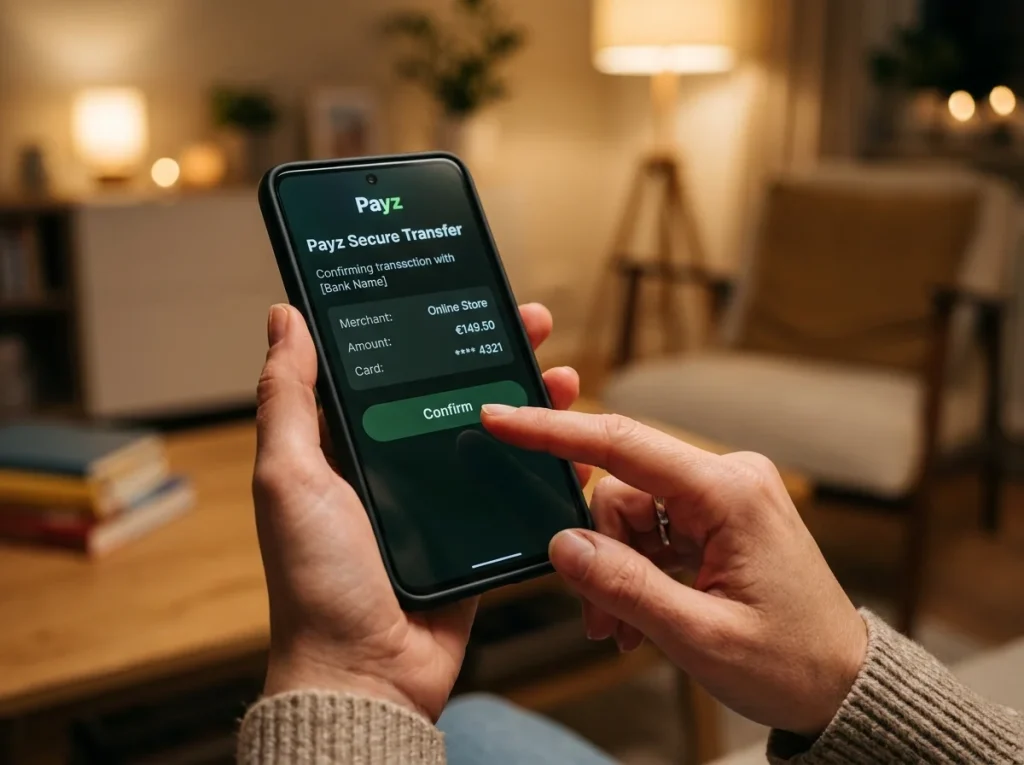
The pop-up most players skip past without thinking about
Walk through any casino cashier deposit flow in 2026 and you’ll encounter a 3D Secure prompt somewhere. Most players treat it as a brief inconvenience — enter the code from the bank’s text, get back to depositing. The mechanics behind that prompt have changed substantially in the last twelve months, and the changes affect how Payz deposits at UK casinos actually work even when the user-facing flow looks the same.
What's inside this guide
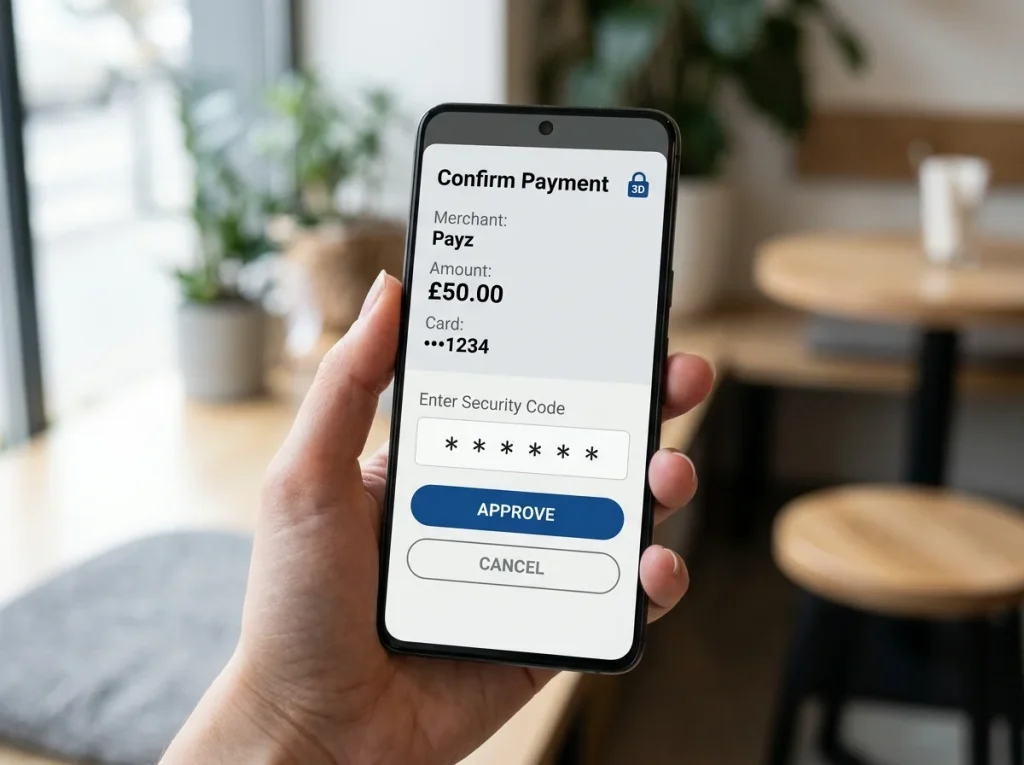
UK debit card usage continues to grow as the underlying payments backbone, with 26.1 billion debit card payments processed in 2024 and 18.9 billion of those contactless. Most of the card volume that doesn’t fund Payz balances directly funds them indirectly through repeated top-ups. The strong customer authentication regime that sits on top of that card volume now reaches the casino deposit flow whenever a Payz balance is replenished from a card source, which is most of the time.
What 3D Secure actually is and isn’t
3D Secure is a card-issuer-authenticated step that confirms the cardholder is genuinely authorising a transaction. The “3D” refers to the three domains involved — issuer, acquirer and interoperability — not to anything visual. The protocol exists to reduce card-not-present fraud by adding a second authentication factor on top of the card details themselves.
The current version of the protocol is 3D Secure 2, which superseded the original 3D Secure 1 across most issuers between 2019 and 2022. Version 2 is more flexible than version 1 because it allows for risk-based exemptions — low-risk transactions can sometimes complete without an authentication challenge, while higher-risk ones get a stronger challenge. This is why some Payz top-ups produce a 3DS prompt and others don’t, even from the same card.
What 3D Secure isn’t, and shouldn’t be confused with, is two-factor authentication at the Payz account or at the casino. Those are separate layers operating on different objects. 3DS authenticates the card transaction. Payz 2FA authenticates the wallet account. Casino 2FA authenticates the casino account. A single Payz deposit at a UK casino can touch all three layers in sequence, and players who don’t distinguish between them get confused about why so many codes are arriving in close succession.
The transaction object 3DS protects is the card-to-wallet leg specifically. The wallet-to-casino leg is protected by Payz’s own authentication. The card prompt you see during a casino deposit is therefore authenticating something one step upstream of the deposit itself.
When Payz triggers 3DS at UK casinos
The Payz-related 3DS trigger has a specific lifecycle that’s worth understanding. You don’t typically see 3DS on the deposit itself if you’re depositing from a Payz balance that’s already funded. The 3DS prompt appears when the wallet needs to top up from a linked card to cover the deposit.
This produces two distinct flows. In the first, you have a sufficient Payz balance and you deposit at a casino — no 3DS prompt appears at any point because no card transaction is occurring. The deposit is a wallet-to-casino move that the card network isn’t involved in. In the second flow, your Payz balance is insufficient and the wallet attempts an automatic top-up from a linked card to cover the deposit. The card top-up triggers 3DS, you complete the challenge, the top-up clears, and the casino deposit then completes.

The user-facing experience can look identical even though the underlying transaction structure is different. A “deposit” at a UK casino via Payz might be a single wallet movement or it might be a card top-up followed by a wallet movement, and the 3DS prompt appears only in the second case.
Some operators offer a direct-card option through the Payz cashier where the casino deposit happens by initiating a card transaction that nominally routes through Payz but is really a card-to-casino flow with Payz as the processing intermediary. These transactions are card transactions and always trigger 3DS, even when there’s a Payz balance that could have covered the deposit. The distinction is subtle but matters for diagnosing which authentication layer is producing prompts.
App prompts vs SMS vs email
UK card issuers have implemented 3DS challenges in three main delivery formats. The format affects timing, security and reliability of the deposit flow.
App-based prompts are the modern standard. The issuer’s banking app receives a push notification asking the cardholder to authorise the transaction. The cardholder opens the app, sees the transaction details — merchant, amount, currency — and confirms with biometrics or a passcode. The whole exchange takes 5-15 seconds when the app is already on the phone. This is the most reliable and the most secure delivery format because the authentication is tied to a device controlled by the cardholder.
SMS-based prompts are the legacy default that many issuers still use. A text message arrives with a numeric code; the cardholder types the code into the merchant’s payment page. The flow is functional but slower than app-based — text delivery can take 15-60 seconds, and the code can occasionally fail to arrive at all. Some banks have begun phasing out SMS-based 3DS in favour of app-based, but the transition is uneven across the issuer base.
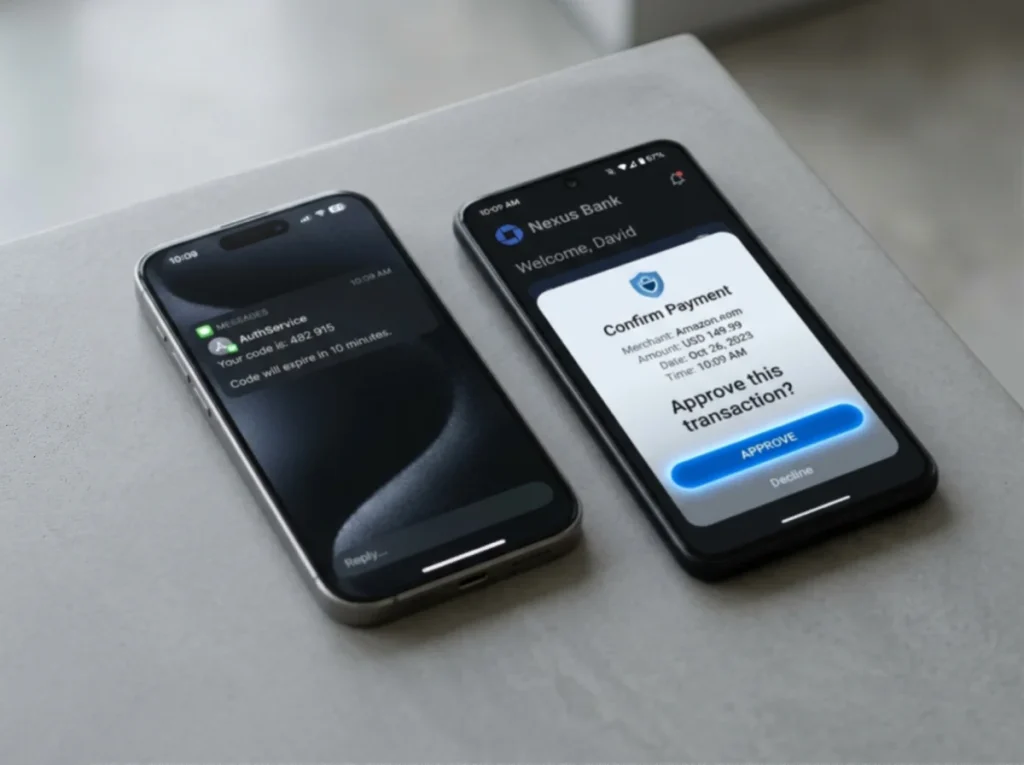
Email-based prompts are rare but still used by a handful of smaller issuers. They tend to be the slowest and least reliable format because email delivery times vary widely and email accounts are themselves variably secured. From a casino deposit perspective, email-based 3DS often produces timeouts where the merchant’s payment session expires before the email arrives.
For Payz users depositing at UK casinos, the practical recommendation is to use a card linked to an issuer that supports app-based 3DS. The deposit flow with app-based prompts is fast enough to be unnoticeable; the same flow with SMS-based prompts often introduces enough latency to matter for time-sensitive verticals like live dealer.
Failure modes and bypass myths
3DS failures during a Payz top-up that’s funding a casino deposit can manifest as either a clear authentication failure or as a silent timeout. The clear failure is recoverable — you retry the transaction with the correct code or with the bank app open and ready. The silent timeout is worse because the casino doesn’t always know that the underlying top-up failed and may show the deposit as failed without explaining the cause.
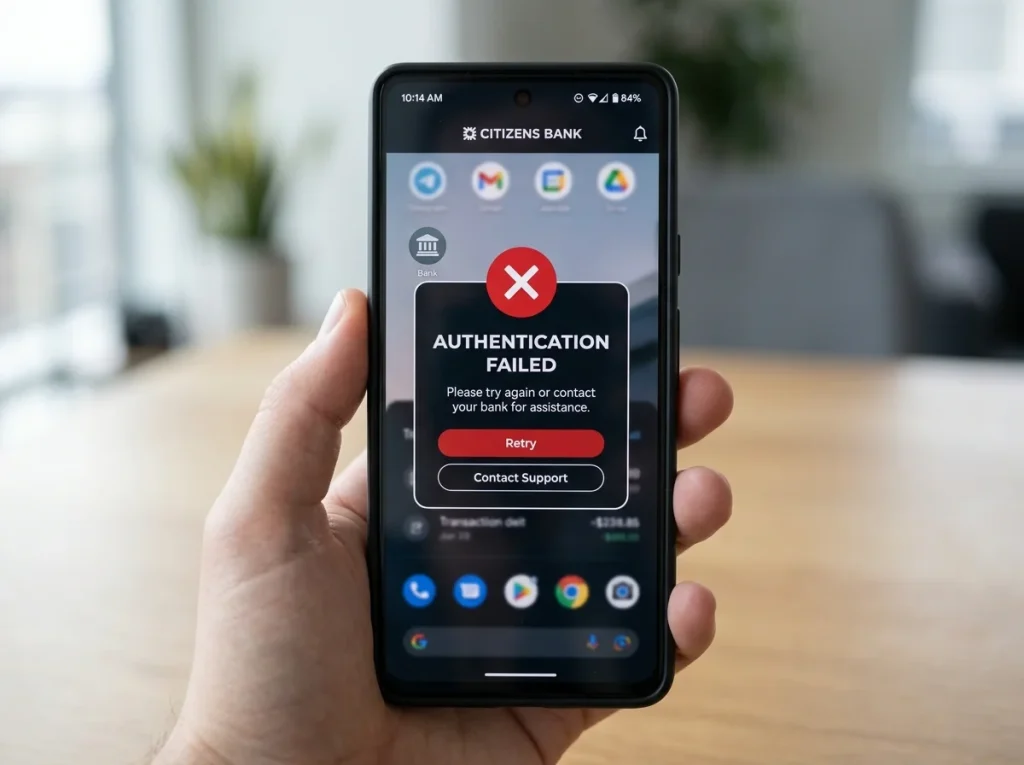
The recoverable failure modes are wrong code, expired code, code entered in the wrong field, and biometric authentication failure inside the bank app. All resolve by retrying. The less recoverable failures are issuer system outages — when the bank’s 3DS system is temporarily down, no card transaction can authenticate, which means no Payz top-up can complete from that card, which means no casino deposit can complete from that top-up.
The bypass myth worth dispelling is the idea that 3DS can be skipped for low-value transactions. The protocol does allow risk-based exemptions, but the exemption is granted by the issuer, not requested by the merchant or the cardholder. Operators sometimes route low-value Payz top-ups through exemption logic but they can’t force the exemption — the issuer decides. So players who think they can avoid 3DS by keeping deposits small will sometimes succeed and sometimes not, depending on the issuer’s risk model.
What changes with the new SCA rules
FCA PS25/12 takes effect on 7 May 2026, tightening the strong customer authentication regime that 3DS implements. The rules reduce the scope of available exemptions and require stronger evidence of risk-based decisioning when an exemption is applied. The practical effect for Payz users at UK casinos is that the rate of unprompted 3DS challenges will increase slightly — fewer transactions will qualify for silent authentication.
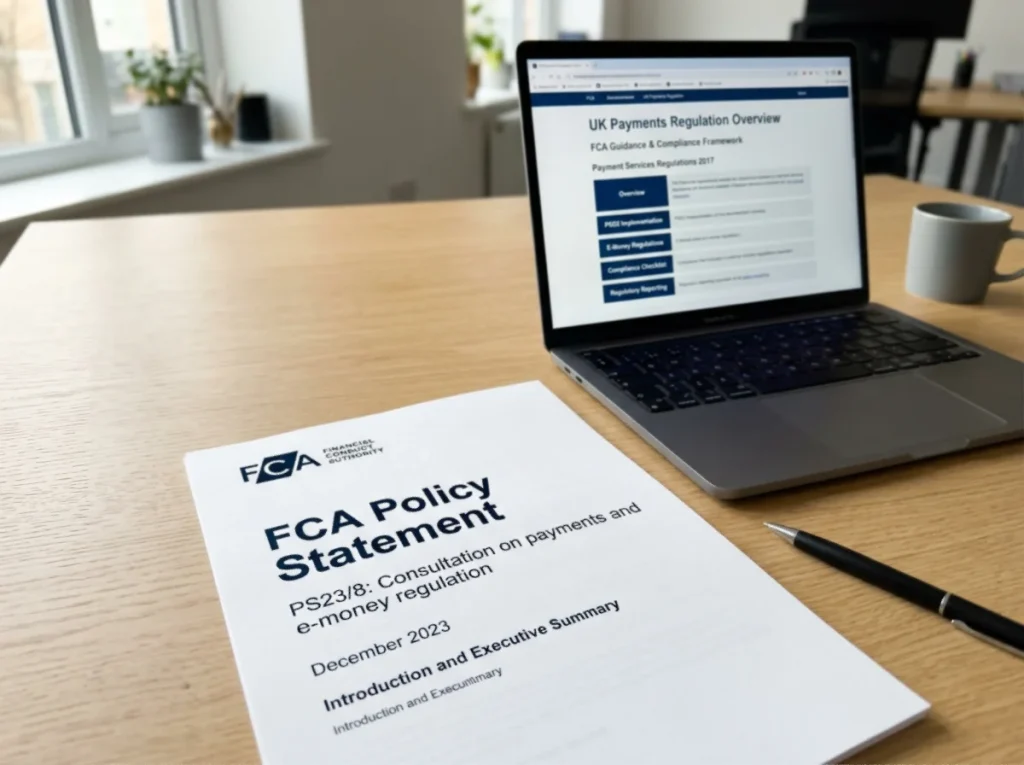
The trade-off is between security and friction, and the regulation has landed firmly on the security side. Players who currently experience smooth no-prompt deposits via card-funded Payz top-ups should expect to see more 3DS prompts post-May 2026, even on the same patterns of activity. The fix is to ensure the bank app is installed, push notifications enabled and biometrics configured, so that prompts when they appear resolve in seconds rather than minutes. The follow-on layer of authentication — at the Payz account itself — sits in the breakdown of Payz two-factor authentication options for casino users, which covers how to configure the wallet’s own security to complement the card-level checks.
Can a UK casino legally skip 3D Secure on small Payz deposits?
The casino doesn"t decide whether to skip 3DS — the card issuer does, through risk-based exemption logic. Some small Payz top-ups will be authorised without a 3DS challenge if the issuer"s risk model permits it; others will be challenged. The casino"s own preferences don"t override the issuer"s authentication decisions.
Does enabling biometric login on Payz replace the 3DS step at the casino?
No. Payz biometric login authenticates the wallet account, which is a separate layer from card-level 3DS. If a casino deposit triggers a card top-up to the wallet, the 3DS step on the card transaction happens regardless of wallet-level biometric configuration.
What happens if my bank"s 3DS system is offline when I try to deposit?
The card top-up fails, the Payz balance doesn"t increase, and the casino deposit fails as a consequence. The failure is visible in the casino cashier as a transaction error but not always with a clear explanation. The fix is to retry once the issuer"s system is back online, or to use an alternative funding source for the wallet.
ecoPayz Casino Articles: UK Market Trends and Payment Data
Our top casino picks for the UK
- BeOnBetBonus: 100% up to €500 + 100 FS · Payout speed: 1-3 business days
- WinBeastBonus: €5000 + 500 FS + €650 Freebet · Payout speed: 1-3 business days
- NightWinBonus: £900 + 400 free spins · Payout speed: 1-3 business days
- JetsetspinsBonus: 200% Bonus + 100 Free Spins + Free Royal Wheel · Payout speed: 1-3 business days
- DieselwinBonus: Welcome Pack 250% up to £4000 + 200 FS · Payout speed: 1-3 business days
- EvoSpinBonus: 125% up to €2500 + 125 Free Spins · Payout speed: 1-3 business days
- SpinFormulaBonus: 550% Up To £15,000 + 550 FS · Payout speed: 1-3 business days
- Revery PlayBonus: 100% up to€1,000+ 100 FS · Payout speed: 1-3 business days
Written by the editors at Ecopayz Casino UK.