
ecoPayz Casino Deposit Limits and Self-Exclusion in the UK: Tools the Wallet and the Casino Share
 Available in GB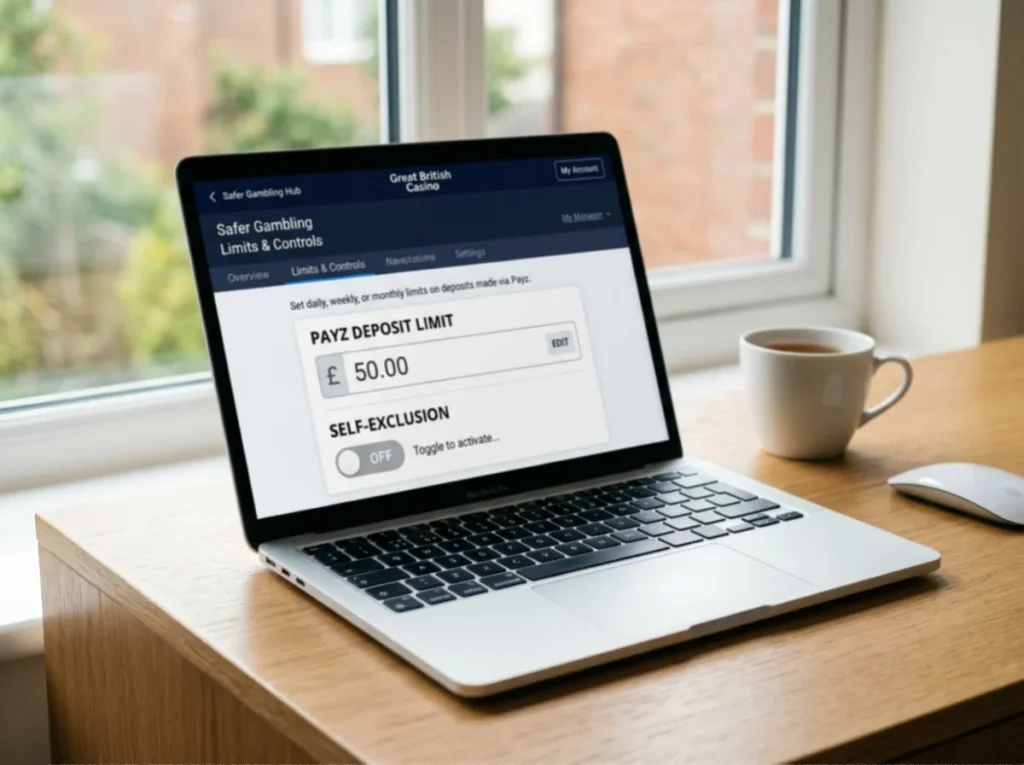
The most underused settings in the UK casino ecosystem
A small share of UK adults — around 2.7% — score 8 or above on the Problem Gambling Severity Index, the threshold for what regulators classify as problem gambling. Most of the people who would benefit from deposit limits or self-exclusion never reach the PGSI 8 threshold but still play more than they intend to. The tools to manage this exist on both the wallet side and the casino side, and the vast majority of UK players don’t use either to anywhere near their potential.
What's inside this guide
This piece walks through the practical layer of deposit limits and self-exclusion as they apply to Payz casino activity in the UK. The aim isn’t to advocate for any particular approach but to make the tools legible — what they do, where they live, how they interact, and what the trade-offs are. The choices belong to each player; the information about the choices should be available to everyone.
Where deposit limits live
Deposit limits at UK casinos sit in two distinct layers that operate independently. Casino-side deposit limits live on the casino account and apply to that operator’s site only. Wallet-side spend controls live on the Payz account and apply to outbound transactions from the wallet regardless of which casino is receiving them.
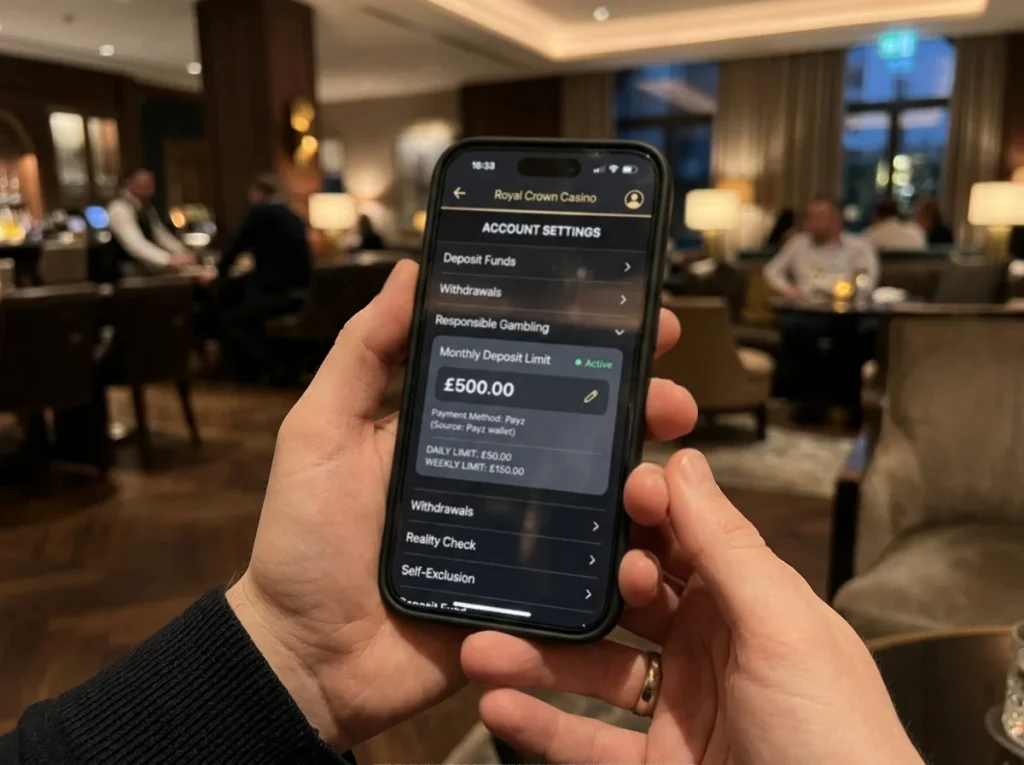
The casino-side limit is the one most players encounter. UK operators are required by their UKGC licence to offer deposit limit tools at registration and to apply them when set. The limit caps how much you can deposit in a given window — daily, weekly, monthly — and refuses to accept further deposits during that window once the cap is reached. The limit applies to the operator’s site only, not across other operators. So a £500 monthly limit at Operator A doesn’t prevent you depositing at Operator B at the same time.
The wallet-side spend control is less commonly known. Payz allows you to set outbound transaction limits on the wallet itself, capping how much can leave the wallet to any merchant including casinos. The control applies wallet-wide, so it does cover transactions to multiple casinos in aggregate. This is the closest equivalent within the wallet to a cross-operator limit.
The two layers reinforce each other. A casino-side limit prevents over-deposit at any single operator. A wallet-side limit prevents the wallet from over-funding deposits across operators. Together they cover the gap that exists when a player has accounts at multiple operators and wants to control aggregate spend.
GAMSTOP and Payz interaction
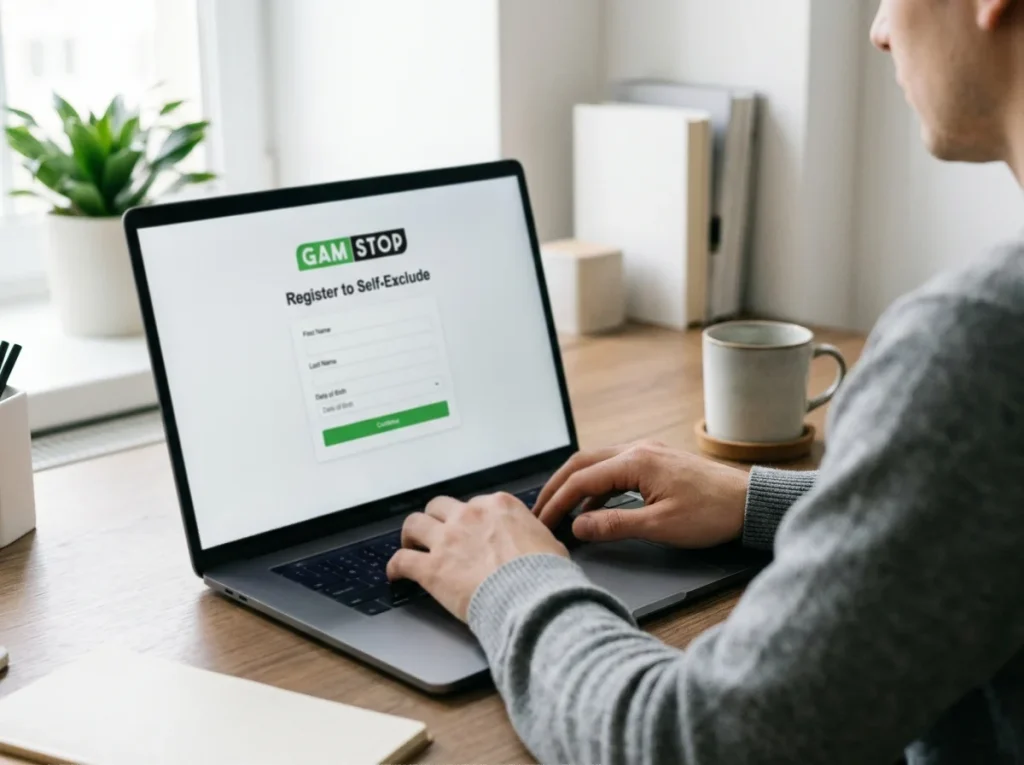
GAMSTOP is the UK’s national self-exclusion register, mandatory for all UKGC-licensed online operators. When a player registers with GAMSTOP, all UKGC-licensed sites are required to block that player’s accounts and prevent new registrations during the exclusion period, which can be set at six months, one year, or five years.
The interaction between GAMSTOP and Payz is asymmetric. A GAMSTOP self-exclusion blocks the casino accounts but doesn’t directly block the Payz wallet. The wallet continues to function for all non-gambling purposes — purchases, transfers, ATM withdrawals — during the exclusion period. What GAMSTOP does block is the casinos’ ability to accept deposits from any source, including Payz, for the excluded player.
This means a self-excluded player has the wallet still active but cannot deposit it at any UKGC-licensed casino. Attempts to deposit will be rejected by the casino, not by the wallet. The wallet sees the casino as just another merchant; it’s the casino’s compliance with GAMSTOP that produces the block.
The asymmetry has both strengths and limitations. The strength is that GAMSTOP doesn’t disrupt the player’s non-gambling financial life — the wallet continues to function for everyday purposes. The limitation is that the wallet cannot itself enforce gambling-specific blocks beyond what the casino does; if a player attempts to deposit at an offshore site that isn’t part of the UKGC framework, the wallet won’t block the transaction.
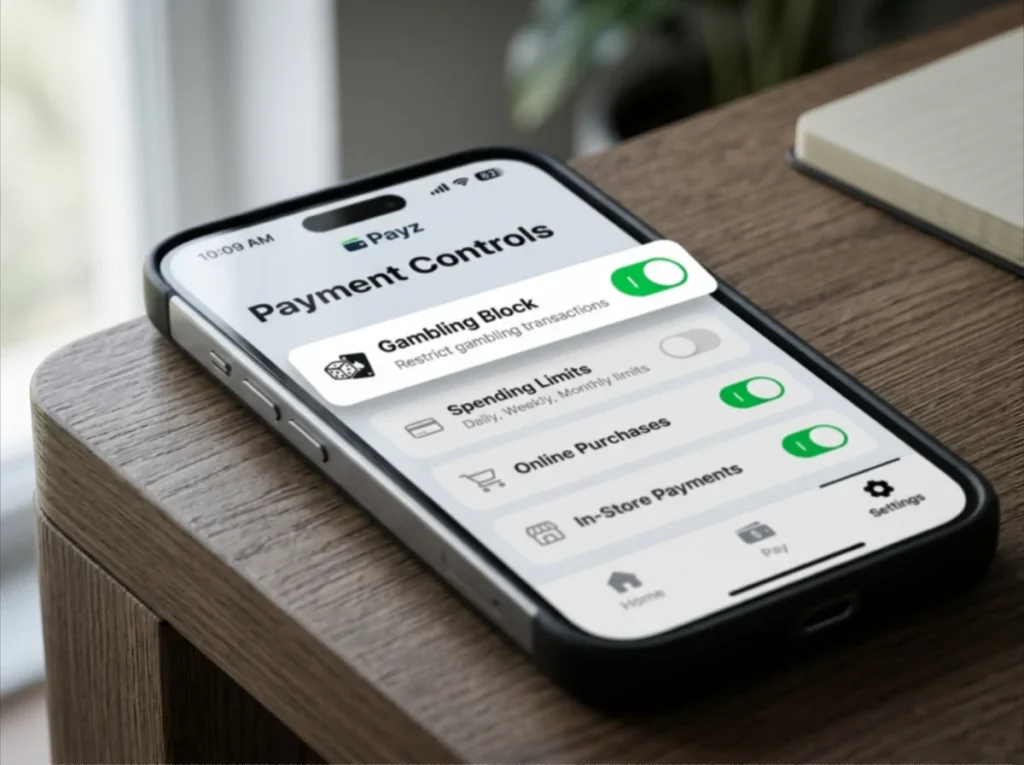
For players who want a more comprehensive block, the wallet-side spend control discussed above can be set to disallow transactions to gambling merchants generally, providing a second-layer block independent of GAMSTOP. This is a more aggressive intervention than GAMSTOP alone and worth considering for anyone who wants to remove the option of attempted off-shore deposits during a self-exclusion period.
Setting a Payz-side spend block
The wallet-side spend block is configured inside the Payz app or web interface in the security settings, under spending controls. The granularity available varies but typically includes outbound transaction limits per day, per week and per month, plus the ability to block specific merchant categories.
For gambling-specific control, the merchant category code (MCC) 7995 covers betting and gambling transactions across most card networks. Blocking MCC 7995 prevents the wallet from completing any transaction tagged as gambling, which catches UK-licensed casinos and most offshore ones too. The block is enforceable at the network level rather than relying on the merchant’s own compliance, which makes it stronger than GAMSTOP for the specific use case of preventing off-shore deposits.
The block can be set with various durations. A short cooling-off period of a week or two helps a player reset after a difficult session. A longer block of months helps with sustained behaviour change. The wallet allows the block to be set indefinitely if the player wishes, with a reversal requiring a cooling-off period during which the block remains in force.
The technical implementation is straightforward but the practical setup matters. The block needs to be active when the user is most vulnerable to impulse deposit, which is often outside normal hours. Setting the block proactively, before a difficult moment, is the use pattern that produces results. Setting it reactively, in the aftermath of a difficult session, can help with the immediate impulse but doesn’t prevent the underlying pattern from returning.
Casino-side limits and cooling-off periods
UK casinos are required to offer deposit limit tools and to apply them as set by the player. The framework around these tools has tightened significantly. In Safer Gambling Week 2025, 281,000 deposit limits were set by UK players, up 41% year-on-year. The increase reflects both expanded operator prompting of the tools and growing player awareness of them.
The standard casino-side limits are deposit limit (capping deposits per period), loss limit (capping net losses per period), session limit (capping continuous play time) and reality check (prompting awareness at set intervals). Each operator must offer at least deposit limits; most offer all four. The specific limit values are at the player’s discretion within ranges the operator sets.
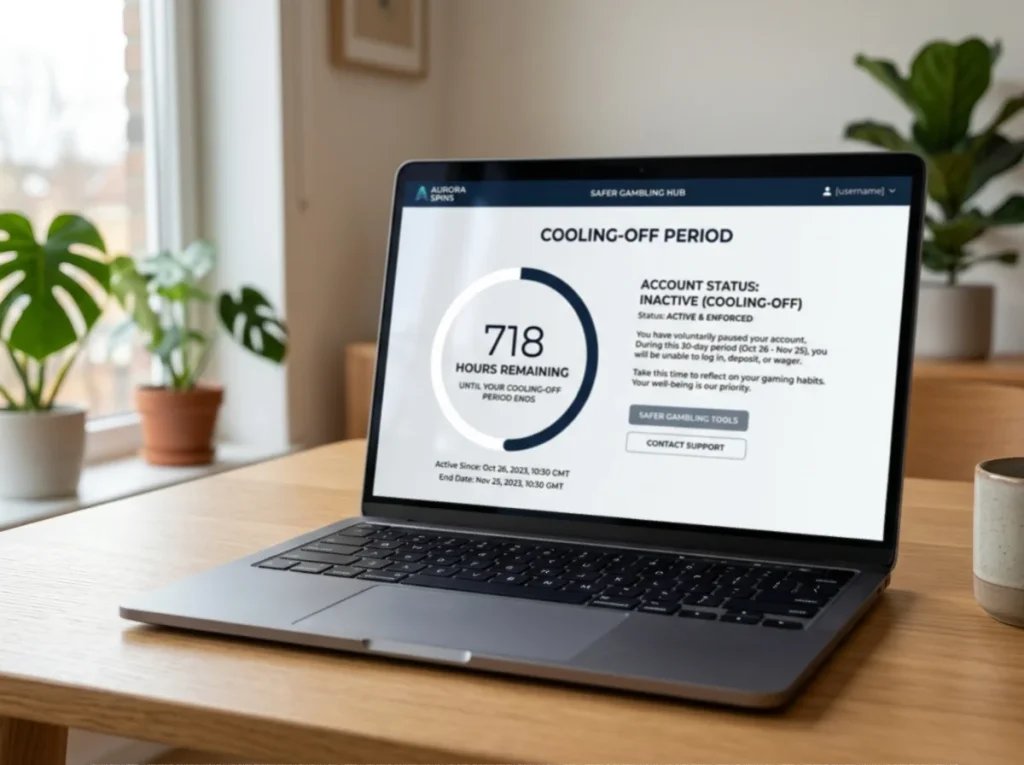
Cooling-off periods are the casino-side mechanism for short-term breaks. A 24-hour, 7-day or 30-day cooling-off pauses the account during that window, blocking deposits and play. The cooling-off is reversible only after the chosen period ends, which prevents impulse-reactivation. This is intermediate between a daily deposit limit and full self-exclusion.
The mechanics of changing limits have been deliberately asymmetric since UKGC guidance updated. Reducing a limit is immediate — if you set a lower cap, it applies right away. Increasing a limit requires a 24-hour or longer delay before the new higher cap takes effect. The asymmetry prevents impulse-increases during difficult sessions and matches the underlying behavioural design across the industry.
Our top casino picks for the UK
- BeOnBetBonus: 100% up to €500 + 100 FS · Payout speed: 1-3 business days
- WinBeastBonus: €5000 + 500 FS + €650 Freebet · Payout speed: 1-3 business days
- NightWinBonus: £900 + 400 free spins · Payout speed: 1-3 business days
- JetsetspinsBonus: 200% Bonus + 100 Free Spins + Free Royal Wheel · Payout speed: 1-3 business days
- DieselwinBonus: Welcome Pack 250% up to £4000 + 200 FS · Payout speed: 1-3 business days
- EvoSpinBonus: 125% up to €2500 + 125 Free Spins · Payout speed: 1-3 business days
- SpinFormulaBonus: 550% Up To £15,000 + 550 FS · Payout speed: 1-3 business days
- Revery PlayBonus: 100% up to€1,000+ 100 FS · Payout speed: 1-3 business days
Support resources in the UK
Beyond the in-product tools, the UK has substantial external support infrastructure for problem gambling. GamCare operates the National Gambling Helpline, which received 55,228 calls and online chats in 2023-24, a 25% year-on-year increase that reflects both growing awareness and growing need.
GamCare’s Money Guidance Service, focused on the financial dimension of problem gambling, registered 1,954 users in 2025, up 153% from 923 in 2024. The service provides debt advice and financial recovery support specifically for people whose gambling has produced financial harm. Aggregate gambling debt across users of the service in 2025 exceeded £7.2 million, averaging £21,269 per person — a substantial increase from £2.8 million the year before, reflecting both more users and more severe cases reaching the service.
The pattern in these numbers — growth in helpline contacts, sharp growth in debt-focused service uptake — points to gambling harm increasingly manifesting through financial channels rather than only through behaviour at the casino. The wallet-and-casino tools described above address the casino-facing dimension. The external support infrastructure addresses the broader financial and personal dimensions where wallet controls alone don’t reach.
For Payz casino users specifically, the awareness of these external resources matters because the wallet sits at the interface between gambling and personal finance more directly than a debit card does. A wallet balance that’s been built up over months from successful gambling sessions and is then lost in a single bad session is a financial event that can produce hardship beyond what the casino’s own tools account for. The broader safety architecture around UK Payz casino play, including the regulatory and operator-side context, is covered in the overview of whether Payz casinos in the UK are safe and what makes them so.

Does a GAMSTOP self-exclusion stop Payz from funding any UK casino during the exclusion period?
GAMSTOP blocks the casinos from accepting deposits, not Payz from sending them. The wallet itself continues to function during the exclusion period but cannot complete deposits at any UKGC-licensed casino because the casino is required to reject the transaction. For additional protection, set a wallet-side block on MCC 7995 to prevent attempted deposits at offshore sites outside GAMSTOP"s reach.
Can I set a Payz-side spend block that overrides a casino"s own limit settings?
The wallet-side block operates independently of casino-side limits and applies to outbound transactions from the wallet regardless of the receiving merchant. It doesn"t override the casino"s limits — both apply simultaneously, with the more restrictive of the two effectively governing what can complete.
Where do I get external support if Payz casino play has become a problem?
GamCare operates the National Gambling Helpline (0808 8020 133) with free, confidential support 24 hours a day. Their Money Guidance Service offers debt-focused support specifically for gambling-related financial difficulty. The Citizens Advice Bureau also provides general financial advice that intersects with gambling debt.
ecoPayz Casino Articles: UK Market Trends and Payment Data
Written by the editors at Ecopayz Casino UK.